|
9 Ladywell Place
Dover
07742828598
 |
|
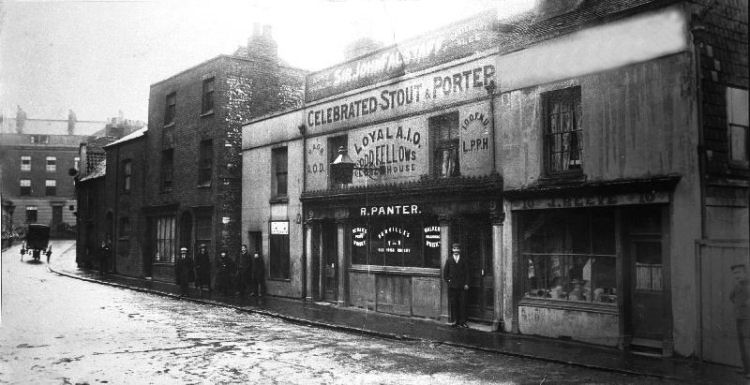
Ladywell, early 1890's. By then a widening at
the previously narrow lane had already taken place. Until 1867 it was
only 14ft wide, cobbled, and had a drainage gully running down the
centre. At that time the lane was one of the boundaries of the town.
Beyond it was open fields and the villages of Buckland, River and Temple
Ewell.
In 1867 the lane was widened to 20ft but it was still extremely
narrow at the High Street junction. Consequently another widening became necessary in 1893,
involving property on the side opposite the Town Hall, between the Sir
John Falstaff public house and the High Street corner.
The public house
was rebuilt in 1903 and the High Street corner premises in 1907. An
interesting feature visible in the original picture is the line of
railings of the front gardens of properties facing Ladywell and the Town
Hall, known as St Martin's Terrace, which were in domestic occupation
when the photograph was taken. These short gardens were removed when the
Corporation widened High Street in 1903. |
 |
|
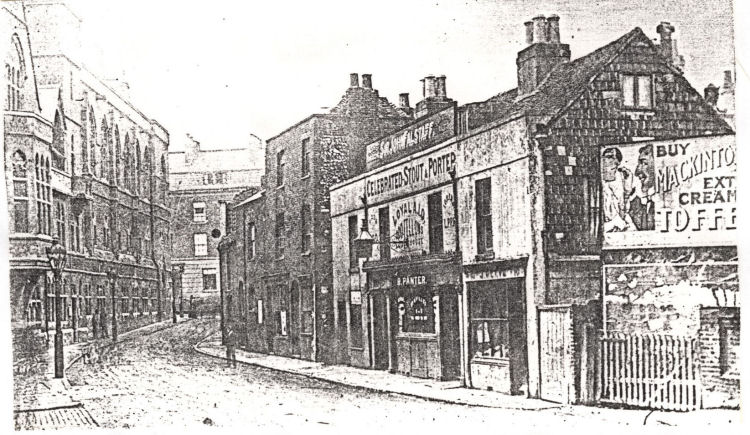
Appeared in the Dover mercury, 23 October 2003. By Joe Harman.
Ladywell, Dover, before the widening in 1900.
The above is a picture of Ladywell taken just before the road was widened in
1900.
I was informed that the people in the photo are members of the Meadows
family who traded in second-hand furniture and are standing outside
their shop.
Next door, to the right, is Adams the printers. The widening took place,
but the frontages were not tidied up until 1907.
You can see the date over the blocked doorway to the present mortgage
premises.
Many people will recall the top end in High Street being Knowles the
fruiterers. The Sir John Falstaff was rebuilt and set back.
There appears to have been a "sweeterie", hairdresser and shoe-repairer
on the site before becoming the present fire station.
Joe Harman.
|
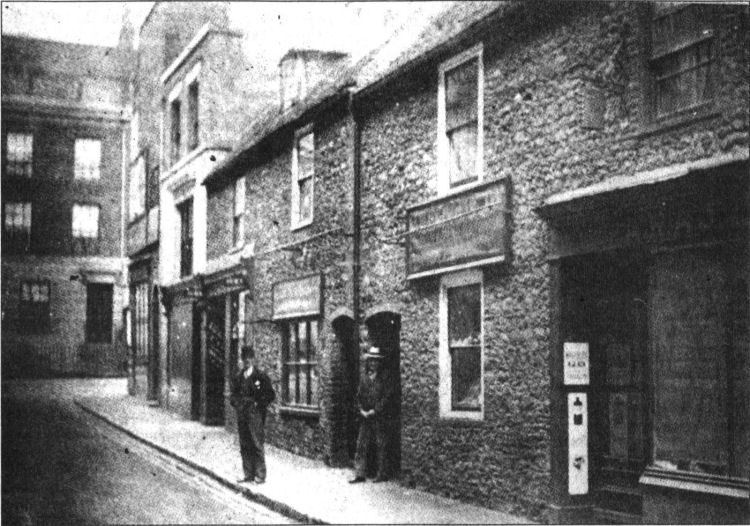
Above photo, date unknown, kindly sent by Linda Cox. |
The fourteen foot road was widened to twenty feet in 1867
and four cottages then stood thereabouts. By 1869, Thomas Chrisie Royce had
converted two of them into a pub. Edward Hubbard hosted for four years then
sold to the East Kent Brewery, at that time, a subsidiary of the Dane John
Brewery, Canterbury. The doors opened at five a.m. to welcome the coffee
drinkers from 1876 and continued that practice after 1900.
|
From the Dover Express and East Kent News, Friday,
16 July, 1869.
WILFUL DAMAGE
George Stanley, a shipwright, was summoned by Edward Pay, a fruitier,
for wilfully damaging his front door on the night of the 7th instant.
The complainant said that he lived at Lady Well, next to a
public-house known as the "Sir John Falstaff," which is kept by the
mother of the defendant. On Wednesday night, at a quarter-past ten, he
was in his back room, when he heard a knocking at his front door. His
wife was in the shop, and on his hearing the knocking he went into the
shop, and found John Stanley and his wife there, trying to shut the door
against a crowd outside. The latch of the door was broken in their
endeavours to close it. The door was afterwards closed, and the people
outside then kicked and pushed against it. As they did not desist
knocking, the prosecutor opened the door, and the first person he saw
pushing against it was the defendant, who used very bad language.
By the defendant: I am certain I saw you pushing against the door.
John Stanley said he was a mariner and belonged to the Wellington
Pilot Cutter. In consequence of something that took place he went into
Mr. Pay's house on Wednesday night, the 7th instant, and while there he
heard a great noise outside the door. On the prosecutor opening the door
he saw George Stanley against it. The crown around the door did some
damage to it.
By the defendant: I was not in the back yard of Mr. Pay's house.
Mary Ann Stanley, the wife of the last witness, said that she was in
Mr. Pay's house with her husband on Wednesday night. She saw several
people outside, and on the prosecutor opening the door, and telling them
to go away, she saw the defendant, and he used offensive language.
Defendant denied the charge, and called George Howard, who said he
was a butcher and lived in Council House Street. he was in Lady Well on
the night of the 7th instant. There was a disturbance outside the house
of Mr. Pay. He did not see the defendant among the first who caused the
noise. The witness John Stanley was out in the back yard at the time.
George Hambrook said he lived at Finnis's Hill and was employed at
the Oil Mills. He was in lady Well on Wednesday night last in the "Sir
John Falstaff" public-house. There was a disturbance outside the house
occupied by Mr. Pay, but he was not taking any part in the affair. The
prosecutor undid the door; but there was no damage done to it. he could
see right through the house, and saw the witness John Stanley in the
yard.
The Magistrates said they considered the charge proved, and fined the
defendant 2s. 6d., the damage to the door 5s., and the costs 13s.; in
default, seven days' imprisonment , with hard labour.
The defendant went to gaol.
the prosecutor then made an application that the defendant might be
bound over to keep the peace, defendant having threatened to
"knock his head off" and to injure him in other ways. In consequence of
the threats he was afraid defendant would do him some bodily injury.
The Magistrates bound the defendant over in his own recognisance's
and in two sureties of £5 each, or one of £10, to keep the peace towards
complainant for two months.
|
|
From the Dover Express and East Kent News, Friday 16 March, 1877.
DRUNK AND DISORDERLY
John Henry Wraight, chair mender, was charged with being drunk and
disorderly in Park Place.
Police-sergeant Johnston said he saw the prisoner on Friday at Park
Place; he had off his coat and seemed in a fighting position. He
understood that the prisoner had been turned out of the “Sir John
Falstaff” public-house.
The prisoner said he was very sorry, and the bench dismissed him with
the usual caution.
|
|
From the Dover Express and East Kent News, Friday 13 September, 1878
DESERTERS
John Smith and Joseph Turner were charged with being deserters from the
Depôt of Royal Marines, stationed at Walmer.
Police-sergeant Hemming said: between six and seven this morning I saw
the two prisoners come out of the “Falstaff” public-house, Ladywell. I
stopped them and asked them if they were on pass. Smith said “Yes,” but
as they could not produce any I took them into custody as being
deserters.
Turner said he was not a deserter but absent without leave, and the
other prisoner said he was a deserter.
Prisoners were ordered to be sent back to the Depôt at Walmer.
|
|
From the Dover Express and East Kent Intelligencer, 6 January, 1882. Price 1d.
The members of the Ancient Order of Oddfellows had their annual supper
at the “Falstaff Inn,” Ladywell, on Tuesday evening. This has been for
many years the lodge house, and it is contemplated to building on these
premises a larger room to meet the growing necessities of the case. The
supper was admirably served by the host who had secured the assistance
of Mr. W. Fox, baker, in cooking the excellent joints supplied by Mr. G.
Adams. After supper a very pleasant evening was spent.
|
|
From the Dover Express and East Kent News, Friday, 18 December, 1891. Price 1d.
I.O.O.F. FALSTAFF INN
The above held their annual audit of the Benefit Society on Tuesday, and
found a bonus of 24s. for each member, they therefore deposited 10s.
each to the Society to form a substantial club for the next year, each
member taking up the remaining 14s.
|
|
Dover Express 27th July 1900.
DOVER TOWN COUNCIL.
A projecting lamp at the "Sir John Falstaff Inn" was allowed on the
application of Mr. Francis.
|
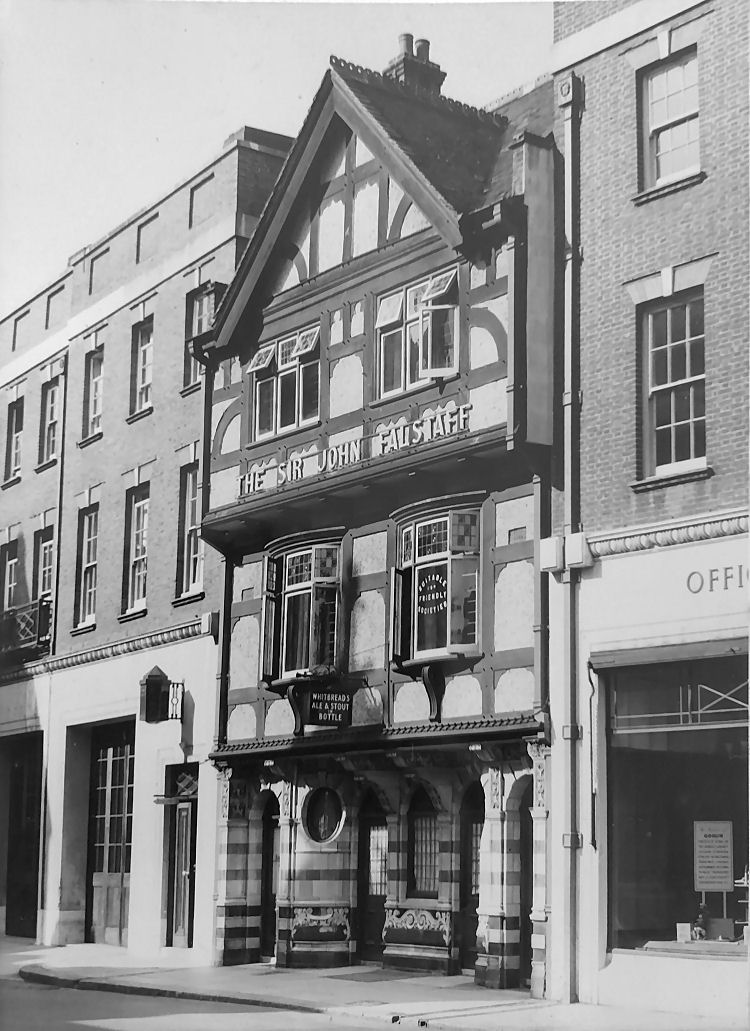
1893 saw the road widened again which meant its removal
but following the road improvement the present house was erected in 1903.
Ash and Company received from Dover Corporation £1,650 in 1902 which must
represent the purchase price or compensation.
|
From The Dover Express, Friday, April 03; 1914; pg. 4. Issue 2907.
TOWN, PORT, & GARRISON.
A meeting of the members of the Dover branch of the National Society of
ex-Naval and Military Men will be held at the "Sir John Falstaff" Hotel, Ladywell, on Monday, April 6th, at 8 p.m.
|
August 1917 it was stated that after Mr. J. T. Poole left, possibly for
military action and the house transferred the to the Secretary of Messrs.
Ash and Co, the house was temporarily closed, as it was difficult to find
both a tenant and beer! Obviously the war had hit the brewing trade as well
as those to run the premises.
Efforts made to declare the pub redundant in 1934 were not
successful. The local Council were looking for premises to house the police
at that time so fingers pointed in their direction but if they were
involved, and it would have been convenient right next door to their fire
fighting appliances, they were frightened by the price.
Permission was given for it to close again for the duration of the war in
October 1940. Possibly it did. I know not. Certainly open again in 1948.
This time a
Whitbread house
|
From the Dover Express and East Kent News, 12 March,
1937.
Police Object to Extension.
The licensee of the "Sir John Falstaff" applied for an hours
extension for a concert on Thursday.
The Chief Constable said there was no indication what the concert was
for and so he objected to the extension.
The licensee, replying to the Magistrates' Clerk, said the concert
was by the Druids to raise funds for a children's Coronation treat. He
thought it would be open to the public.
The Chief Constable said he would withdraw his objection if no one
was admitted to the premises after 10 o'clock.
The licence was granted on that condition.
|
|
From the Dover Express and East Kent News. 25 March, 1938. Price 1½d.
OLD CONTEMPTIBLES' ASSOCIATION
The Branch membership now totals 50 members.
His Worship the Mayor (Councillor J. R. cairns) has kindly consented to
present the “Dispensation” to the branch in the Town Hall, Dover, at 8
p.m. on Friday, May 20th. It has been decided to invite the neighbouring
branches of the British Legion and of the Old Contemptibles' Association
to witness the ceremony.
The next meeting of the branch will be held at the “Falstaff Hotel,”
Dover at 8 p.m. on Friday, April 1st.
|
|
Dover Express 6th August 1943.
Town, Port & Garrison.
From Saturday. The HQ and Clubroom of the Civil Defence Social and
Sports Club wiil be at the “Sir John Falstaff”, Ladywell.
|
|
Dover Express 29th August 1941.
POLISH SAILORS AND POLICE.
Dover police Court 23rd August 1941.
Michael Poeppers (32) was charged with being drunk and disorderly at the
“Sir John Falstaff”, Ladywell, on August 22nd, and refusing to quit the
premises when ordered by the licensee, Wilfred Chambers.
The Chief Constable said that he understood the officer commanding the
unit to which this man was attached was making an application for this
man and another man on another charge to be handed over to be dealt with
by the Naval Authorities. He did not propose to offer any objection.
The Naval Officer said that both men were Poles and Petty Officers and
had never had any trouble before. He expressed apology that they should
have made a nuisance of themselves ashore.
The men were handed over to be dealt with by the Naval Authorities.
|
|
From the Dover Express and East Kent News, 12 December, 1952.
Dog Match at the "Falstaff"
The last match of the year held by the Dover and District Canine
Society was at the "Sir John Falstaff," Ladywell, on Friday, when Miss
Monica Boggia was the judge. The cup for the dog with most points for
1952 went to Mrs. Stella Arnold's smooth dachshund "Skipper of the
Swatchway," while Mrs. Grierson's golden retriever "Tessa of Breconrea"
was the best bitch.
Points awarded at the show were: "Skipper of the Swatchway," "Quixote
of Rydens," "Deerbolt of Provachocty," "Deerbolt Scoota" and "Tessa of
Breconrea," 8 points; "Seagry Chansonette," "Collinwood Chrysalis," "Colinwood
Corvett," "Verity of Hindham," "Commodore of the Swatchway," "Hugo of
Nonington," "Crowtrees Captain," and "Thunder of the Swatchway," 7 pts.;
"Herarian Flashlight," "Chum of Elms Vale," "Reyway
Prince Ti Ang," "Cocos
Coral," "Tantalising Red Devil" and "Diana of Mapesbury," 6 points.
|
 |
|
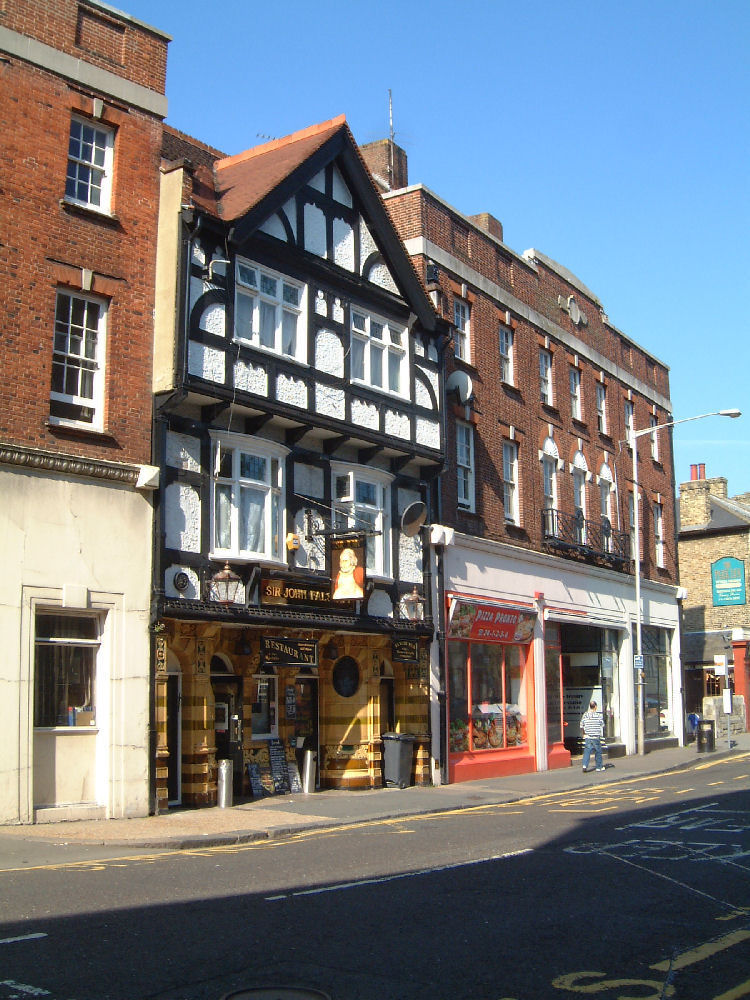
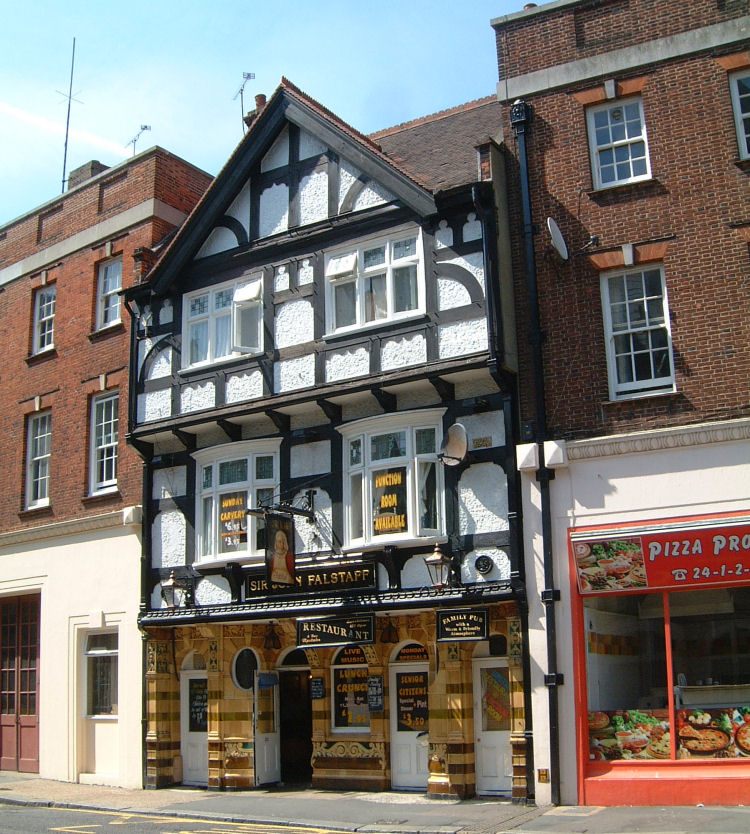
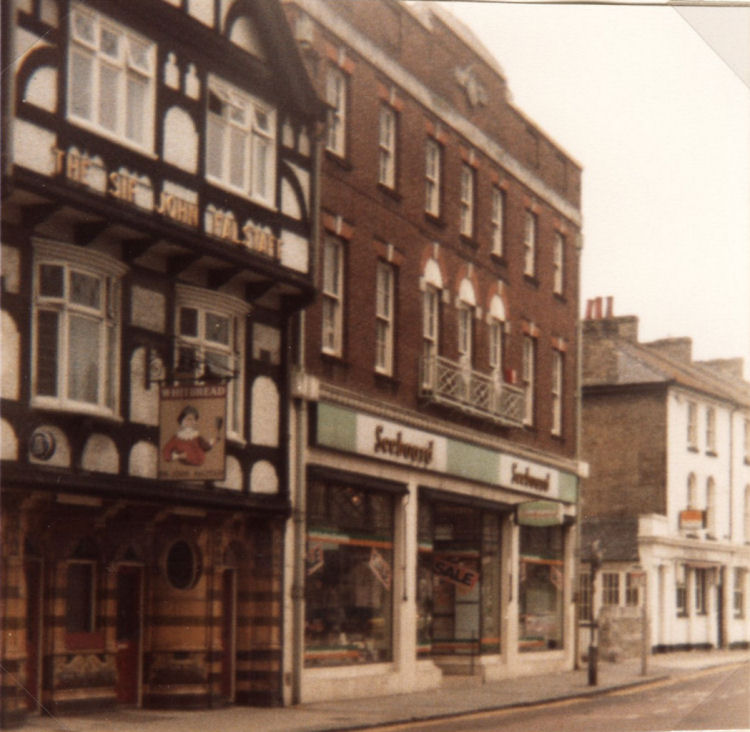
Above Sir John Falstaff circa 1980 photo by Barry Smith. |
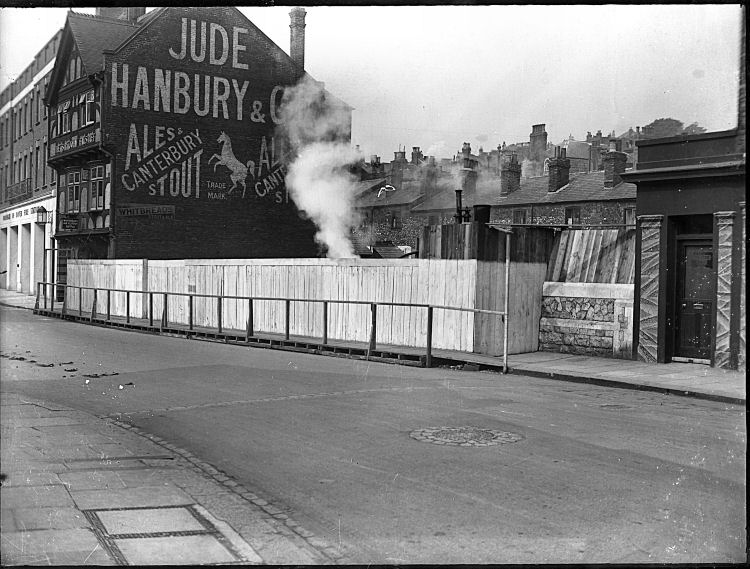
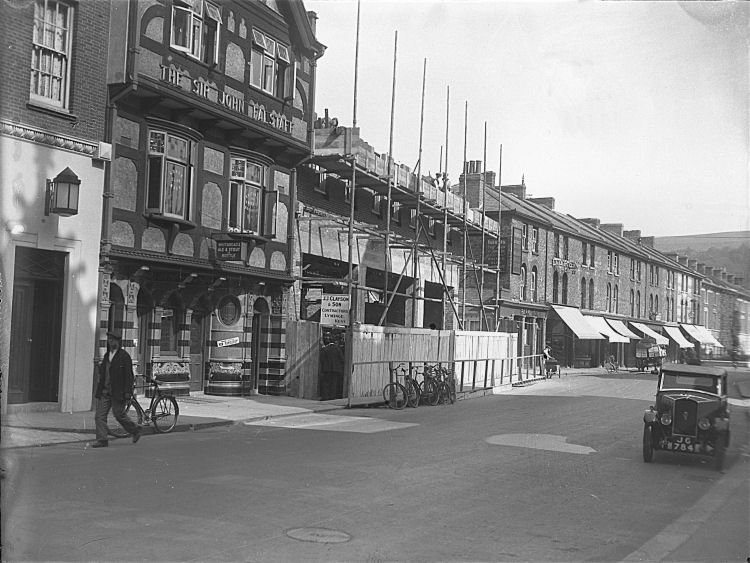
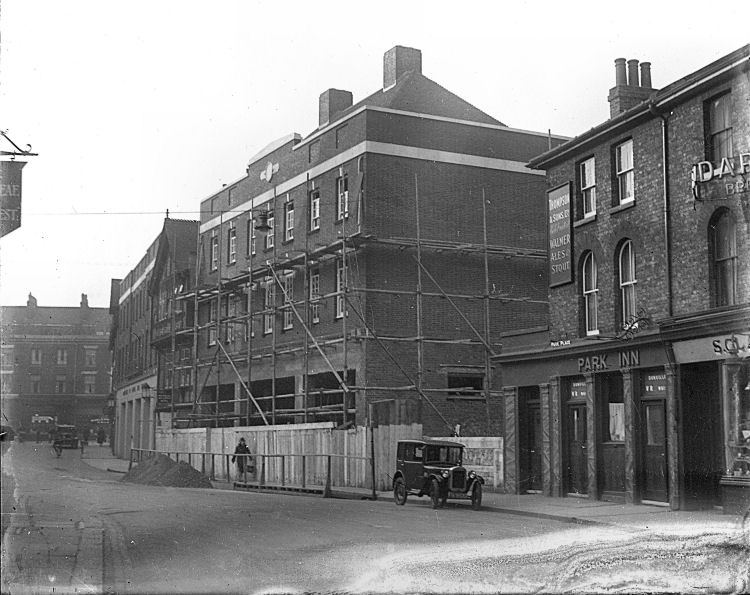
Above pictures showing the Seeboard buildings being built, date
pre 1938. The bottom picture also shows the "Park Inn" (right) and the
sign of the "Wheatsheaf" (left.) |
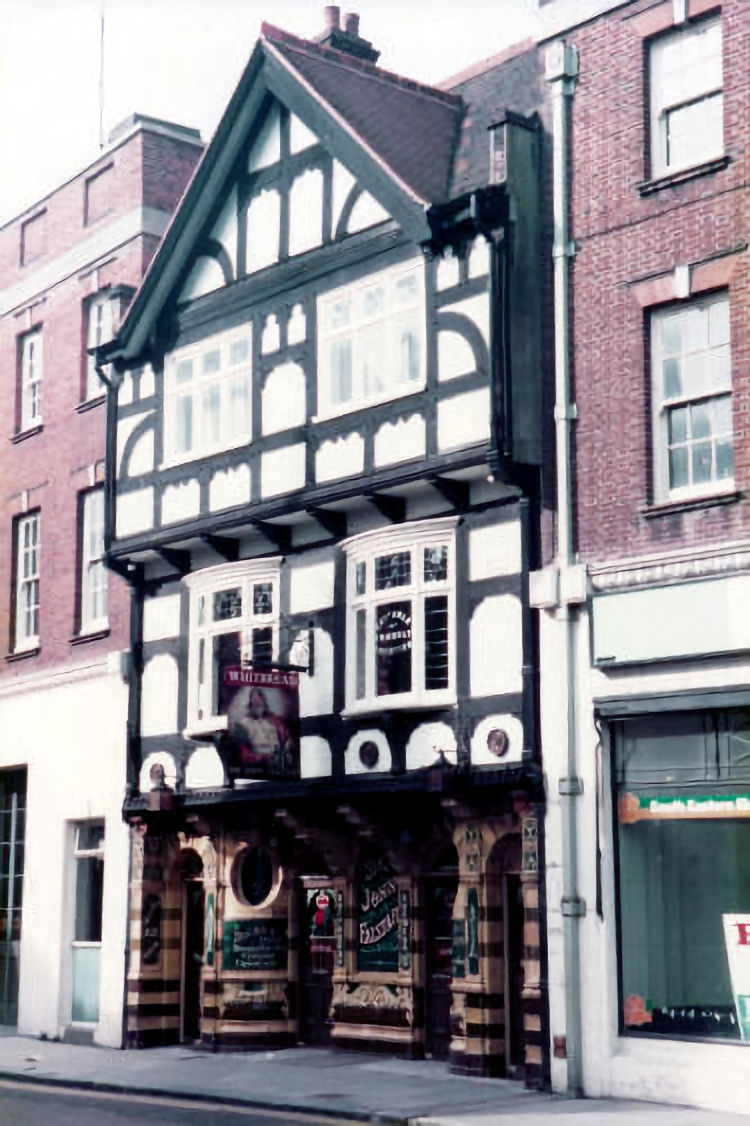
Above photo, 1983. Photo by Eddie Chard. |
|
From the Dover Express 5 April 2001
Fire in pub
A SMALL fire broke out at the Falstaff public house,
Dover; at 1am on Monday. The owner was awoken by the sound of crashing glass
as fire fighters broke into the pub with a sledgehammer to put out the
blaze. There were no injuries and only a small area of carpet was damaged.
Police are investigating how the fire started.
|
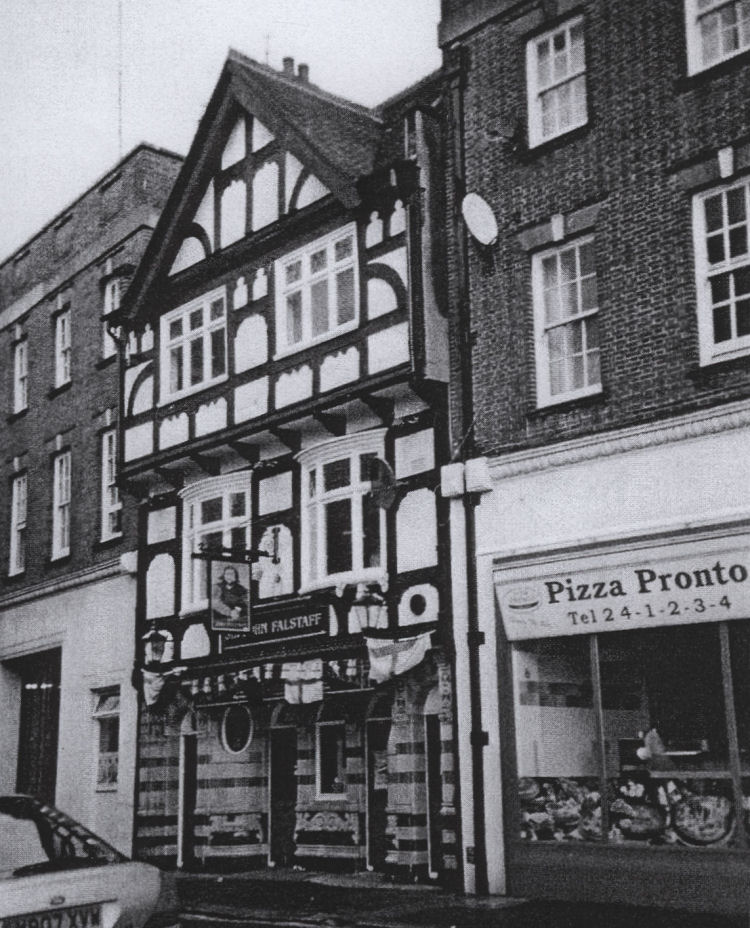
Above photo of Sir John Falstaff 2006.
|
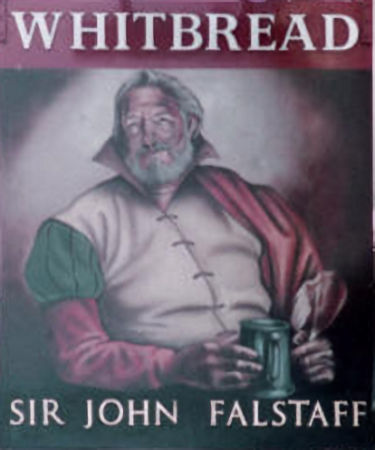 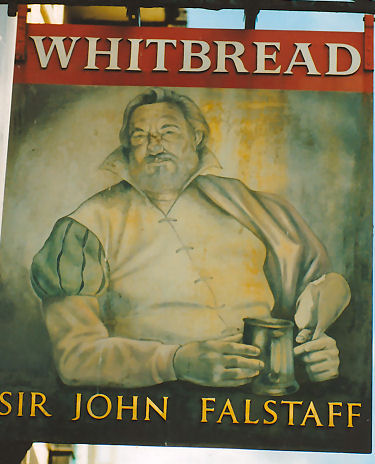
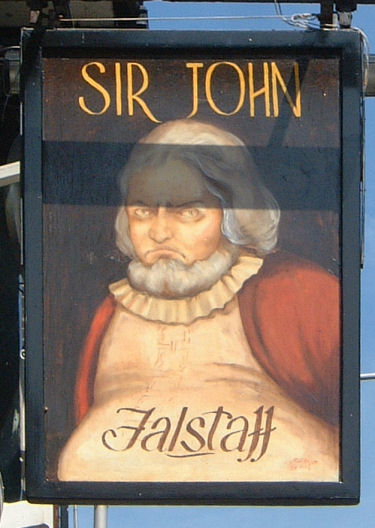
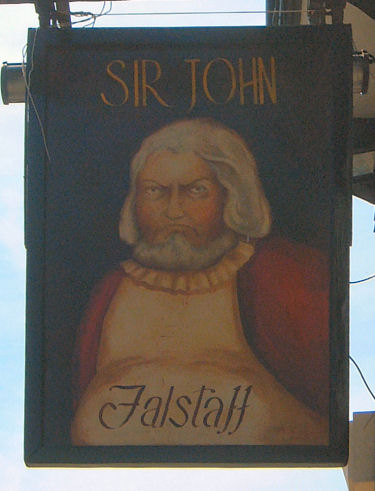
Sir John Fastaff sign left 1983, right October 1991.
Above with thanks from Brian Curtis
www.innsignsociety.com
|
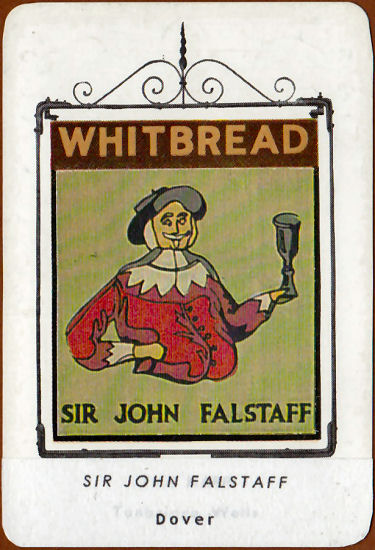
The above sign, wasn't actually designed and released by Whitbread, but has
been designed by Robert Greenham in the same style as the card sets they
distributed as a representation of what the sign looked like. Robert
says:- This was based on the image which appeared on Whitbread's metal
map for East Kent which was painted by D. W. Burley in 1950, on
commission from Whitbread. |
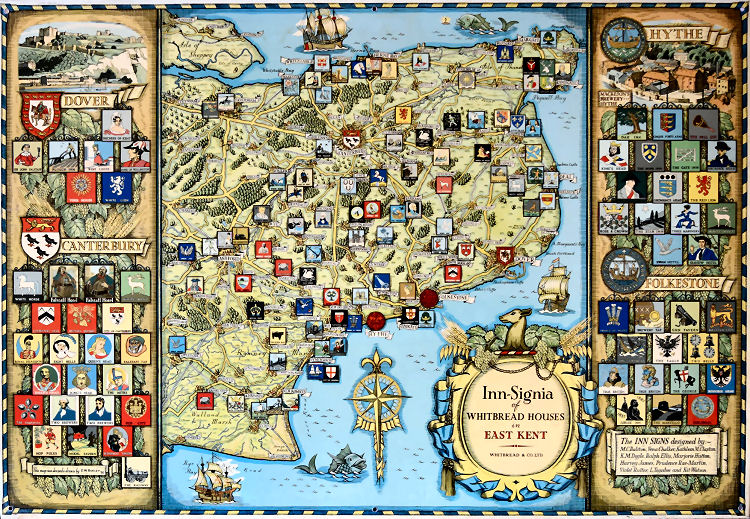
The above metal map, kindly sent by Robert Greenham was released, in
1950 and painted by D. W. Burley, and was titled Inn-Signia of Whitbread
Houses in East Kent, Whitbread & Co Ltd. The Inn Signs designed by:- M.
C. Balston, Vena Chalker, Kathleen M Claxton, K. M. Doyle, Ralph Ellis,
Marjorie Hutton, Harvey James, Prudence Rae-Martin, Violet Rutter, L.
Toynbee and Kit Watson. |
|
From the Dover Express, 26 April 2007. Report by Phil Reilly and photographs Andy Jones.
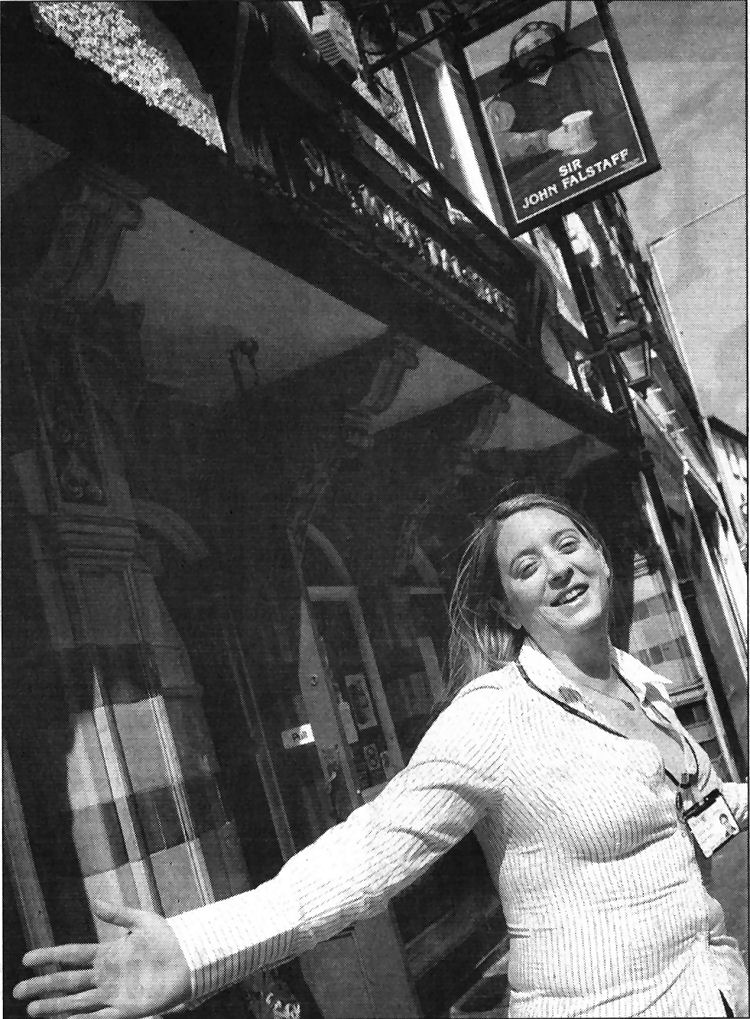
She's back: Sarah Webb outside the to-be-renamed Sir John Falstaff pub
DOAJ200407Sarah
The landlady with a golden touch whose Finest Hour is still to come.
The no-nonsense approach SARAH WEBB has taken to running the Britannia
pub in Townwall Street has earned her many admirers, as well as a
reputation in some quarters as "The Bitch". The businesswoman is now
expanding her empire to the Sir John Falstaff in Ladywell, another pub
that comes with a troublesome reputation that she hopes to turn around.
Reporter PHIL REILLY and photographer ANDY JONES met her in the newly
refurbished premises to hear how a childhood playing with guns and
tanks led her to Dover and a very strange encounter.
PUB GHOST
ONLY two days after taking over her new pub, landlady Sarah Webb came
face to face with a ghost.
As she crept around the ancient basement of the Sir John Falstaff in
November, acquainting herself with her new premises, she saw a young
girl dressed in rags by the entrance to a blocked-off tunnel that once
linked the pub to the police cells across the street.
For the feisty landlady, who was nicknamed
"The Bitch" during three years
behind the bar at the Britannia in Townwall Street, it was a strange but
oddly comforting experience.
"This, might sound a little silly but I have a ritual that I kiss every
wall in the building when I move in," explained Sarah between puffs on a
cigarette on one of the refurbished pub's
leather sofas.
"It was about 11pm, there was no one else in the pub and I was in the
basement: I suddenly felt really cold, which was horrible at first.
"Then I saw this girl with really short hair dressed in rags by the
steps to the tunnel, she just stood there staring at me.
"I wasn't scared, which I know sounds strange, but I actually had a
conversation with her.
"I apologised for the previous
owners and told her she was going to be safe now and asked her for
protection.
"I looked away for a second and when I looked back she was
gone."
It was only afterwards that Sarah found out the building was reputed to
be haunted by a ghost
called Queenie, a 19th-century servant girl who was found dead in the
tunnel.
"I was told she was beaten to death," she said. "Someone said it was an
escaped prisoner, but who knows what the true story is, it's all
folklore now."
It is no surprise that Sarah, 34,
was not fazed by a ghost - in fact it is hard to imagine her being fazed
by anything.
She learned to stand up for herself during a childhood spent between a
Catholic convent school education in Leicestershire and firing guns and
playing in tanks with the Territorial Army.
Her grandfather ran the local TA club bar and the soldiers would take
Sarah along to the firing range, where at the age of just seven she
fired her first bullet.
"I was a soldier when I was a kid. I mean that, they showed me
everything," she explains with a glint in her eye and a sip of a
cappuccino.
"To me it was just play, but when I wasn't firing guns or playing in
tanks the office girls were showing me Morse Code."
She moved to Dover five years ago for her job as a contract manager
working with Customs and Excise.
She gave it up in 2003 to realise her dream of running a pub and took
over the ailing Britannia.
She has turned the pub's
fortunes around and earned a reputation as a hard but fair landlady in
the process.
With more than a trace of pride she claimed the pub, which now has a
24-hour licence, has the biggest barred list in Dover and that she and
her door-staff have no qualms about ejecting any troublemakers.
"The gay community come in the Britannia but there can be a lot of
homophobia.
"One guy was followed into the toilets by two guys who were being
abusive towards him.
"He came out and told the doorman and as soon as the two guys came out
of the toilet we showed them the door."
Sarah featured in the pages of the Dover Express in December 2005 when
she revealed she would be opening a private members' club at the
Britannia for pole-dancing but only two revue nights have taken place
since then.
Sarah became good friends with several London-based erotic dancers, including her Texas-born deputy manager Cookie, while she was
working at Heathrow airport in the late-90s.
She is keen to make a new start at the Sir John Falstaff (she will be
living in a flat above it). It has been given a comprehensive makeover
and its name will be changed to the Second World War-themed the Finest
Hour.
The name change should take place in the coming weeks, with only the
design of the pub sign standing in the way.
Customers can expect a comfortable and friendly atmosphere, while anyone
who causes trouble can be expect to be swiftly deposited on the pavement
outside.
• Sarah was born in Leicester in 1973, where she attended Our Lady's
Convent and the Delisle Catholic schools.
• She began work at 18 in security management, moving to Aylesbury
aged 23.
• She began working as a contract manager at Heathrow Airport in 1997,
and flitted between there and Dover between 1999 and 2001 to work for Customs and Excise.
• Sarah moved to Dover in 2001 and quit her job two years later to take
over the Britannia pub.
|
|
From an email received from Paul Smith, 14 December
2009.
Futher info on GHOST
My name is Paul Smith and I was the licensee with my wife Sue and
shadowed the refurbishment when it was reopened in 2003 till 2006. I
converted upstairs to a 36-seater restaurant with its own working
kitchen and bar, then had to close it due to excessive rent increases.
May I add Miss Webb's introduction to the little girl ghost.
I had the old cellar hatch moved and the steps that were mentioned
are the old cellar steps, not a tunnel entrance as mentioned above.
I had a conversation with her in my restaurant and she asked me if
the pub was haunted. I told her all about the wash room next to the
men's toilets and a woman in a maids outfit that was spotted by my son.
My cleaner also saw a Victorian gentleman in a purple cravat who was
spotted in the corner by the bar hatch. They played games with us by
hiding keys and remote controls but the items would reappear somewhere
else later on. One day my son was ironing a t-shirt in the hall and he
later found it in the bathroom sink. Funny but annoying, but they never
caused us any harm.
Paul Smith.
|
|
From the Dover Mercury, 10 May 2007.
Pub given new lease of life.
A TOWN centre pub which has Stood empty for several months is being
re-launched tonight (Thursday) as a pub and members' club, themed on
Britain's military history.
The Sir John Falstaff, in Ladywell, is being
renamed The "Finest Hour". It will contain First and Second
World War memorabilia, and will be a home for the Dover War Memorial
Project.
Behind it is Sarah Webb, landlady of The Britannia in Townwall
Street, who has teamed up with the project's researchers, Maggie
Stephenson-Knight and Simon Chambers.
|
|
From the Dover Express 24 May 2007.
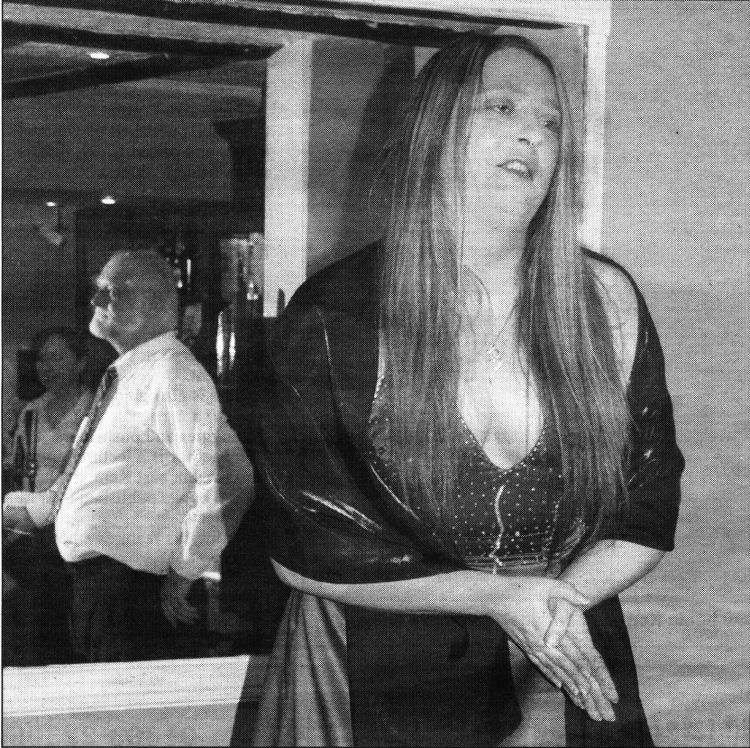
Officially open for business: Landlady Sarah Webb speaking at
Thursday's pub launch, with Cllr Roger Walkden reflected in the mirror.
Pub's opening is Finest Hour for military buffs.
A PUB opened in Dover last week with a pledge to keep the town's
military history alive.
The Sir John Falstaff in Ladywell has been
renamed The Finest Hour by new publican Sarah Webb, and was officially
opened with a party last Thursday.
The pub will now become home to the increasingly successful Dover War
Memorial Project, in which researchers Maggie Stephenson-Knight and
Simon Chambers are
trying to uncover the stories behind the names on the statue outside
Maison Dieu House.
Speaking at the event, Cllr Roger Walkden said: "The
work that Maggie and Simon have done over the last few months has been
nothing short of amazing and worthwhile to so many people."
The pub will
also be home to veterans' groups and will host themed events
commemorating military campaigns.
|
I'm afraid that's about all that ever happened at this pub and I never
did see any new signs change to tell of the re-naming.
The pub closed shortly after the above declaration of a new name in May
2007 and I have seen no movement since then.
10th May 2007 the pub was supposed to be renamed the "Finest Hour".
To date I have no information regarding when this will happen and the pub is at present closed (20
April 2008) apparently due to structural defects.
Latest I have heard it opened again in early May 2008, a whole year after
closing, although I believe the name hasn't changed as promised, and the
licensees from the "Wheelwrights
Arms" have taken it on, closing that pub due to electrical faults. As
one fault miraculously disappears from one pub, another appears in another.
As of November 2011 the pub was closed and is boarded up. Future unknown.
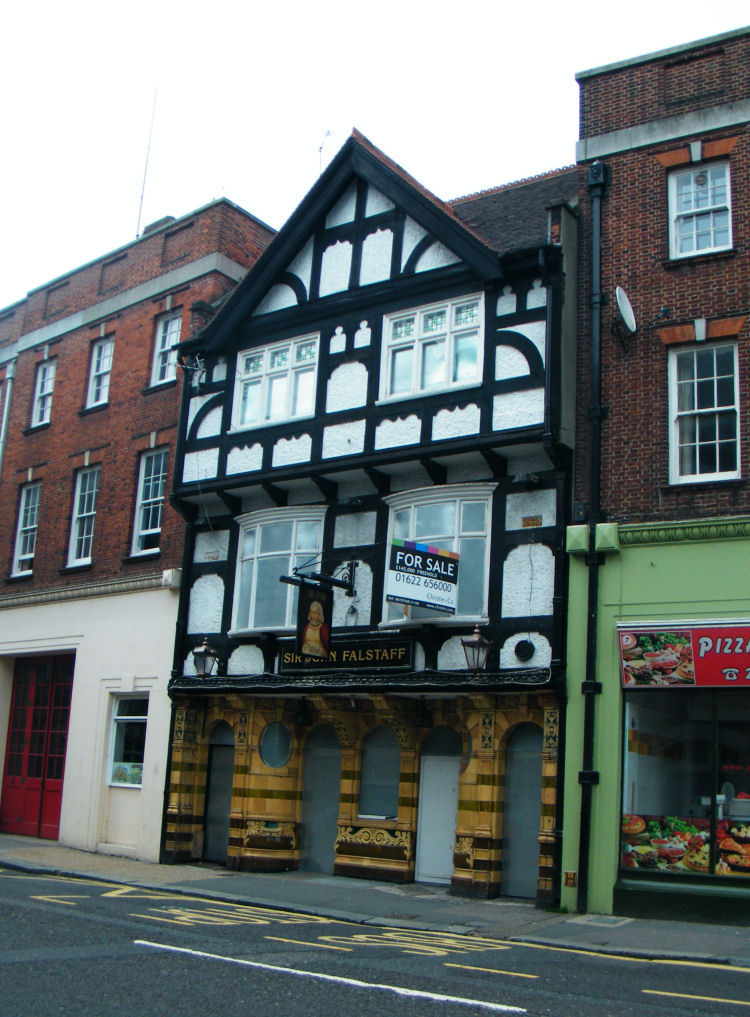 Above photo by Paul Skelton, 31 May, 2012. |
Latest news I have heard 20 February 2012, the leasehold is for sale at
£145,000.
News received in December 2012 tells me the pub has been sold or let, but
is not yet open for business.
Further news says that a gentleman named Jeff Flowers owns the pub and he
hopes to reopen it again in August 2013.
New signs have just gone up as shown below but workmen are still inside
the premises which today looked gutted with bare floorboards and little in
way of serving area.
|
From the Dover Express, Thursday, 6b
December, 2012. 65p.
SIR JOHN FALSTAFF PUB IS SOLD OFF
Ladywell pub the Sir John Falstaff has been sold.
The historic boozer shut in April 2012 but has now been nought by a
first time purchaser.
Selling agents Christie + Co say the freehold was bought for £145,000
plus VAT.
The three-storey detached building has a bar and first-floor function
room plus three-bedroom owner's accommodation.
Robert Cockayne, who handled the sale, said: “The sale shows there is
a keen appetite for freehold public houses. Despite the current negative
coverage about the region's public house market, with the right
marketing and professional guidance, they do sell well in the South
East.”
|
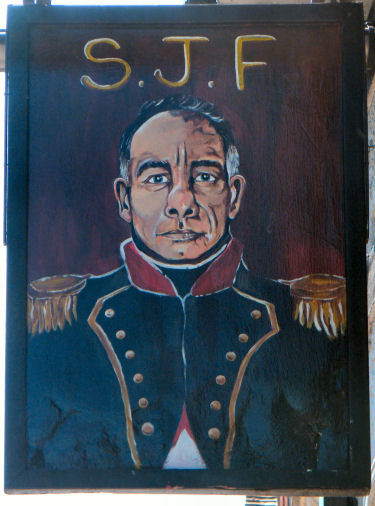 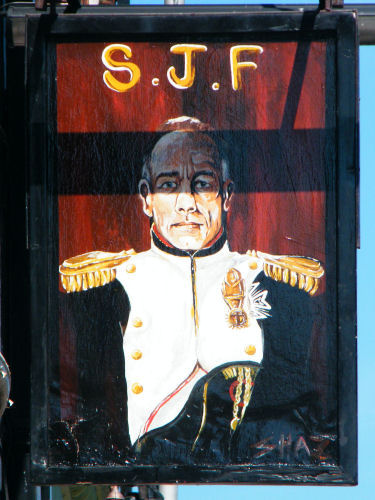 Above pictures taken by Paul Skelton, 14 August 2013.
|
|
From the Dover Express, Thursday, 19
January, 2013. 70p. Report by Mike Sims
TELL ME WHO DESIGNED MY LOVELY PUB
Jeffrey Flowers wants to list venue
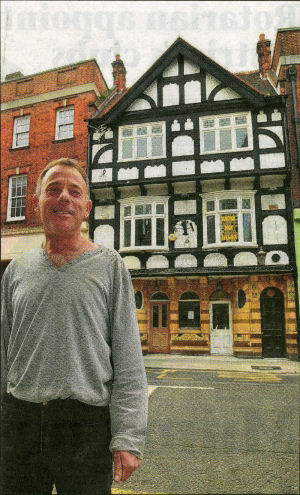
A FARMER-turned-stonemason who has spent tens of thousands of pounds doing
up a historic Dover boozer needs your help to get it listed.
Jeffrey Flowers, 53, bought the empty Sir John Falstaff in November for
a knockdown price of £100,000.
He has spent months renovating the Ladywell pub, and is now just weeks
away from opening it under the new name of The "Fleurs."
But he is appealing to Express readers to help protect the building,
which was built around 1900 and boasts stunning tiling and stonework.
It is his first foray into the pub industry, and is the latest job in a
varied career, which has included working on the Houses of Parliament
during his stonemasonry
career and running a farm in France.
The father-of-two said: “I need to know who the architect and builder
were to help get it listed with English Heritage.
“I've been to the library and spoken to the council but still don't
know, so can you help? It's got some of the best front tiles in the
country and I've spent tens and tens of thousands doing it all up. But
look at it, it's worth it.
“We don't want to lose it forever, so we need to protect it.”
The building has a bar and first-floor function room, plus upstairs
accommodation, but closed more than a year ago.
After eight months of hard graft, Mr Flowers - who has never run a pub
before - says he is now just three weeks away from throwing open the
doors.
Home
He said: “I've never done this before, but you've got to do something
before you die. I've been living in Ashford with my brother but will
live above the pub when it's open, it'll be my home.
“But I need to get it listed - people think it already is, and so did the
council, yet it's not.
“It attracts lots of visitors who take pictures of the stonework.
“It's gorgeous, but if we lost it that would be a disaster.”
|
|
From the Dover Express, Thursday, 1 August, 2013. 70p.
DIGGING INTO PUB'S PAST
EXPRESS readers have rushed to help a publican who is trying to get
an historic Dover boozer listed.
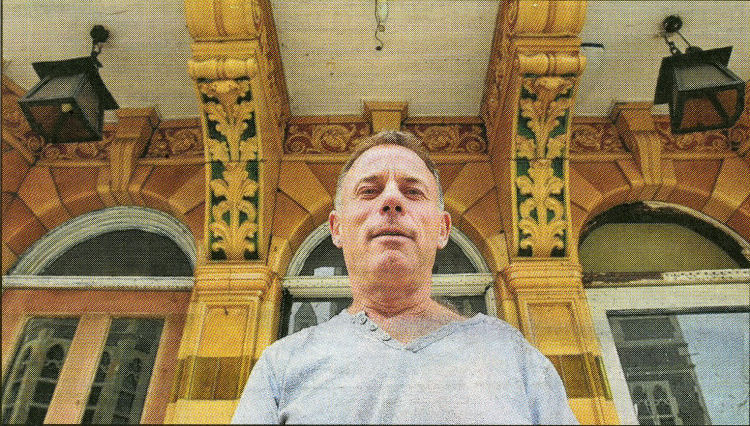
We reported last month that Jeffrey Flowers, 53, was renovating the
"Sir John Falstaff," to be renamed The "Fleurs," in Lady-well.
He needed help finding out about the building's origins in order to
persuade English Heritage to list it, and readers have jumped to his
aid.
Andy Hill sent in an old Express article, which said the history of
the site had been traced back to 1795 when carpenter Thomas Harrison
bought the plot of land.
He built four cottages, two of which were converted into a pub
between 1865 and 1874 by Dover butcher Thomas Royce.
It was called The Falstaff, later renamed the Sir John Falstaff, but
in 1903 the local authority said Ladywell needed to be widened and that
the building would have to be demolished.
East Kent Brewery, which was part of the Canterbury-based Dane John
Brewery and owned the original pub, and Dover Corporation struck a deal
and the new boozer was created.
Mr Hill said: “I have always had an interest with the pub. A
great-great-great grandfather of mine, Thomas Christie Royce, Freeman of
Dover, was one of the instigators of the widening of Ladywell and the
development of Park Place and Street.
“I have spoken with Mr Flowers about the name change, which I just
cannot understand why. It will always be the Falstaff to Dovorians.”
|
The pub remained closed from between November 2011 and July 2015 when it
eventually reopened as the "Fleurs."
LICENSEE LIST
STANLEY J 1869-Sept/71

ESCOTT R Sept/1871-73
RUTTER Alfred 1873
HUBBARD Edward 1874+
 
HOMEWOOD S J to Jan/1880
 JOYNER Richard Jan/1880-88
 (age 54 in 1881
 ) )
WRIGHT Mrs Elizabeth 1891-95+
  (age 54 in 1891)
AYERS Walter Cave 1899

FORD Charles Richard 1891-1903
 (age 30 in 1901)
  
PANTER Robert Mar/1905
BUTCHER Ernest Apr/1905-Aug/06
GOLDSACK Stephen Aug/1906+
BELSEY Stephen 1909-11+ (age 49 in 1911)

O'ROURKE Owen 1913-1914 end

O'ROURKE Mrs Susan
1914-23/May/16
POOLE Joseph Thomas 23/May/1916-Aug/17
Secretary of Messrs. Ash & Co. Aug/1917+
DAVISON C E 1918
CLEMENTS J F 1920-Jan/21
TREADWELL Robert Arthur Jan/1921-Apr/22

ALFORD Rupert E Apr/1922-28 end
 (Late Royal Irish Constabulary)
SMITH George Robert 1928-Feb/29
STEVENS Alexander Feb/1929-32+
  (Of High Street, Whitstable)
WYLE Philip to Aug/1933
BLOGG Stanley Philip Aug/1933+ dec'd
(Victualler
of Minster)
BLOGG A J 1934 end
EDMUNDS Llewellyn 1934-38+
 
CHAMBERS William 1948-17/Aug/51
 
FRANKS Bernard George 17/Aug/1951-81 dec'd
   Whitbread Fremlins
HARRIS James 1981+
BARNES G A 1987
HILL J H 1987
SMITH Paul and Sue 2003-06
WEBB Sarah 2007- May 2007
WATSON Ms K May 2008+
Closed Nov 2011
From the Kelly's Directory 1874
From the Post Office Directory 1874
From the Post Office Directory 1882
From the Post Office Directory 1891
From Pikes Dover Blue Book 1895
From the Kelly's Directory 1899
From the Post Office Directory 1901
From the Post Office Directory 1903
From the Kelly's Directory 1903
From Pikes Dover Blue Book 1909
From the Post Office Directory 1913
From the Post Office Directory 1922
From Pikes Dover Blue Book 1924
From the Post Office Directory 1930
From Pikes Dover Blue Book 1932-33
From the Post Office Directory 1938
From Pikes Dover Blue Book 1938-39
From Pikes Dover Blue Book 1948-49
From the Kelly's Directory 1950
From the Kelly's Directory 1953
From the Kelly's Directory 1956
Library archives 1974
From the Dover Express
|