|
Crosswall & 28 Strond Street
Dover
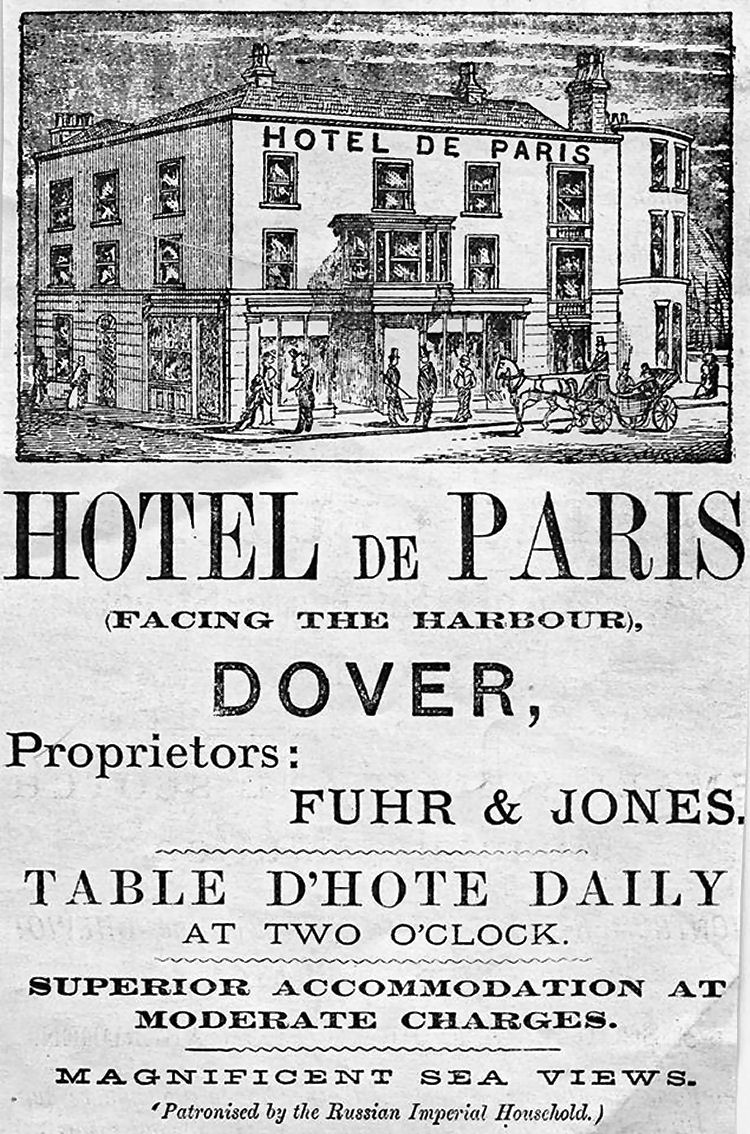
Above advert circa 1870. |
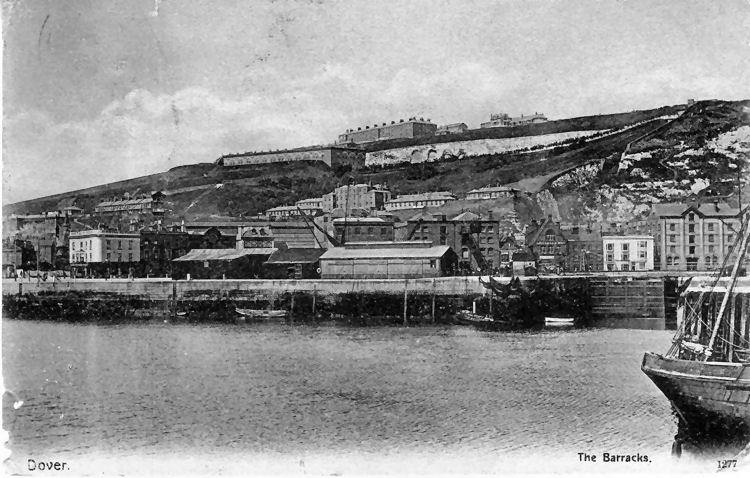
Above postcard showing the Hotel de Paris on the left, 1906, kindly sent
by Graham Butterworth. |
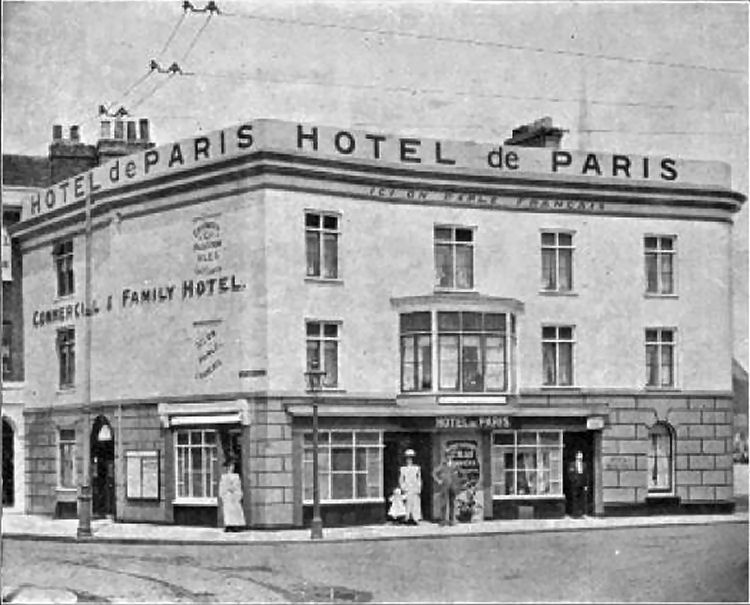
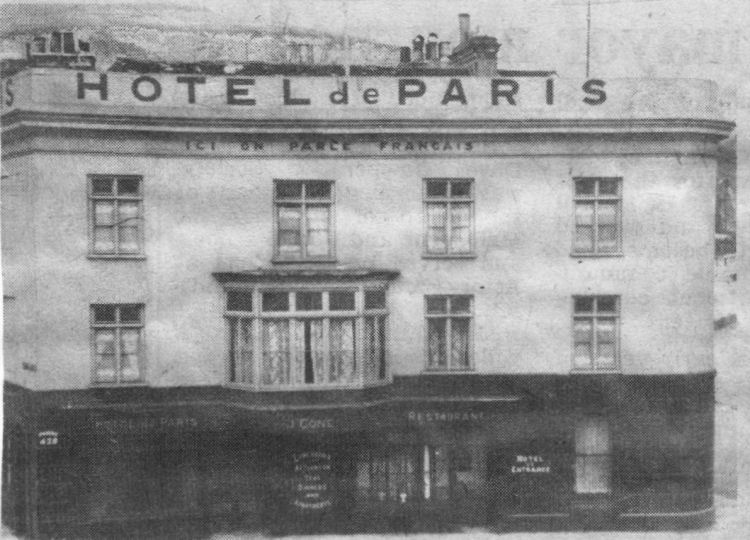
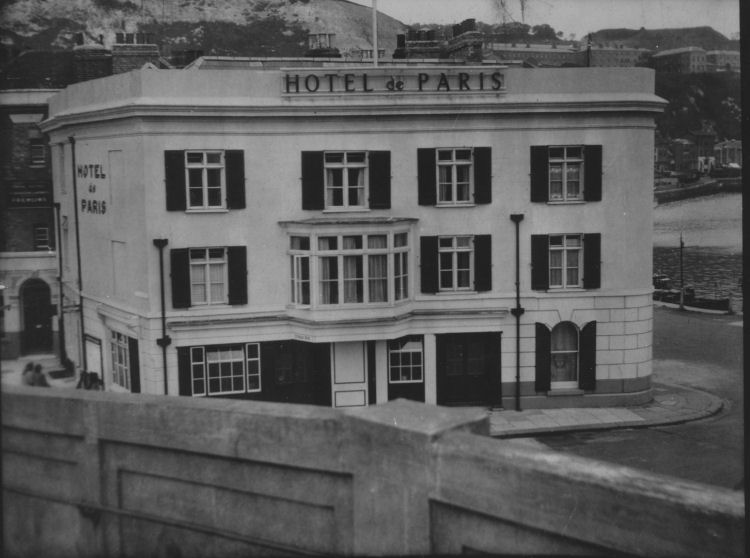
Above photo, 1920 when the phone number was 429. |
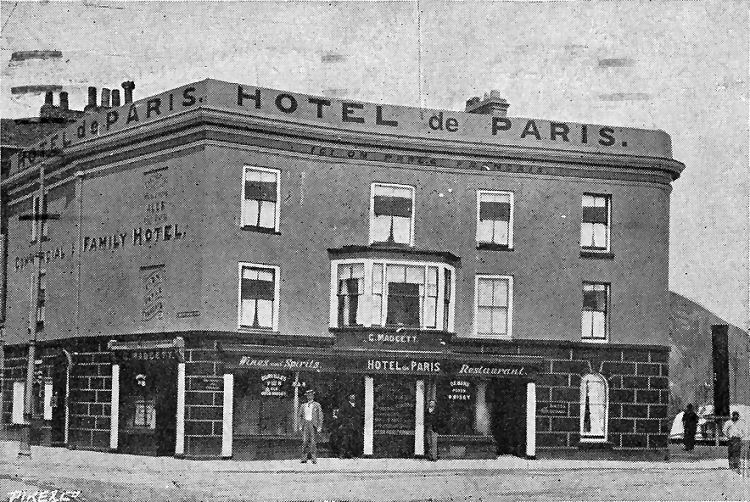
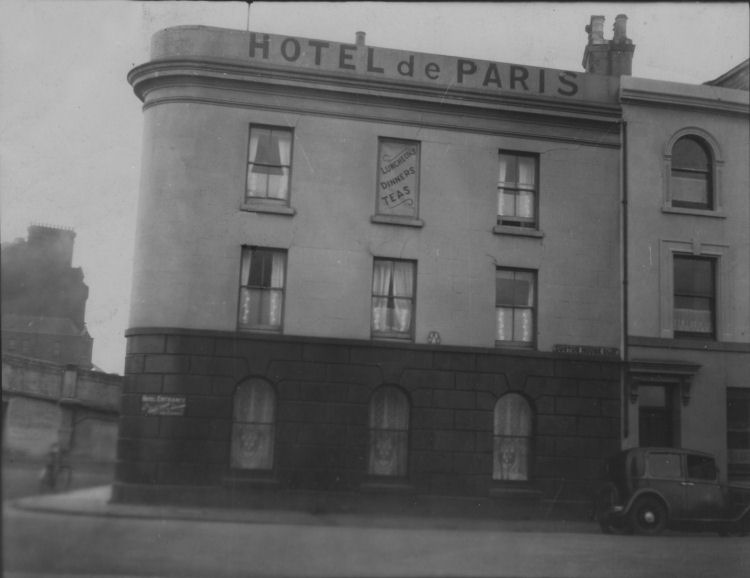
Above photo, circa 1920s, kindly sent by Graham Butterworth. |
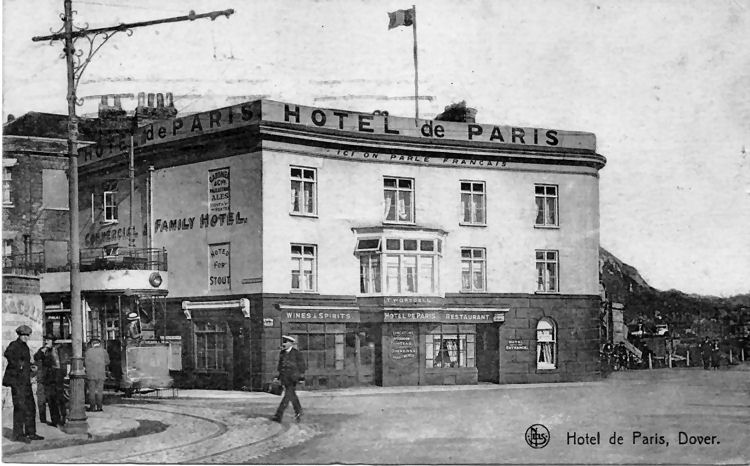
Above postcard, kindly sent to me from Graham Butterworth, who says the
postcard was post-marked 6th October 1921. |
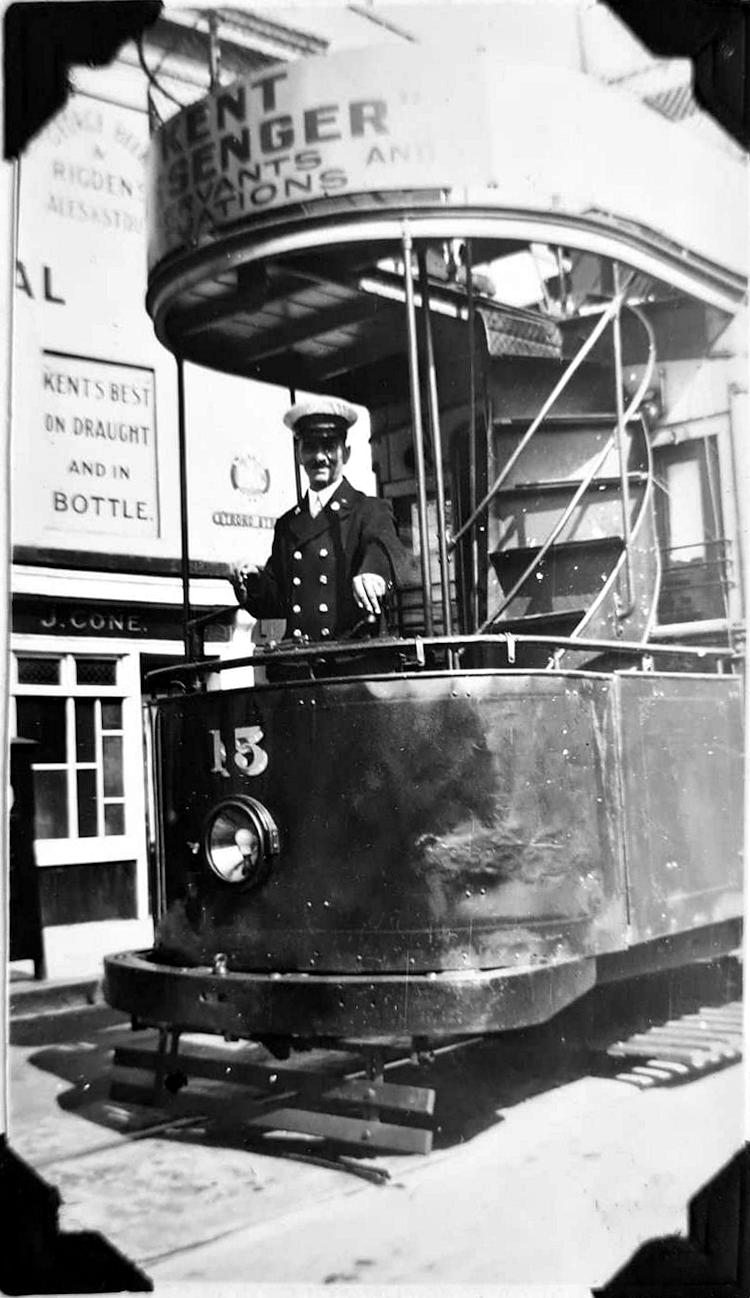
Above photo August 1929, kindly sent by Phil Eyden. |
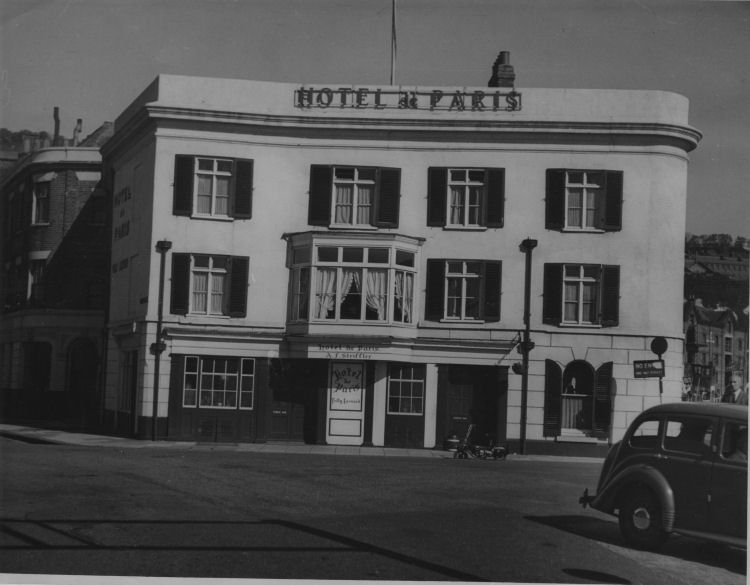
Just to the left of the photo can be seen the "Swan
Hotel"
|
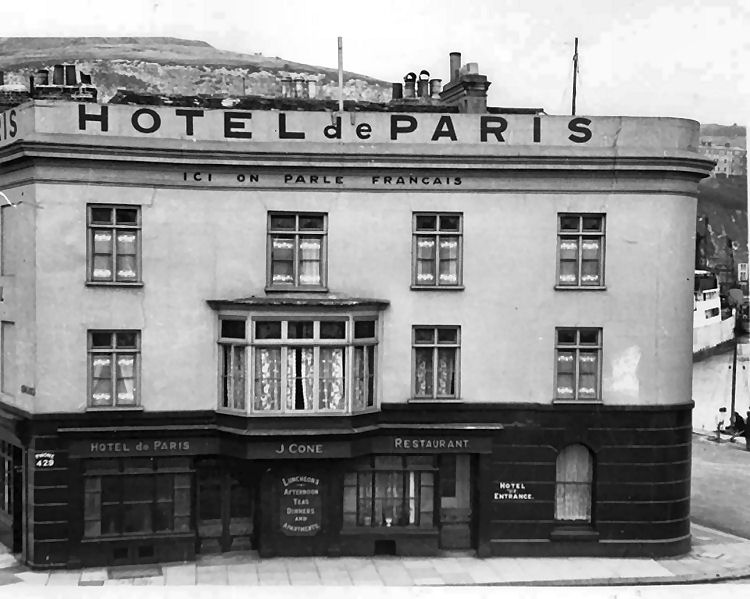
Above photo, circa 1930, kindly sent by Kathleen Hollingsbee. |
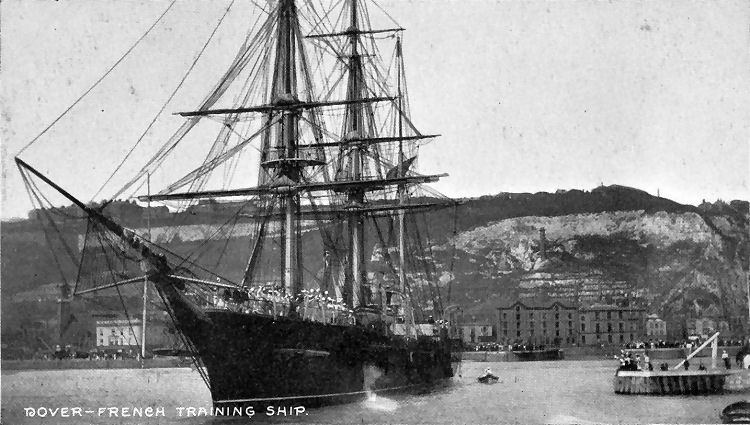
Above postcard circa 1905-10 showing a Dover-French training ship, date unknown,
kindly sent by Graham Butterworth. |
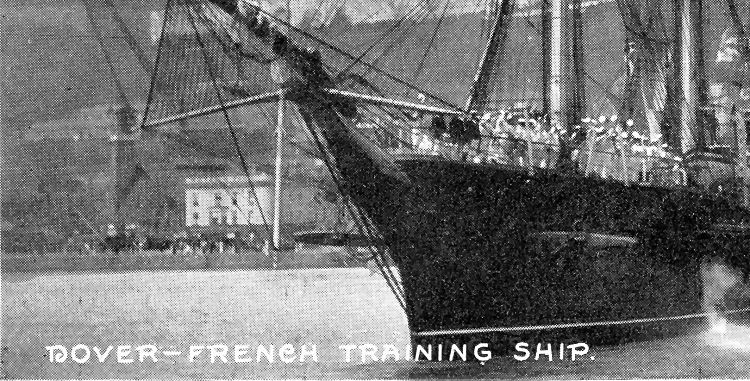
Above postcard showing a close-up of the Hotel-de-Paris and what is now
(2021) the Old Harbour Station Booking Hall music venue. |
|
Kentish Gazette, 8 February, 1870.
Smugling.
At the police court last week, a seaman belonging to the Belgian
Government mail-packet Diamant, and giving the name of Montagne, was
charged with haring concealed about his person 2 lbs of foreign
manufactured tobacco, liable to forfeiture.
E. J. Prescott, an officer of Customs, was on duty on board the
Diamant on the preceding afternoon, and saw the defendant go on
shore. Shortly afterwards he returned on board; but very soon made
preparations for going Ashore again. Suspecting from his movements
that all was not right, be followed him on shore the second time,
and saw him enter the “Hotel de Paris” upon the Crosswall. On going
inside, Montague was standing in front of the bar. He asked him to
accompany him outside, whereupon Montagne took from his breast a
packet and threw it behind the bar counter. He then walked out of
the house, and witness having stopped him, returned to the bar, when
the landlord of the “Hotel de Paris” gave him the package which
Montague had “dropped.” It was found to contain 2 lbs., of foreign
manufactured tobacco. Prisoner had been three times convicted. The
magistrates fined him treble the value and duty, 33s., and the costs
12s. 6d., which he paid.
|
|
From the Dover Express and East Kent News, Friday 14 June, 1878
LARCENY
David Jones was brought up charged with stealing a coat and white slop
from the building near the Custom House Quay, the property of William
James Brian.
William James Brian said: I live at 11, Ladywell Place, and am working
on a building next to the “Hotel de Paris.” The coat and slop produced
is mine. I left them lying on some slates in the building on Tuesday
last. I left them there about one o'clock, and when I came back at two
they were gone. I made enquiries, but no one had seen the going of them.
Yesterday afternoon as I was passing Mr. Philpott's in St. James' Lane I
saw my coat hanging outside, for sale. I went in, and spoke to Mr.
Philpott's son about it, and he gave me a description of the man he
brought the things off. I then went to the Police-station, and gave
information. I did not see the slop till this morning. The value of the
coat and slop is 5s. I have never seen the prisoner before to my
knowledge.
Edward Philpott, son of Frederick George Philpott, second-hand dealer,
said: I had charge of the shop in St. James' Lane. On Wednesday last the
prisoner brought the coat and slop produced to the store and offered to
sell them for 1s 6d. I asked him who they belonged to, and he said they
were his own. I gave him 1s. for them. I hung the coat outside for sale,
and yesterday the last witness came and recognised it as belonging to
him. I have seen the prisoner about the place for the last fortnight
before I bought the things of him.
Police-constable Cook said: Yesterday afternoon I received a description
of a man who had stolen a coat and slop. Last night I was on duty in the
Market Square, when I saw the prisoner coming through the square. I went
up to him and asked him where he was lodging, and he said the “Eight
Bells.” I told him I should take him into custody on suspicion of
stealing a coat and slop from a building on the Custom House Quay. He
made no reply, and I took him to the Police-station. I then went for the
last witness, who identified the prisoner as the man whom he bought the
things from. Prisoner said he knew nothing about it.
Prisoner, in defence, said he met a man who asked him to buy the
clothes, as he was hard up. He told him he did not require them. The man
then said if he would try and sell them for him he would give him a
quart of beer, and subsequently he went to Philpott's shop and offered
them for sale, and Mr. Philpott's son gave him a 1s. for them. The man
he bought the things off had been living at the “Red Lion” public-house.
He had not seen him since. Prisoner further said he had been employed at
Mr. Stiff's.
In reply to the Bench, the Constable said the prisoner had been employed
at Mr. Stiff's, but he was off work at the time the things were stolen.
Constable also said the prisoner was drunk when taken into custody.
Mr. Vidler: Did anyone come to your store beside the prisoner?
Mr. Philpott: No, sir.
The Bench considered the case proved, and sentenced him to one month
imprisonment, with hard labour, in Canterbury Gaol.
|
|
From the Dover Express and East Kent Intelligencer, 24 March, 1882. Price 1d.
On Wednesday evening some men were rolling down on planks a large barrel
of tar from the second story of a bonded warehouse adjoining the “Hotel
de Paris,” when by some mishap the planks gave way, and the barrel of
tar fell to the ground and smashed. Alfred Challis, from the “Dover
Castle Hotel,” who happened to be passing under at the time, had a very
narrow escape.
|
 |
 |
 |
 |
|
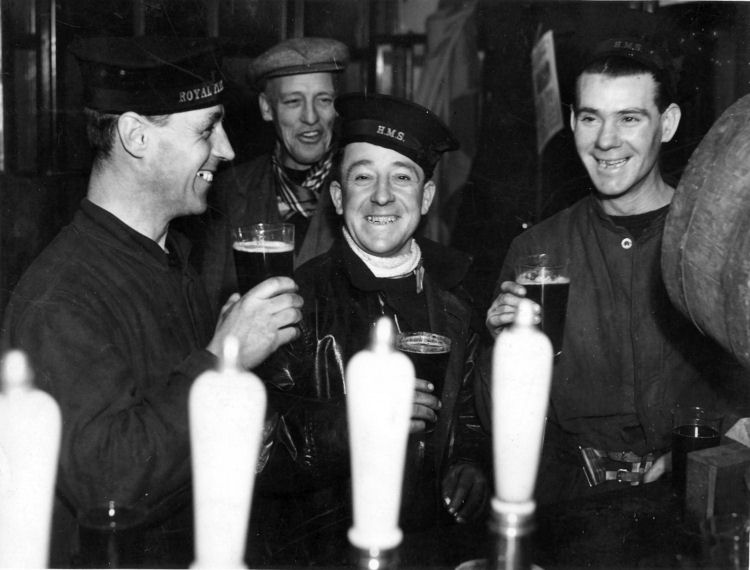
Members of Dover Patrol relaxing in 1940. By kind permission of Dover
Library ILL/250. |
 |
|
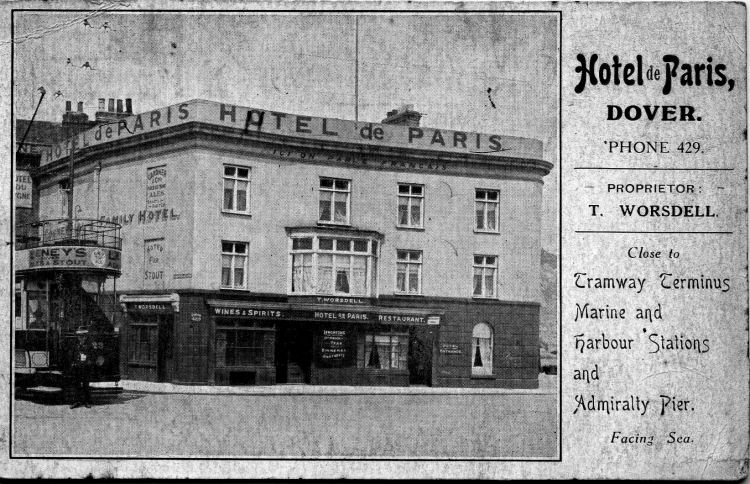
Above picture shows a business card circa 1920. (I have taken the
colour out of this to get a better image.) |
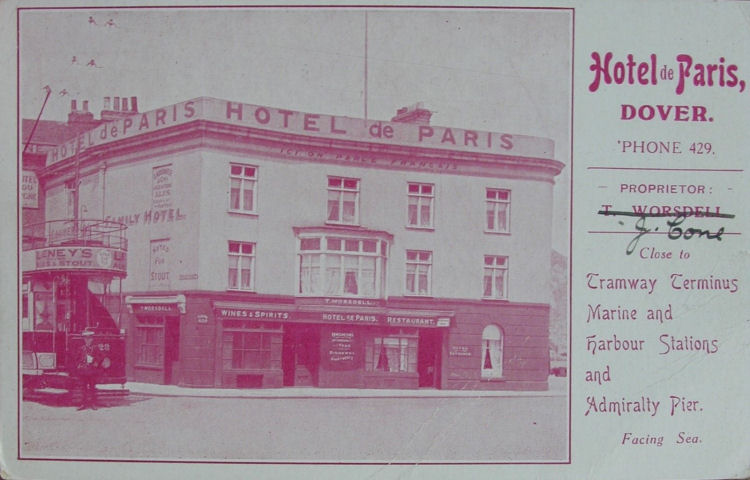
Same card, obviously changed hands with the pub, circa 1930. |
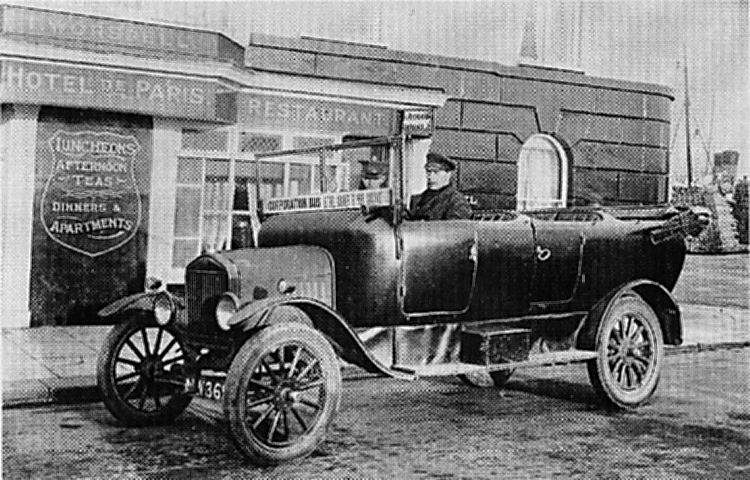
Model T Ford Charabanc seating for 18, outside the Hotel de Paris,
December 1925, after a gas explosion damaged the tram-car service and
this minibus service lasted all but 2 weeks while repairs were being
made.
|
|
From the Dover Express and East Kent News, Friday 10 May, 1889.
A SOLDIER DROPS DOWN DEAD
An inquest was held on Monday, at the “Hotel de Paris,” by the Borough
Coroner (Sydenham Payn, Esq.), on the body of a soldier named Francis
Watson, who died suddenly in one of the barrack rooms at the South East
Front, after hurrying up to get in before the last call.
The following gentlemen composed the Jury:- Messrs. R. Ford (foreman),
F. J. Ealding, A. Vincent, F. Lambert, F. Stephens, J. Baker, J. Parr,
R. Enright, C. Struckett, J. Jarry, E. H. Laurence.
After viewing the body, the following evidence was taken:-
Sergeant Patrick Foley, of the Royal Irish Fusiliers, stationed at the
South Front Barracks, said: I know the deceased; he is in the same
company as I am. His name is Francis Watson, and he is 19 years and 4
months old. I saw him last at 9.58 on Saturday evening at the South
Front Barracks. He came and answered to his name, and then proceeded to
his room. He was with Private Kearney. He appeared quite well, but
seemed out of breath from hurrying to the barracks. Within five minutes
of that time I was sent for, and it was reported to me that he had
fainted. I found him lying on his bed. He appeared as if he was in a
faint. His coat had been unbuttoned. I sent for a stretcher, and had him
taken to the Hospital immediately. I tried to revive him, but was
unsuccessful. I accompanied him to the Hospital. He was taken into the
detaining room. There was no doctor on duty at the time. One of the
orderlies expressed an opinion that deceased was dead. He joined the
regiment last August, and has been in hospital twice.
Francis Kearney, a private in the Royal Irish Fusiliers, said he was
with Watson about half-past seven on Friday evening, when they went to
the “Town Arms” public-house, and remained there nearly two hours. When
they left, and had got as far as the Town Hall, the gun fired. They
walked at a quick pace down the town and up by the hospital to the
barracks. They got in and answered their names. They both slept in the
same room. When they got into their room deceased began to undress. He
seemed all right. Witness then saw him drop back, so he loosened his
coat and got some water. Deceased was laid out flat, and assistance sent
for. He did not seem to recover. Witness helped to take deceased to the
hospital.
Francis Denham Frankland, a surgeon on the Medical Staff, said he was
orderly medical officer. On Saturday evening about eleven o'clock, in
consequence of a communication, he went to the hospital at the Western
Heights. He saw deceased lying in the detaining ward. The staff sergeant
in his letter said that a man had been brought in dead. Death had taken
place within two hours. He examined the body, but found no marks of
violence. His opinion, from hearing the evidence, was that death was due
to heart disease, accelerated by hurrying up to barracks.
A verdict was returned in accordance with the medical evidence.
|
|
From the Dover Express and East Kent News, Friday, 23 August, 1889. Price 1d.
SUICIDE IN TREVANION STREET
On Saturday afternoon about five o'clock, information was received at
the Police station that a man had died suddenly at 29, Trevanion Street.
A Police-constable was sent round with instructions to take a doctor.
Finding Dr. Marshall at home he took him round to the house. On going
upstairs they found a man lying dead on a bed in a room, which contained
no furniture but a bedstead and a straw palliasse. The body had every
appearance of death from natural causes. The Policeman and the doctor
questioned the widow of the man, and not being satisfied with her
replies they sent for the Coroner. He directed the body to be locked up,
and it was subsequently taken to the dead house. On Monday a post mortem
examination was made by Dr. Marshall and Dr. Baird, and it was found
that death had resulted from a corrosive poison, but the doctors could
not state positively what it was, but they suspected that it was cyanide
of potassium. The man had been employed at the Ordnance Stores, and
earned 24s. a week, but by absenting himself had been discharged. He was
also a pensioner receiving 7s. a week. His name was Harry Slater. An
inquest was held at the “Hotel de Paris” on Tuesday, at 4 p.m., before
the Borough Coroner (Sydenham Payn, Esq.)
The following gentlemen composed the Jury: Messrs. G. H. carrier
(foreman), E. Brown, A. Dawe, F. C. Bartholomew, E. Horsnaill, G. Bean,
G. Lester, W. Moffatt. T. Delahaye, G. Martin, M. Becker, James
Carpenter, and H. A. Coulson.
Annie Slater, the widow of the deceased, was the first witness called.
She said: I live at 29, Trevanion Street. The deceased had been
assistant foreman at the Ordnance Stores, Dover. His age was 47 years.
He was an Army pensioner. I left the house about ten o'clock on Saturday
morning to do a little charing. Previous to leaving the house I gave the
deceased 2d. I finished work about three o'clock and went home, where I
found my husband lying on the bed alone. My little girl was also in the
house. I said to him, “Harry, Harry, Harry,” as he looked rather queer.
He did not answer, and I sent at once for the Police. I saw a jam pot on
the table in the middle room. It was on the mantle when I went out. I
have not seen him drink out of it. There was nothing in the pot. When I
had sent for the Police I went back and found that the deceased was
quite dead then. He was not dead when I first went into the room. When I
went into the room the first time I saw him drinking out of the jam pot.
The Coroner here cautioned the witness, who appeared to be contradicting
herself, and asked if she did see him drinking out of the jar.
Witness: He was drinking out of the jar, when I first went into the
room.
The Coroner: Was it true that you tried to prevent him drinking out of
the jar?
Witness: Yes; I had quite a struggle to get it from him. I could not
prevent him taking it. I did not think he had taken any before I came
into the room. The little girl took possession of the jar and took it
from the room. My husband did not speak to me during the struggle. He
did not appear to be in pain afterwards. He died in about an hour, or a
little more perhaps. After the struggle I only said to him, “Harry,
Harry, Harry,” but he only shook his head – that was all that
transpired. I was quite sober at the time. We had no dispute. My husband
was dead when I sent the two boys for the Police. I did not find any
paper or bottle in the room. I was perfectly sober during the morning. I
have never heard my husband threaten to commit suicide. The house has
been destitute of furniture for the last six months. Before that time it
was well furnished. I sold the furniture. My husband's wages were £1 4s.
a week, and he also had a pension of 7s. a week. For the last three
weeks we have only had a little assistance from my friends in London. I
have been married 24 years.
The Coroner: Why did you try to take the jar away from him?
Witness: I have never seen him drink from it before.
The Coroner: Was that the only reason?
Witness: Well, there was a little red powder at the bottom.
The Coroner cautioned her again, and said if she did not give her
evidence more straightforwardly he would have to deal with her another
way.
Witness: There was no water in the jar; it was quite empty. The powder
was at the bottom and looked moist.
The Coroner: What became of the jar after the struggle?
Witness: It was rinsed out by my little girl, who wanted to drink out of
it.
The Coroner: Did you let your little girl have it after suspecting
something wrong and let her drink out of it?
Witness: She rinsed it out first. Ashe asked me for some water and I
told her to get in the jar.
The Coroner: What did your little girl say when you went home? (The
witness hesitated). If you do not tell me I shall have her up and give
you into custody.
Witness: She said her father had been bothering her to give him 2d. or
3d. to get a pint of beer. That was in the morning.
The Coroner: But what did she say when you came home?
Witness: She did not say anything. I went home three times between the
morning and the evening. On the first occasion when I returned, about an
hour after I went to work, he was standing by the mantel place. I
remained in the house half an hour, and then I left to get a loaf of
bread. When I returned he was lying on the bed. It was then about half
past eleven. It was then that the struggle took place, and he died about
half past twelve. This last story is the true version of the affair.
Whilst he was dying he was rolling his eyes and grinding his teeth.
After my husband was dead I asked a stranger in the street to go for a
surgeon. My little girl told me about half past two that he had taken
something out of a paper. She said that she thought that it was to make
sherbet. It was then I went into the room and we had the struggle.
The Coroner said he thought it was of no use going on any further. He
did not believe anything the woman had said.
After reading the evidence over to her the Coroner asked her if the man
died at half past twelve or half past two.
The woman said first he died at half past twelve, and then she said he
died at half past to.
The Coroner said he could not have died at both times.
Ellen Slater, the little girl in question, was then called. As she was
of tender years she was not sworn. She said: In the morning my father
had 2d. from my mother and he went out. He was absent a great part of
the morning, and returned about dinner time. He did not eat anything.
Mother was out. When he returned he lit the fire and boiled some water.
When it boiled he filled the white jar up. He had two packets – one he
put into his pocket and the other, in which there was some red powder,
he emptied into the jar. This he drank. He asked me to have some of it,
and told me it was sherbet. I did not drink any as he afterwards told
me it was poison. After drinking some of the contents of the jar, he
emptied the other packet in – it appeared to contain a white powder. He
filled the jar up with warm water. I went at once and told mother that
father had taken poison. She came home directly. He was drinking out of
the jar. Mother went up to him and tried to take the jar away, and spilt
some of the contents upon the floor. He then drank the remainder. Mother
then took the jar from father and put it in the cupboard under the bed.
I did not drink any water out of it. Father appeared to be in great
pain. Mother sent me out as soon as father died to see what the time
was; it was three o'clock. My mother rinsed the jar out soon after my
father died. She put it back in the same cupboard. Father burnt the
papers after he emptied the powders out. He never spoke after taking the
poison. He said “Good-bye” just before taking it.
Dr. Marshall said: On Saturday last about 5.40 p.m. a Police-constable
called at my house and asked me to see a man in Trevanion Street. I went
with him to 29, Trevanion Street. On going upstairs I saw the deceased
lying on his back on a straw mattress without any covering except his
clothes. He was quite dead. The body was not cold. He had been dead at
least two hours. The attitude of the body was composed, and there was no
evidence of vomiting or convulsions having occurred. The pupils of the
eyes were widely dilated. There were no marks of violence. There was
every appearance of death from natural causes. I saw the widow of the
deceased, but she was in such a mental condition that I could not get
anything from her. On Monday morning, having received instructions from
the Coroner I went with Dr. Baird to the dead-house and made a post
mortem examination of the deceased. Dr. Baird, in my presence, opened
the body. We found the internal organs quite healthy, and the body well
nourished, with the exception of the stomach, the mucus membrane of
which was in a state of intense congestion. Perforation had taken place,
and a large portion of the contents had escaped into the abdomen. I
believe that the congestion was caused by some corrosive poison, which
the deceased had swallowed. It is my belief that he had taken cyanide of
potassium. The condition of the stomach was quite sufficient to cause
his death.
T. Taylor, Sergeant in the Metropolitan Police, stationed at the
Ordnance Stores, Dover, said he knew the deceased well for the last
three years. He saw him outside the Ordnance Store at quarter one on
Saturday. He asked to see Conductor Lennington with reference to
obtaining a character. He left the Ordnance Store on the 30th ult.,
because he absented himself, and after four days was discharged. He was
rather addicted to drink. Mr. Lennington was engaged at the time
deceased called, and he said he would go to Mr. Lennington's house. He
was quite sober then.
J. Lennington said he was Conductor of the Stores at the Ordnance
Department. The deceased had been employed five years and ten months in
the department at Dover. He called at two o'clock at my house at 3,
Selbourne Terrace on the Folkestone Road. He asked me to get him a
character from my superiors. I told him I would see about it. He also
asked for 10s., but I did not let him have it. He promised to come to
the office in the afternoon. I did not see him afterward.
Police-constable Richards said that at 5.50 p.m. he was sent for from
the Police station to 29, Trevanion Street. He saw Mrs. Slater there,
and went into a little room and saw the deceased lying on a bed
apparently dead. He went for a doctor, and got Dr. Marshall. He searched
the room and found nothing but a bed and table. He found on the body the
papers produced, which had no relation to the case, and a purse
containing a full Martini Henri cartridge.
Mr. T. O. Sanders, Superintendent of Police, said he removed the body on
Sunday night to the dead-house. He also made enquiries at various
chemists, but he had been unsuccessful.
Sergeant Taylor said that cyanide of potassium was very much used in the
army for cleaning gold lace, and the deceased might easily have obtained
it.
The Coroner then summed up. He said that the evidence of the widow was
apparently quite worthless. It seemed quite certain that the deceased
drank some water during the afternoon into which he had put some
powders. There was no evidence to prove that this was poison, but if it
was, the suicide was a very determined one. The house appeared to be in
as miserable a condition as anyone could imagine. If they found that
deceased had committed suicide they would have to consider the state of
his mind. At two o'clock they find him talking quite rationally to Mr.
Lennington. He appeared also to have been quite rational when he was
talking to the daughter in the afternoon.
The Jury, after considerable discussion, brought in the following
verdict: “That the deceased committed suicide by taking poison, but
there was no evidence to show the state of his mind at the time.”
|
|
From the Dover Express and East Kent News, Friday, 20 December, 1889. Price 5d.
YOUNG MAN DROWNED
Last evening before six and seven o'clock, a young man named Lewis
Cornwall, a native of St. Peters, one of the crew of Mr. Bussey's ship,
Premier, fell overboard when coming ashore at Dover, and was drowned. An
inquest will be held this evening.
From the Dover Express and East Kent News, Friday, 27 December, 1889. Price 5d.
DROWNED IN DOVER HARBOUR. SERIOUS ALLEGATIONS
An inquest was held on Friday afternoon by the Borough Coroner (Sydenham
Payn, Esq.), at the “Hotel de Paris,” on the body of the young man Lewis
Cornwall, whose death we briefly reported in last weeks' Express. The
case at first assumed a serious aspect, as it was stated that some of
the crew of the vessel to which the deceased belonged had been
threatening, on Thursday afternoon, the throw Cornwall overboard. But
the evidence seemed to show that the deceased, in returning from the
Craig Alvah to the premier, must have stumbled over the mooring ropes,
or the handle of the crane, and fallen into the harbour, the heavy sea
boots which he was wearing, prevented him from making any efforts to
save himself by swimming. Mr. W. Bussey, the owner of the vessel, was
present at the enquiry.
Mr. A. Massey was chosen foreman, and the Jury proceeded to view the
body, and the spot where the deceased was found.
The following was the evidence taken:-
Lewis James Cornwall said: I am a cabinet maker by trade, living at St.
Peters, Isle of Thanet. The body lying at the dead-house is that of my
son Lewis Albert Cornwall. He was about 18 years of age, and a seaman in
the employ of Mr. Bussey, on board the premier. He has been aboard about
a month, and I last saw him alive on Saturday, he was then at home on
leave for a day. He said that the captain and mate were very kind to
him, but that one of the crew was a perfect fiend, and that he had
threatened his life. He went back on Sunday night. He was a very sober
lad. He once fell overboard at Sunderland, and being an excellent
swimmer, swam about for some time till he was picked up.
By the Foreman: He did not tell me the name of the man who had
threatened his life.
William Jackson, a private in the Rifle Brigade, said: I went on board
the Premier on Thursday evening about half-past six, to see a friend of
mine, Fred Farmley, one of the crew. As I was getting on board I met the
deceased, who was just getting over the side. He was the same man that
is now lying at the dead-house. I asked him where he was going, and he
said “on board the next ship, to get a piece of soap; we have none on
board.” The Premier lies by the Sunderland coal stores, alongside the
quay. A dark man followed me aboard, and we both went down to the
forecastle. There were two of the crew in there, and we all remained
below, talking for about twenty minutes, and then Farley went on deck to
throw a bone overboard. When he had gone up a few steps, we heard
someone shout, and Farmley cried out “Man overboard,” and we all rushed
up and jumped on to the quay. Someone shouted that he was under the
stern, but we then heard a groan in the direction of the bows. We ran to
the bows, but could not see anything. A man with a life-buoy ran up, and
we then saw bubbles come up, and the man got a grapnel and hooked the
body almost immediately. The crew of the next vessel hung a light over
the bow, and the body was got on to the quay, and attempts were made to
restore animation. A doctor was sent for immediately, but the attempts
were fruitless, and we afterwards took the body to the dead-house. There
is a crane close to the spot, and the handles stick out over the quay. I
have never heard any quarrelling on board the Premier, and did not hear
any on this occasion. As we were going on board, the deceased asked the
dark man for 2s.
John Short, a seaman belonging to the Craig Alvah, the ship referred to
above, said; The deceased came on board yesterday evening to borrow a
piece of soap, and he remained on board the vessel about a quarter of an
hour. He then left with the soap, and I heard him walk away to his ship,
and a few minutes afterwards I heard someone running about on deck, and
on going above I saw a lot of men standing close by the crane, and the
body of a man lying on the quay. When the deceased left our vessel I
only heard his steps, and I did not hear a splash or anything else.
There is a crane between out vessel and the Premier, and one night the
handle of it nearly knocked me overboard.
William Pitt, a seaman belonging to the James Simpson, which is lying at
the bottom of the slip-way, said: Last night between six and seven I was
going ashore from my vessel, when I heard something fall into the water,
and knowing from the sound that it was a man, I called out “man
overboard,” and on reaching the quay at the back of Cambridge Road, I
saw someone struggling in the water. As far as I could see there was
nobody on the quay. I ran round as fast as I could, but as I had to go
right round by Northampton Street, it took me some time. When I got
round, the body had been got out. I heard him cry out once when he was
in the water.
W. Hart, said: I am a watchman to the Dover Harbour Board, and about
half-past six I came out of the door at the top of the ballast quay, and
heard a man shouting that someone was overboard. I got down the
life-buoy which hangs on the coal stores, and ran towards the Premier
and Craig Alvah, as I knew that they were the only vessels in that
direction. I could not see anybody in the water but a man was hanging a
rope over the bows of the Craig Alvah and saying “Here catch hold of
this, sonny.” I then lay down on the quay, and saw bubbles coming up,
and I then ran for the grapnels and got hold of the body almost
immediately. The Craig Alvah then lowered a boat, and we got the body on
to the quay.
The Coroner: Could not the handles be taken off the crane at night, as I
think that they are very dangerous.
Witness: No they are fixed on by keys.
The Coroner said that the handles were a source of danger to strangers,
as they could not be seen at night.
William Thomas, a coloured man, said: I am a seaman living at 14,
Commercial Quay. I went on board the Premier between six and seven, as
stated by the witness Jackson. We all stayed below talking for about 20
minutes, when Farmley went on deck, and as he was going up he cried out
that someone was overboard. We then all ran up and jumped on the quay. I
am quite sure that no one left the vessel till then.
W. Wilson, an ordinary seaman, who was below with the last witness, said
that when they left off working the cargo about half-past five, they had
tea. After that they were about to wash, and they found that they had no
soap, and the deceased went to borrow a bit from the Craig Alvah. He had
a row with him in the afternoon, but they had made it up.
Mr. T. W. Colbeck, surgeon, said: I was called about a quarter to seven
yesterday evening to come to the Northampton Quay, and I went at once
and found four men trying to restore animation to the deceased, who was
lying on the quay. I examined him, and set them to work in a more
methodical manner, but after working for about half an hour, I found
that he was quite dead. I left the body in the hands of the Police, and
I have since examined the body but can find no marks. Death arose from
drowning. I had passed up the street close by, a few minutes before, but
everything was quiet then.
The father said he could not see how in the face of the evidence, his
son sank so quickly.
The doctor said that he was wearing a pair of heavy sea boots.
Frederick Farmley the other man who was in the forecastle, was then
called, and he corroborated the statement of Wilson, that none of them
left the forecastle. He said that sometimes the deceased and he had a
little fun together.
The captain of the Premier said that it was very funny.
The Coroner said that he thought the Captain had better be sworn.
Richard Pay, Master of the Premier, then came forward and was sworn. He
said that he was not on board when Cornwall was drowned. On Wednesday
evening the lad told him that he would be obliged to leave the vessel,
as he was frightened of his life, because of the conduct of the
witnesses, Farmley and Wilson. On the afternoon on which he was drowned
the last witness knocked him down and tried to jump on his head. He (the
Captain), told him that he would lock him up if he did not cease, but
Farmley said that he did not care, but would do for him.
The Coroner said that he did not think these threats were carried out.
If they believed the evidence it was a simple accident.
P.C. Brace said that he was called about five minutes to seven to see
the body, and it was removed to the dead-house when the doctor
pronounced life to be extinct. He searched it, but found nothing on it.
The Coroner in summing up said that there was not the slightest breath
of suspicion. It showed how silly it was to make use of idle threats,
and what complications they might lead to. He thought that the deceased
must have stumbled over the handle of the crane, and his heavy boots
caused him to sink immediately.
The Jury returned a verdict of “Accidental Death,” adding a rider
requesting the Coroner to communicate with the Harbour Authorities,
asking them to remove the handles of the cranes at night.
|
|
From the Dover Express and East Kent News, Friday, 13 February, 1891. Price 1d.
SUDDEN DEATH OF A SERGEANT
An inquest was held at the “Hotel de Paris,” by the Borough Coroner (Sydenham
Payn, Esq.), on Thursday afternoon, as to the death of John Hakes, a
sergeant in the Royal Fusiliers, who died suddenly in the mess room, at
the Shaft Barracks, on Sunday afternoon.
Mr. David Houlden was chosen foreman of the Jury.
After viewing the body, which was lying at the Mortuary at the Heights,
the following evidence was taken:-
Sergeant Clark, Royal Fusiliers, said that he knew Hakes, who was a
sergeant in the same regiment. He was in the Shaft Barracks mess room
about half-past three on Sunday, when he rose from the sofa on which he
had been lying, and, on going towards the table to get some water, fell
down. They thought he had fainted, and tried to restore him with water.
Finding he did not come to, the sergeant-major and the medical officer
were called; they came about ten minutes after, and pronounced life to
be extinct. The deceased had had his dinner with them, and appeared in
good health then. He had never complained of anything.
Police-sergeant Stevens said that he went to the Shaft Barracks about
four p.m. on Sunday. He there saw the body of the deceased lying on a
stretcher. He was informed that the medical officer had pronounced life
extinct, and he then directed the body to be removed to the Mortuary.
Horace Cocks, surgeon of the Medical Staff, at the Grand Barracks, said
that on Sunday, between half-past three and a quarter to four, he was
called to the deceased. He went almost immediately, and found him lying
on his back on a stretcher, death having recently taken place. There
were no marks of violence. The man had never been under his charge. He
could form no opinion as to the cause of death.
Sergeant Collins said that he knew Sergeant Hakes well; he had never
heard him complain of anything but a cold. Whilst out route marching
last week, and going up the hill, he remarked that they were going
rather fast. He always seemed in good health, and performed his duty. He
did not remember him ever being on the sick list here. He was present on
Sunday afternoon when deceased laid on the sofa after dinner. He saw him
get up and go towards the table for some water when he fell. He remained
still and did not struggle. The deceased was a sober man.
Lieutenant McMahon said he had known the sergeant for about five years.
He was thirty years of age, and had been in the regiment eleven years.
He produced the medical certificate, which showed that he had not been
attended since February, 1886.
The Coroner said that the enquiry should be adjourned for a post mortem.
The enquiry was accordingly adjourned till Wednesday afternoon.
At the adjourned inquest, Mr. Cocks, the military surgeon, stated that
he found, from the post mortem examination, that death arose from
rupture of the aneurism of the heart.
A verdict was returned accordingly.
|
|
From the Dover Express and East Kent News, Friday, 27 February, 1891. Price 1d.
SUDDEN DEATH OF A SERGEANT
An inquest was held at the “Hotel de Paris,” on Wednesday afternoon, by
the Borough Coroner (Sydenham Payn, Esq.), touching the death of Joseph
Pike, a Master Tailor and Sergeant in the Border Regiment, who was found
dead in the tailor's shop.
Mr. J. A. Beeching was chosen foreman of the Jury, and after the Jury
had viewed the body, which was lying at the mortuary at the heights, the
following evidence was taken:-
Captain Wardler, Border Regiment, said: The body lying at the mortuary
was that of Pike, last master tailor of the regiment. He was 29 years of
age, and had been in service since 1878. He had not been on the sick
list since he had been at Dover. He saw Pike the day of his death about
11 o'clock, and he appeared all right then.
James Neilson, a private in the Border Regiment, said that he worked in
the tailor's shop under Sergeant Pike. He last saw him alive the
previous day about 11 o'clock in the tailor's shop. He came into the
room, and after paying one of the men went downstairs into the cutting
room, and some time after he heard someone knocking at his door. He
opened the door, and, there was two men of the Regiment there; he then
went downstairs into the cutting room, and saw Pike lying between two
cutting boards, face downwards. There was nobody else in the room. He
then went upstairs, and informed the other two men in the shop, they
suggested that he should be shifted. Whilst they were talking Sergeant
Lyle came in; he went downstairs, and said he thought it was all up with
the deceased. He then stepped up to him, and took hold of his wrist
which was cold. The doctor was sent for, and in the meantime they turned
him over on his back. Pile was a healthy man, and they had only heard
him complain of a cough.
By the Foreman: he did not seem depressed.
Sergeant Lyle said that he went to the tailor's shop about half-past
twelve. Cassedy, one of the men in the shop said that he had better go
downstairs; he did so, and found Pike lying on his face on the floor. He
thought he was dead. He noticed a little blood on the floor close to his
face, and he reported the matter to the Adjutant and Medical Officer.
The deceased had complained of bad pains in the chest, and spit blood.
Robert Lockhart Ross Macleod, Surgeon of the Medical Staff stationed at
Dover, said that he examined the body, and found life to be extinct.
Pike had a contusion on his forehead and nose, such as would be caused
by a fall. The blood came from his nose. He made a post mortem
examination of the body that day, and found death resulted in stoppage
of the heart's action dependant upon valvular disease.
The Jury returned a verdict in accordance with the medical evidence.
|
|
From the Dover Express and East Kent News, Friday 10 February, 1893. 1d.
SUICIDE IN A BARN
An inquest was held yesterday by the Borough Coroner (Sydenham Payn,
Esq.), at the “Hotel de Paris,” on the body of a labourer names Stephen
Brown, who lived at 26, Peter Street, employed by Mr. Bailey, of Barton
Farm, who had that morning, shortly before eight o'clock, been found
hanging dead in a loft in the barn. Mrs, Brown, the deceased's wife,
said that she left home on Tuesday evening slightly the worse for drink,
and she had not seen him since. A son of the deceased said that when he
left home he said, “You can have poor grandfather's coat and my watch
when I'm dead.” Mr. Ash, the bailiff of the farm, said that the deceased
did not return to work after dinner time on Tuesday, and he sent a man
after him. Deceased was found in the “Town Arms” unfit for work. That
morning he saw deceased in a loft in the barn, and sent a man named
Arnold to tell him to come down and speak to witness, but Arnold saw
there was something wrong, and they found that brown was hanging by a
piece of cord, and was quite dead and cold. The police were sent for,
and deceased was cut down and taken to the dead house. Mr. Walters said
that death was due to strangulation. Mr. Ash also stated that he had
told deceased on one occasion when he was the worse for drink, that the
next time he would be discharged.
The Jury returned a verdict of suicide whilst in an unsound state of
mind.
|
|
From the Dover Express and East Kent News, Friday 19 May, 1893. Price 1d.
TERRIBLE ACCIDENT AT THE CHANNEL TUNNEL WORKS
TWO MEN KILLED
A very shocking accident happened early on Monday morning at the Channel
Tunnel works on the west side of Shakespeare Cliff. The tunnel, which is
a mile and a quarter in length, was commenced about the year 1880, but
after a time the Government ordered the works to stop, and since that
time nothing more has been done to extend the boring. But the part that
had been done has been carefully looked after, the supports being
renewed from time to time and the tunnel carefully kept clear of water.
At various points of the tunnel the boring has been enlarged and made
square, the sides being supported by wood. At the end of last week the
men employed at the works were engaged I renewing the wood at No. 2
heading, some 500 yards from the shaft. On Monday five men named J.
Wigman, Fisher, Horton, Hobbs, and Bailey, descended with the intention
of putting up new woodwork, or sets as technically termed. Previous to
the men entering the tunnel the air pump above had been at work for
about an hour, sending air down to the end of the tunnel in pipes, so as
to clear the atmosphere. The men had proceeded some distance when they
perceived smoke, and sent J. Wigman back to inform the foreman, Mr.
Wetton. He, with W. Wigman, the foreman of the miners, descended, and
with the other men entered the smoke for some distance. At length, as it
became denser, they commenced to return, but unfortunately Fisher
happened to knock his hat off, and in stooping down to pick it up
breathed some carbonic acid gas, which had according to natural laws
fallen into the bottom of the tunnel. This made him nearly insensible,
and his comrades assisted him back. Unfortunately, Wigman and Wetton,
who were dragging him along, also became affected, and, although they
got him some distance, they were at length obliged to leave him. They
all went back to the tunnel shaft but Fisher, and Horton, when told by
Wetton that Fisher was behind, went back to him. Wetton obtained the
assistance of five more men – Waller, Sageman, cave, Hopkins, and How –
who took a trolley to where Horton and Fisher were and placed both men
on it. The rescuers however could not proceed very far when they in turn
became affected, and Sageman unconscious. However, Wetto broke the air
pipe with a sledge hammer, and the air thus obtained revived the men and
the whole were brought to the top. Horton and Fisher appeared to be
dead, and several of the other men were very bad. A special train from
Dover brought Do. Colbeck, who succeeded in getting all but Horton and
Fisher round. The bodies of these two men were brought back to Dover in
the special, and also the other men who were sent to their homes, the
bodies being removed to the mortuary on the North Pier. The cause of the
smoke was not determined for certain, but it is thought that some wood
belonging to the old set caught alight on Saturday and smouldered till
the Monday morning. The burning of this wood would cause the formation
of carbonic acid gas, a deadly poison. The air sent down by the
compressor would only slowly move this, and the fact that the smoke did
not travel with the air and warn the men that there was something wrong
before they entered the tunnel is accounted for, in that smoke does not
travel as fast as air, and would hand behind. Both the deceased are
married with large families and reside in Dover.
The inquest was held at the “Hotel de Paris” on Tuesday afternoon by the
Borough Coroner (Sydenham payn, Esq.) The following composed the Jury:
Messrs. W. H. Wright, (foreman), George Attwood, A. Calvert, T. Manser,
H. W. day, H. J. Myhill, T. Tomalin, E. Turney, J. Torr, A. Hambrook, H.
W. Rolfe, H. W. Winchester, W. W. Lord, F. Hoskins.
The Coroner, in opening the inquiry, said that they had been called
together that afternoon to enquire into the sad death of two men,
Charles Horton and Henry Fisher. He was informed that on Monday morning
early several men were proceeding down the works of the Channel Tunnel,
and had not gone very far when they met with some foul air, and two of
their number became overpowered and unfortunately lost their lives. Of
course they would have to inquire into the matter and see how it
occurred, and if there was any blame, or whether it was one of those
unfortunate accidents that sometimes occur. The bodies were lying in the
mortuary, and after viewing them they would come back and take the
evidence.
The following was the evidence:-
Thomas Fisher said he lived at Faversham. He had been to the mortuary,
and one of the bodies was that of his brother, Henry Fisher, a labourer
employed on the shaft at the Channel Tunnel works. He had been in that
employment for eleven years. He was 34 years of age, married and had
five children.
James Horton said he lived at 1, Chiltern gardens, Folkestone Road, and
the body at the mortuary was that of his father, Charles John Horton, a
labourer. He was 46 years of age last October, was married, and had
eight children. He last saw his father alive at half past five on Monday
morning. He had worked at the Channel Tunnel works for the last five or
six years. He never heard his father make any complaint.
The Coroner, to Mr. Wetton, the foreman at the Channel Tunnel: have
these works any connection with the coal undertaking?
Mr. Wetton said they had not.
The Coroner said he asked the question as if it had anything to do with
the coal mine he would have to adjourn, and report the matter to the
Secretary of State.
Edmund Wetton said he was foreman and engineer employed at the Channel
Tunnel works, near Shakespeare Cliff. Yesterday morning about 6.45 he
arrived at the works from his residence at Maxton. He went into the
engine-room, where the engines pump the air into the farther end of the
tunnel. The tunnel was a mile and a quarter long, and the shaft 164 feet
deep. At 7.10 the driver of the engines informed witness that the
engines started at 6.30. Five men then descended the tunnel. They
included Horton and Fisher. They went down in an ordinary skip. Witness
was on the surface and saw them go down. They were going to repair No. 2
heading. Witness had not got a plan. The headings were an enlargement of
the tunnel, and there were four of them. Witness had been given to
understand that they were the commencement of making the tunnel to its
proper width at these parts. At 7.30 witness was in the shops when one
of the men J. Wigman, who had gone down, came up to witness and told him
that there was some smoke in the tunnel and he thought there must be
some fire. Witness ordered the compression to be put on faster so as to
send more air. They had been working with 40 lbs. pressure of steam when
witness first saw them. The pressure had always been sufficient to clear
the tunnel. Then W. Wigman, J. Wigman, and witness started at once and
went down the shaft to see what was on fire. They had walked about 350
yards when they found smoke and went about 100 yards in it. It was
rather thick. When Wigman came up he had left Henry Fisher, Charles
Bailey, Charles Horton, and H. Hobbs below. These men were sitting on
some pipes about a hundred yards outside the smoke. Fisher got up and
went down the tunnel with W. Wigman some twenty yards in advance of
witness. They intended to go through the smoke to put out the fire. They
could see no fire, but the smoke had the smell of burnt wood. They had
got about 100 yards in the smoke, and as the smoke was getting thicker
he called the two in front to come back. They could see each other as
they had lamps. They said “all right we will come back.” The smoke was
thicker at the bottom. All three had lights. They used both lamps and
candles in the tunnel. As Fisher was returning to witness, he knocked
his hat off against a ring. He stooped down to pick it up and
immediately became insensible. He fell on the ground and got up and came
to witness but he could see that he had lost all power of himself.
Witness and W. Wigman got hold of him and dragged him 100 yards and
Wigman became affected and had to go on alone. Witness dragged Fisher
another 40 yards and then witness became affected. The air at this time
was very bad at the bottom, but all right at the top. The tunnel was
about seven feet high. Witness was then obliged to leave Fisher, he got
about 30 yards when he met the deceased, Horton, who was waiting for
them. Witness and Horton returned to Fisher and dragged him another 20
yards. Witness was then obliged to give up. Horton stayed with Fisher
whilst witness went to the bottom for assistance. The air was then
getting worse, it being driven up towards the bottom of the shaft.
Witness got to the bottom of the shaft and called out for assistance. C.
Waller, G. Cave, H. Sageman, I. Hopkins, and S. Howing came down and
took a trolly down the tunnel and placed Horton and Fisher who were both
unconscious then on it, and brought then to within 100 yards of the
shaft bottom when the rescuers were overpowered. Witness got two more to
go down, Ayling and Avery, Ayling carried Sageman, and Brizley pulled
the trolley to the bottom of the shaft. Witness then went down and broke
the air pipes about fifty yards from the bottom of the shaft so that the
bad air might be driven back and they might get some more air. That had
the desired effect and the men were all sent up to the surface. Fisher
appeared to be dead. Witness was the last to come out; he had worked at
the tunnel 11 years. The men had been last at work on it the previous
Saturday and also on the Friday. Men went down the tunnel every day, and
at 2 p.m. on Saturday everything was in order. No one went down the
tunnel on Sundays. The air compression did not work on Sundays. They had
never had any trouble with foul air. He had been down the tunnel that
morning with W. Wigman, C. Waller and J. Hopkins. They only went about
50 yards, the fire was still smouldering and the smoke was coming up.
The compressing engine was in good order. Witness thought that the fire
arose from a candle which had been left on the old timber on Saturday.
Fisher, Horton, Wigman and Bailey worked in the tunnel on Saturday. They
were engaged in removing old set and putting in new. The old set vas
very dry and would easily catch alight. The men were using candles.
Mr. Day, a Juryman, asked how the air was pumped down.
The witness said it was by means of cylinders and they were perfectly in
order.
Mr Day: Do you think sufficient time elapsed for the air to go through?
Witness: Yes.
Mr. Day: Why did it not drive the smoke more than half way?
Witness was unable to say.
By the Coroner: The air was forced through pipes to the end of the
tunnel.
Mr. Day: It is my opinion that you do not have sufficient pressure to
send the air back.
By Mr. Day: The pumps were stopped every fortnight and examined. There
were three sets. Mr. Waller examined the pumps. They had steam gauges on
the air pumps, and they showed that 10lbs. pressure of air was usually
used, but they could go as high as 20 lbs.
By the Coroner: He could not account for the smoke not reaching the
shaft.
James Wigman, 61, Oxenden Street, said he was employed at the Tunnel
works as a labourer. On Monday morning at 7.10, witness, with four
others, including Fisher and Horton, descended the shaft. Mr. Wetton
told them to go down into No. 2 square heading and put in a new set. On
reaching the bottom they found the new timber on a trolley. They got
their light s ready. One lamp and two candles. Three of them proceeded
down the tunnel – witness, Hobbs and Bailey – with the trolley of wood,
and the two deceased, Horton and Fisher, followed them. After they had
got down 300 yards they noticed the lights were glimmering. Witness took
the candle off and saw that there was nothing the matter with it. They
could smell smoke, and then, leaving the trolley, they proceeded another
100 yards in, and found smoke working up all of a heap and getting
thick. They left the trolleys where they were and went back to within
ten yards of the shaft bottom. There was no smoke at the bottom then.
Witness left the other four sitting on the main pipe, and witness
ascended again to report to Mr. Wettob. Mr. Wetton and Mr. W. Wigman
accompanied witness to the bottom. Mr. Wigman was foreman miner. The
other men accompanied them up the tunnel and they met the smoke a
hundred yards nearer than when they left it. By the time they reached
the smoke a second time half an hour must have elapsed. When they got
down about 300 yards the second time he found that he was being
overcome. He started to return again and met C. Bailey, who was
following behind them. He accompanied witness back, and Hobbs, whom they
also met came back with them. Hobbs after a little time fell, and
witness and Bailey got him to the shaft bottom, where they became
helpless, and witness knew nothing more until he found himself at the
top. Witness was working in the shaft on Saturday. They were working in
No. 2 heading, 500 yards from the bottom of the shaft. They have been
using two or three candles. All that were alight were blown out except
two candles, which were used to light them back. One had been stood on
the main pipe, and one on the chalk face, these two were blown out and
left sticking there. They had not been smoking, it being strictly
prohibited. Witness blew out both of the candles. They left the tunnel
about twelve o'clock on Saturday. The side and the head trees of the old
set were brought out on Saturday and only the rubbish left behind. The
candles were over the rubbish, which was in the face of the wood which
had rotted off, and was very dry. Only a fortnight ago all the rubbish
in the tunnel had been removed. There were several taps on the air pipe
to let in the air at various parts of the tunnel, but witness had never
used them to see if they worked.
The Coroner suggested that the inquiry should be adjourned and the works
visited.
Mr. Lord said they would be agreeable but an order would have to be
obtained from Mr. Brady.
The Coroner said he would take the doctor's evidence, and if the Jury
would like to go and view the works arrangements would be made.
The foreman suggested that the Board of Trade should be asked to send an
Inspector down.
The Coroner said he would do so.
Dr. Colbeck said that at twenty-five minutes past eight he was called to
the South Eastern Railway Station. He was told that there had been an
accident at the Channel Tunnel works. Witness at once proceeded to the
station and found a train waiting there, and as soon as an engine had
been attached witness and Mr. Lord, the station master, proceeded to the
works. He found two men lying on the ground and the men were trying to
restore animation. Three others were sitting about on the grass or beach
in an exhausted state. Witness at once set to work on the worst cases,
whilst Mr. Lord administered restoratives to the others and they came
round and were taken home. Fisher was quite dead, and as there was some
uncertainty about Horton they persisted in their efforts for a full half
hour, until they were quite certain he was dead. The men who were alive
were brought back in the train and sent home. In both cases death was
due to poisoning by carbonic acid gas. Carbonic gas would be produced by
fire, and especially by wood burning. The gas was very much heavier than
air. A certain measure of air would be 30 and carbonic acid would be 37
and would sink to the bottom. The air would be blown over the gas.
The Coroner: Granted that carbonic acid gas sunk to the bottom, how
would you account for it not driving out the smoke which was lighter and
floating on the top?
Witness was unable to say. He wished to add that great praise was due to
a man named Croucher, an inspector from Folkestone, who was carrying
out, when witness arrived, the best method of restoration.
Mr. C. Waller said he was a turner employed at the Channel Tunnel Works.
The air compressors were looked at daily. Witness had been at the works
since 1882. He never found any defects in the machinery and there were
none at present. About a month ago there had been a thorough overhaul of
the machinery. Witness was at the works on Monday morning, and went down
with the third rescue party. The engine driver could tell exactly the
amount of air going into the tunnel.
The Coroner asked if witness would explain if the engines were working
properly why the smoke was not driven out of the shaft? Witness was
unable to answer.
It was decided to adjourn the inquiry till the 25th inst., at 3 p.m., so
that further evidence of a scientific character might be obtained.
|
|
From the Dover Express and East Kent News, Friday 26 May, 1893. 1d.
ADJOURNED INQUEST
The adjourned inquest on the two men Horton and Fisher, who met their
death on Monday week in the Channel Tunnel, was resumed at the “Hotel de
Paris,” yesterday afternoon, by the Borough Coroner (Sydenham Payn,
Esq.)
The Coroner in re-opening the enquiry said that on the last occasion the
inquiry had been adjourned for the purpose of obtaining additional
evidence, also for the inspection of the works and machinery by an
engineer, and communicating with the Board of Trade. He then read a
letter he had received from the Board of Trade stating that after
considering the facts that it was not a case in which the Board of Trade
felt called upon to direct an official to attend. He had then instructed
Mr. Thomas to inspect the pumps and machinery. He had done so on Friday.
Unfortunately the tunnel could not be entered owing to the presence of
gasses. He suggested that after they had taken the evidence that the
enquiry should again be adjourned to some time when an examination of
the tunnel could be made.
Mr. L. W. Thomas an engineer carrying on business at the iron Foundry,
said that he visited the Channel Tunnel Works on the 19th inst. He found
a pair of steam engines at work, 16 inch cylinders, and 24 inch stroke
working at 35lbs. of steam. The wind gauge on the pumps showed 2lbs on
the square inch. The steam engines were worked up to 60 revolutions a
minute and they obtained 12lbs. pressure which he considered was amply
sufficient for all purposes. The engines and machinery were in good
order.
Several of the Jury expressed an opinion that the compressors should be
taken to pieces, but the witness explained that the gauge showed that
the engine was in good order without it being taken to pieces.
Mr. F. Wetton, the foreman at the Channel Tunnel Works, was re-called.
He said that on Monday they descended the shaft and proceeded along the
tunnel about 50 yards to where the broken pipe was. This that had
replaced. The engines had worked continuously, night and day. The tunnel
smells very strongly of turps and burning wood, and was not fit to go
into. There was very little smoke. A light would burn at the top but
would go out at the bottom. He thought that the fire was still
smouldering.
Charles Jones, the engine driver, who had been sent for from the Channel
Tunnel, said that the engines worked well on the morning of the
accident.
After some conversation it was decided to adjourn the inquiry till June
the 7th, and that the Jury should descend the tunnel as soon as it was
cleared.
|
|
From the Dover Express and East Kent News, Friday 2 June, 1893. 1d.
THE CHANNEL TUNNEL
The Coroners Jury who are enquiring into the death of Fisher and Horton
visited the Channel Tunnel on Monday. The fire had burnt itself out, and
the air had been cleared so that the Jury were able to get as far as the
end of the tunnel, that is a mile and a half under the sea. We
understand that traces of fire were found but the origin is still a
mystery. In one place in the tunnel several candles for the use of the
men were found hung from the roof, and they were not even melted showing
that there was no great heat. The adjourned enquiry will be resumed next
Wednesday afternoon.
|
|
From the Dover Express and East Kent News, Friday 9 June, 1893. 1d.
THE CHANNEL TUNNEL DISASTER
The adjourned inquest on the two men, Horton and Fisher, who met their
deaths in the Channel Tunnel on May 15th, was resumed at the “Hotel de
Paris,” on Wednesday afternoon. The Jury since the last inquiry visited
the Tunnel on the 26th ult.
The Coroner said that he supposed it was not the Jury's intention to
hear any further evidence, as that had after their visit to the tunnel
intimated that they were satisfied what the real cause of the outbreak
and all the trouble was.
The Foreman said that as far as he was concerned he did not want any
further evidence. They went to the end of the tunnel and the engines and
everything were all right.
The Coroner first congratulated the Jury on the safe termination of
their expedition to the end of the Tunnel the other day. He also thought
their thanks were due to those gentlemen of the South Eastern Railway
who arranged for their conveyance to the spot, and also to the Company
for the facilities offered. The Coroner then summed up the evidence,
which has already been published, at some length. In conclusion, he said
that everything seemed to be in perfect order, until this occurrence.
They had been round the engine houses and examined them, so far as they
can been seen externally and they had also had opportunity of going down
the tunnel. They had been to heading No. 2, and there were evidences
very marked of a fire having broken out, probably caused by the
upsetting of a candle, or a candle having been left down and caught the
rotten wood. If they were satisfied that the matter was an accident they
should say so by their verdict. He did not know if there were any
suggestion they might wish to make for the future safety of the men. It
was an extraordinary event, and the unforeseen will happen in this life.
The room was then cleared for the Jury to consider their verdict, and
after a discussion of an hour and twenty minutes they intimated they had
come to the following decision. “That the deceased were accidentally
poisoned by carbonic acid gas, caused by a fire of which there was no
evidence to show how it occurred.” The Jury begged to make the following
suggestions, that more air cocks be placed in the pipes and also that
there should be means of communication from the tunnel to the surface.
They considered if these precautions had been taken that these poor men
might have been saved.
The Jury said they also wished to express their thanks to Mr. Lord,
Superintendent, Mr. Crosier, Inspector, Folkestone, and Wetton, foreman
of the Works, for their great assistance to the unfortunate men at the
time of the accident.
The Coroner said that he entirely agreed with those remarks. He thought
everyone connected with the case acted in a very high manner. He was not
sure but that Horton succumbed in trying to help his friend. The facts
of the case throughout showed that great credit was due to those present
for the manner in which they had risked their lives in trying to save
others.
Mr. Atwood, one of the Jury said that they would be glad to know if the
Company would do something for the wives and children of the men, as
they had lost their lives in trying to discover how the fire occurred.
The Coroner said he thought they had better keep to their strict duties.
He was sure the Company would do what was proper in the case. They had
always acted honourably.
|
|
From the Dover Express and East Kent News, Friday 28 December, 1894. 1d.
SHOCKING ACCIDENT AT BUCKLAND JUNCTION
A MAN CUT TO PIECES
A shocking accident occurred on the London and Chatham railway just
below the Buckland junction of the Deal line on Christmas night. The
last train on arriving at the Priory reported that it had run over or
though something, and a shunter being sent up the line to see what was
the matter found the various severed limbs of a man's body on the
railroad. The remains were collected and removed to the dead-house on
the police ambulance. It appears that the deceased's name was Thomas
Hill, and he was employed as a stoker at the Gas Works. On Christmas
night he went out at ten, as is usual, to get his supper, but did not
return within the regular time, and it is supposed he was trying to get
into the Works over the wall when he was knocked down. The Inquest was
held at the “Hotel de Paris” yesterday afternoon by the Borough Coroner,
Sydenham Payn, Esq.
The following gentlemen composed the Jury: Mr. F. Wood (foreman),
Messrs. J. Parton, R. Adams, A. Saville, F. Putney, J. B. Green, G.
Spain, F. Wood, D. Doyle, W. Berry, F. Faith, A. White, F. C.
Bartholomew, F. R. Seear, B. Cullingham, and S. G. Cheasmen.
The Coroner in opening the enquiry said that he was very sorry to have
to call them together at this festive time to take part in a very sad
inquiry. He was informed that the deceased Thomas Hill was found
decapitated on the line close to the Gas Works on the night of Tuesday
between 10 and 11. There were several witnesses who would no doubt
enable them to say how the man came in the line, and how the accident,
if it were one, happened.
Mr. Cass, Stationmaster, Dover, and Mr. Walker, Locomotive
Superintendent appeared for the London, Chatham and Dover Railway
Company, and Mr. Fielding for the Gas Company.
Stephen Hills, a bricklayer's labourer, living at St. Peter's in the
Isle of Thanet, said that he had seen the body at the Mortuary, and it
was of his brother Thomas James Hills, 25 years of age. He was a stoker
at the Dover Gas Works.
Thomas Pybus, foreman of the Gas Company's Works, Buckland, said that
the deceased was a stoker at the Work, and had been employed there about
nine years. Witness last saw him alive at work a little after nine on
Tuesday. He came on about six o'clock and would stop until six the next
morning. After he had done the draw, he would leave at ten minutes to
ten. He was quite sober when witness last saw him. He lodged at 81,
London Road. The deceased should return about a quarter to eleven from
supper. On ordinary occasions he would come though the gate which would
be open until midnight. Witness was informed shortly before twelve that
the deceased was missing, and about twelve o'clock a foreman of the
porters from the Priory Station came to the gate, and witness then went
onto the railroad close to the bridge on St. Radigund's Road and on the
down line he saw the body of the deceased lying in an oblique direction
with his head towards Kearsney. By the light of a lamp he saw that the
deceased's head was off lying in the six-feet-way. One of the legs was
torn off and an arm cut in two. The police and the ambulance were then
sent for and the deceased removed to the mortuary. The next morning
witness went to the spot but there was only blood where the leg was
found. To get on to the railway there are several fences and a hedge to
get through.
Cross-examined by the Jury: The way the deceased was crossing the
railway would be a short cut to the Works. The deceased ought to have
been back at a quarter to eleven. If he was not there then, witness
would be informed. He was so informed at a quarter to twelve.
John Blackman, a labourer, working at the gas Works, said he last saw
the deceased about ten o'clock at the “New Endeavour” public house.
Witness was only in there a few minutes, and they then came out, as the
house was being closed. Witness went home, and left the deceased (who
said he was going to get some supper) in the roadway with some of his
mates. Witness was not aware that it was the practice of the men to go
by this short cut.
William F. Clackett, a local coal porter, employed by the L. C. & D.
Railway, living at 125, London Road, said that the deceased lodged with
him. On Tuesday night at 25 minutes to eleven he came in to get some
supper. He was perfectly sober. He left at a quarter to eleven, and
witness saw him turn up St. Radigund's Road. Witness had no idea that
the deceased ever went across the line to the works, he usually went by
Magdala Road. He had lodged with the deceased about eighteen months.
Edward Knivett, an engine driver on the L.C.D.R., said that on the
Tuesday night he was in charge of the 10.25 train from Deal. They were,
however, fifteen minutes late in starting. On crossing the St.
Radigund's Road Bridge, witness felt a slight jumping of the engine. On
arriving at the Priory Station, witness told the shunter that there was
something wrong on the line near the Gas Works, and that he had better
see what was the matter. There was no mark on the engine, and the
railroad was quite straight. They crossed the bridge about 11.p.m.
George Richards shunter at the Priory Station, said that on Tuesday
night the last witness reported that he had run over something at St.
Radigund's Road Bridge. Witness walked up the line with a light. He
found the deceased on the Priory Station side of the bridge. The body
was lying on the outside of the down line. Witness went for assistance
and for the police. He could not find one at first, and went to the
signal box and telegraphed to the Priory Station, but when he got back a
policeman was there.
Mr. W. W. Ord, surgeon, said he was called to the mortuary on Wednesday
morning at 2.15, and saw the body of the deceased. The head was
completely separated from the body, and the features smashed. The left
arm was severed and the left leg torn. The right arm and leg were both
fetched, and the body had every appearance of being run over by a train.
Death must have been instantaneous.
The Coroner briefly summed up the evidence, and pointed out that the
probability would be that the deceased did not want to get to his work
late, and was making a short cut, and either stumbled or was caught by
the buffers in crossing the bridge, and being thrown on the line,
accidentally met his death in going to his work.
The Jury, without hesitation, returned a verdict of accidental death.
|
|
From the Dover Express and East Kent News, Friday 18 January, 1895. Price 1d.
DEATH ON A COLD MORNING
Mr. S. Payn, Coroner for the Borough and its Liberties held an
inquest on Monday afternoon at the “Hotel de Paris,” on the body of
Christopher Border, a man who had been in employ of the London, Chatham
and Dover Railway Company. He had gone to work about 5 o'clock on the
Admiralty Pier and it is believed that the intense cold was more than he
could stand. Soon after going there he became faint; two of his comrades
carried him home to No. 1, Paradise Street and just as he arrived there
he died. Dr. Best was sent for, but on his arrival life being extinct an
inquest was considered necessary.
At the inquest Thomas W. Norris deceased's son-in-law identified the
body.
John Martin, foreman of the Continental Goods department said that the
deceased was hauling on a rope when he said he did not feel well and
walked away saying he was going home. After going a little way he became
worse and was taken home on a barrow.
It appears from further evidence that the deceased had been suffering
from shortness of breath all the week and that he died before the doctor
arrived.
The verdict was that the deceased died of syncope following an attack of
asthma.
|
|
From the Dover Express and East Kent News, Friday, 8 February, 1895.
DEATH OF A CHILD
An inquest was held at the “Hotel de Paris” on Monday afternoon, by the
Borough Coroner (Sydenham Payn, Esq.) on the body of a little child,
William Scott Holland, which on the previous Friday had been found dead
in bed. Mr. A. Dane was foreman of the Jury.
Mrs. E. Holland said that he husband was William John Holland, a Custom
House Officer, living at 18, Bulwark Street. The little boy lying dead
was her son, William Scott Holland, aged 5 months and two weeks, the
child had had a cough for about a week past, but not bad enough to call
in a doctor. On Thursday night she went to bed about eleven o'clock. The
baby was then in bed. After nursing the child witness laid it on the
pillow. Witness was alone, her husband being on duty. About half-past
seven the next morning witness was aroused by her husband's brother
coming downstairs. Looking to the child, which was in the same position
as witness had placed him the previous night, she saw that something was
the matter, but did not then think it was dead. She went down and told
her husband's brother, and on returning with him, found that it was
dead. A doctor was sent for. The child's head was not under the clothes,
and had only on the head a little flannel which was clear from the face.
The one side of the child, face and body, appeared to be dark. The bed
was a large one and the child was over a foot from witness.
Dr. W. J. D. Best said that he was called on Friday about eight o'clock.
He found the child dead on its back in the bed. Rigor mortis had set in
and death must have occurred six hours. The whole of the left hand side
of the child's body which was dark was the result of post mortem
staining, showing that the child had died on that side and remained so
some considerable time after death. The staining also showed that the
blood was not properly aerated at the time of death and from these
conditions witness surmised that the breathing was interfered with, and
the child was by some means suffocated, either by the bed clothes or by
lying on its face.
The Jury returned a verdict of “Accidental Death” in accordance with the
medical evidence.
|
|
From the Dover Express and East Kent News, Friday, 15 February, 1895.
TRAGIC SUICIDE IN SNARGATE STREET
On Friday afternoon Alfred Jones, an assistant to Mr. L. Thomas,
Chemist, 181, Snargate Street, committed suicide in a most tragic manner
at that establishment. The inquest was held at the “Hotel de Paris” on
Monday afternoon by the Borough Coroner, Sydenham Payn, Esq. the
following gentlemen composed the Jury: Mr. C. L. Adams, (foreman), C. G.
Mason, A. White, R. Ford, H. Darricote, W. Merrells, J. Jarry, L. Eason,
J. Head, J. Graves, W. Johnstone, C. R. Baker, F. W. Heatley, J.
Hookaway, and W. Hard.
Thomas Gregory, a master mariner, living at Port Levan, Cornwall, said
that the body at the mortuary was that of his nephew, Alfred Clifton
James. He was an apprentice to a chemist and druggist and was 20 years
of age. Witness received a letter from the deceased, dated last Thursday
– rather an unusual circumstance, it being the first letter witness had
received. There was nothing in the letter except stating that he had
neuralgia in the head.
Mr. Lewis Thompson, chemist, carrying on business at 181, Snargate
Street, Dover, said that the deceased was an assistant in his employ,
and had been with him since September 3rd. the deceased was given notice
to leave a week previous, which would have expired in a month. The
notice was in consequence of carelessness. On the Thursday evening
witness had a visit from a commercial traveller, and he made a
communication to witness in reference to the young man. It was in regard
to some mistake with the accounts, and confirmed some doubt witness had
as to the deceased's honesty. On Friday the deceased said he had
received a letter from his parents enquiring why he was leaving, and
asking if witness would give him a reference. That occurred about two
o'clock, and was in the shop. Witness said he would give him a
character, but not a flowery one because of the mistake he had made.
Deceased said, “Do you think I am honest?” and witness replied, “I never
charged you with dishonesty.” Witness also said, “If you will study my
interests until the end of your time, I have no doubt that it will be
right in the end,” that was in reference to the character. Witness knew
there was something wrong with the deceased's accounts, and after
leaving him he went upstairs, and having thought the matter over, went
down again and taxed him with dishonesty, and he admitted it. Witness
added, “You asked if I thought you were honest. I shall answer it now; I
do not.” The deceased denied it at first, but afterwards admitted it,
and witness said he should write to deceased's parents. At witness'
request deceased also gave the keys of his box to witness. A customer
came in then, and witness directed the deceased to serve and went
upstairs. The deceased seemed very vexed and very agitated. He next
heard someone, who he thought was Mr. George, manager of the shop next
door, come in and go out. Almost directly afterwards the deceased came
upstairs – not five minutes having elapsed since the previous
conversation. He said, “Have you found anything in my box?” Witness
said, “I have not been up yet.” Deceased said, “I have done it. I have
taken half an ounce of prussic acid. (Hydrogen Cyanide)” Witness
replied, “I do not believe it; go down stairs.” He turned round and
walked down, and witness followed him. He seemed very strange and
agitated, but witness could not believe that he had taken poison. As
soon as they got into the dispensary he repeated the words, and said,
“You will see in a moment.” Witness saw then that the poison was taking
effect. Witness said instantly, “You fool!” the deceased said, “I
brought it on myself; good-bye,” and shook hands and then fell down. He
then relapsed into unconsciousness, and witness sent for Dr. Best, who
was over in a few minutes, and every endeavour was made, but it proved
useless, and death took place in a few minutes. The prussic acid was
kept in the poison cupboard, but was not the strongest there is made.
The deceased had suffered from neuralgia, and was studying very hard. He
was also of a very uneven temperament and was frequently very morose,
and witness was of opinion that the deceased was not responsible for his
actions.
By the Jury: It was both articles and money with which witness taxed him
with taking.
The Coroner: Then that was the reason you wished to look in the box?
Witness: Yes.
In reply to further questions, witness said that his takings had fallen
off during the last four months, but there always seemed the same number
of customers, whilst the amount he paid for goods was as much.
A Juryman: Then it was presumed that he sold goods and kept the money?
Witness: That was what appeared.
Dr. W. J. Best said that on Friday afternoon, about eighteen minutes
past two, he was called to the deceased. On arriving at Mr. Thompson's
shop he found the deceased lying on the floor between the shop and
dispensary. He was quite unconscious, with strenuous breathing, and
diffused countenance. His pulse was fairly good. Witness had brought his
stomach pump with him, and immediately used it, and washed his stomach
out. Witness could then smell the poison, which has a characteristic
smell. Witness gave him injections of ether and performed artificial
respiration, but the deceased died in about twenty minutes. The case was
perfectly hopeless. The reason why the poison did not have immediate
effect was probably because he had recently had his dinner. The deceased
died from poisoning by prussic acid.
Mr. W. G. George, a gunsmith, employed at Hillsdon and Hillsdon,
Snargate Street, said that between their shops and Mr. Thompson's there
was a doorway of communication. On Friday afternoon, between ten minutes
and a quarter-past two, witness went through doorway and opened the
dispensary to go in. Deceased was standing back to the door, and,
hearing witness, he turned sharply round, and said, “Do not come in; Mr.
Thompson will be down in a minute, and we want to be together.” The
deceased appeared to be mixing something. Witness frequently went into
the shop, as there was a telephone, and he often used it.
The Coroner said that was all the evidence in the case, which was a
remarkably sad one, but was a perfectly clear one, and they would have
no difficulty in arriving at a verdict. It was clear that the young
fellow took poison with the intention of ending his life, and if that
was their opinion, they should then consider what the state of his mind
was at the time. Up to then he seemed all right, but finding himself
accused of dishonesty, it greatly agitated his mind and he took the
poison. Juries usually took a lenient view of such cases, and considered
that such people were not in their right mind at the time, which, to his
mind, was a very proper view.
The Jury, after a short consultation, returned a verdict of “Suicide
during temporary insanity,” and also expressed their condolence with the
friends of the deceased, and also with Mr. Thompson, who they knew felt
it very much.
The Coroner said he fully agreed with the verdict, and endorsed the
remarks of sympathy.
|
|
From the Dover Express and East Kent News, Friday, 16 August, 1895.
SAD CASE OF DRINK AND DEATH
An inquest was held at the “Hotel de Paris” on Monday afternoon by the
Borough Coroner (Sydenham Payn, Esq.), on the body of an infant, who it
appeared had been overlain by its mother whilst in a state of
intoxication.
Alfred Marshall, labourer, 3, Medway Cottages, Limekiln Lane, Dover,
said the deceased was his son, Frederick Marshall, and was born on May
31st. On Saturday evening his wife returned home drunk about half-past
eleven. The deceased was in his cradle, and his wife went to her room.
Witness laid down on a bed in the lower room. About ten past five the
next morning he went upstairs to lie down on a bed which was in his
wife's room, and found her lying on her right side, and under the
clothes the child was lying with its face against her breast. The child
was dead and cold, and it appeared as if it had snacked during the
night. He then went for Dr. Best and a Policeman. Witness was not sober
on Saturday night.
Rose Ann Marshall, wife of the first witness, said she left the house on
Saturday about six, and returned about nine. She then went out to look
for her husband and returned about eleven. She denied that she was
drunk. The deceased was in the cradle downstairs, and she took it up
with her to bed and undressed it. Witness lay down and put the child to
suckle and fell asleep. When her husband came up in the morning she
awoke and found the child dead. It was lying on her arm with its face
close to her breast. The child was insured for 1d. a week in the
Prudential.
Mr. W. J. D. Best, Surgeon, said the child had been dead for about six
hours. The child was fairly well nourished. From a post mortem
examination he was of opinion that death was due to suffocation.
Police Constable Southey also gave evidence and stated that the mother
appeared to have been drinking.
The Jury returned a verdict that the deceased died from suffocation by
being overlaid by its mother when in a state of intoxication.
|
|
From the Dover Express and East Kent News, Friday, 16 August, 1895.
ANOTHER FATALITY AT THE HARBOUR WORKS
On Tuesday morning an accident occurred on the outer staging at the
Harbour Works, whereby a labourer named Henry Lambert, lost his life by
drowning. The Inquest was held at the “Hotel de Paris” on Wednesday
afternoon by the Borough Coroner (Sydenham Payn, Esq.) Mr. W. J. Jones
was foreman of the Jury.
Mr. A Harby appeared for the Contractor, Sir John Jackson.
Mr. Bradley appeared on behalf of the widow.
Charles Lambert, a mariner, 9, Trevanion Street, said the body at the
mortuary was that of his brother, Henry Lambert. He was employed as a
labourer on the Harbour Works under Sir John Jackson, and was 30 years
of age. He was married but had no children. On the previous morning
about ten o'clock witness was in the barge Irene lying about 30 yards of
the west side of the staging. Witness heard a splash and saw someone in
the water near the east corner of the staging at the extreme end. He was
struggling in the water and witness called to hurry up a boat which was
near the inner end of the staging. He heard witness' calls, and hurried
but it seemed he would be some time having a strong wind and tide to row
against. Witness took his jacket off and jumped overboard and swam
towards the body. When witness got about half way it disappeared.
Witness did not know at the time who it was. Witness swam to the piles
and hung on until the boat picked him up. About two minutes elapsed from
the time of the splash until the body disappeared. The body was
recovered afterwards by means of a grapnel. Soon after witness was
picked up he heard it was his brother. A lifebuoy was thrown to the
deceased and was in the water when witness got there.
By the Jury: The deceased was at work on the staging.
A Juryman remarked that the men ought not to step from balk to balk, but
there should be a platform. He thought there must be great negligence.
By Mr. Bradley: Witness did not get to the spot where deceased sank
before the boat came, because he only swam to the nearest pile. There
was a man in the boat, and when the accident occurred it was about 500
feet away.
By Mr. Harby: The deceased had been a sailor, and had been on this work
for two years.
Thomas Rose, a labourer, 3, Bowling Green Road, employed by Sir John
Jackson, said that he was at work on the previous morning on the outer
staging. They were putting what was called a truss beam across, there
being a new pile driver there. The staging rests on four piles 40ft.
distant from the next pile. On these rest two iron girders with timber
across three feet apart, and about 12 inches wide. The deceased was
working with witness and two other men. The truss beam was being rolled
along two planks to fix under the pile drivers. The deceased was
standing on the cross pieces. They had had to let chains loose to let
the beams past. They were about to make the chain fast again and the
deceased was stepping from one timber to the other having passed round
witness on the outside, and witness hearing a shout turned round and saw
him fall. He caught a chain witness was holding and tore it from his
hand. It was raining at the time but the wind was not blowing very hard.
Witness could not suggest any improvement in conducting the work, as it
was only temporary and was continually being altered. The deceased could
not swim. Ropes were swung down to him and also a lifebuoy. It was
impossible to get down to him as the tide swept him away. Witness
thought that the deceased must have been insensible as when he first
came up he could easily have caught hole of the piles. He was in the
water not two minutes before he disappeared.
By the Coroner: They could have any timber they like for their own
safety.
By a Juryman: The foreman saw that they worked in safety.
By Mr. Bradley: The foreman is Mr. Gouch. There is a rail further down,
butt his was only temporary work, and as soon as it was completed the
rail is put up.
By the Coroner: It would be safer to have a plank along on the cross
pieces, but they did not take the trouble.
By Mr. Harby: It was impossible to have a railing along as the pile
driver could not work then. The boat was not 200 feet from the spot
where the deceased fell.
William Farringdon, a labourer, working at the pier works, said that on
the previous day he was working on the outer traveller about 60 feet
from where the accident happened. He saw the deceased and the other men
shoving a cross piece under the pile-driver to strengthen it. Witness
heard a shout and saw him strike the water o his side. He fell clear of
everything. A plank was thrown over, and then a lifebuoy. After the man
struck the water he came to the surface, but he appeared to be
unconscious. The plank was not two feet away from him. Witness succeeded
in recovering the body an hour and a half later by means of a grapnel.
By Mr. Bradley: The deceased fell about 30 feet.
By the Coroner: the openings between the sleepers are two feet apart.
George Gambrill, 19, Caroline Place, a labourer employed with the
deceased, also gave evidence.
Albert Gouch, foreman, said he was looking after the gang on which the
deceased was working. He was last on the spot five minutes before the
accident happened. Witness gave the order about the replacing of the
chains. It was not necessary for Lambert to get outside the girders. The
chains went up from inside the girders.
By Mr. Harby: Witness had to go where the men went, and if witness had
thought there was and danger, he could have had planks for his own
safety.
Mr. W. E. F. Bird, surgeon said he was called a little before twelve to
the mortuary. He went there at once and saw the body of the deceased.
There were no marks of violence. The appearance were of death from
drowning. The fall from a height might have stunned the deceased,
especially if he fell on his side.
The Coroner said they had taken the evidence very fully, but there
seemed to be no fault in the matter. It seemed strange that these men
whose lives were in their own hands did not take a little more
precaution by putting down some planks. But in this particular case it
did not appear as if it would have been any use, as the deceased went
where there would have not been any planks, and there seemed to be no
real necessity for him to go there. The only verdict he thought they
could return was one of accidental death.
The Jury, after a short discussion, returned a verdict to that effect.
|
|
From the Dover Express and East Kent News, Friday, 30 August, 1895.
ATTEMPTED SUICIDE
Anni Maria Misani, a Swiss, was charged with attempting to commit
suicide by jumping into the Granville Dock, on 25th inst.
Archibald Stewart, a stevedore, living at 2, Limekiln Place, said that
on Sunday morning exactly at ten minutes past nine, he was standing by
the Clyde Shipping Company's shed. He saw the prisoner go by the shed
and walk across the roadway and get under the railing, take her shoes
off and throw her hat off and jump into the water. Sharp, the mate of
the Lily Vita, which was lying close by jumped overboard and witness
threw a rope to him. He got hold of it and then swam to the woman, who
was floating on the water head downwards. On reaching her he raised her
head. A boat from a steam yacht came in answer to witness' calls, and
the prisoner was got into the boat and brought ashore and placed on some
planks. Afterwards she was taken to the “Hotel de Paris” by the
direction of a military surgeon, who was passing. Dr. best was sent for,
and came and pronounced her out of danger. Witness had been down on the
quay at six o'clock and defendant was then walking up and down. Witness'
attention was called to her by the fact that her boots were undone. She
walked up and down there for three hours. The piece of paper (produced)
was found in the boot she kicked off.
Albert Sharpe, mate of the Lily Vita, said that on Sunday soon after
nine o'clock, witness' attention was drawn to the fact that a woman was
in the water. He got a line and ran round. She was in the Granville dock
between the gates and the bridge. Witness jumped in and a line was
thrown to him by the last witness who caught hold of the woman. A boat
came from a yacht and the prisoner was got into it. As soon as she was
in the boat they commenced to make efforts to restore her. She was at
once landed and witness left her on the planks. She was then insensible.
Mr. A. Welsford said he was called by the Police about 9.35, and went to
the “Hotel de Paris” and found the prisoner lying in a room undressed,
in blankets, suffering from shock. She was breathing well but appeared
to be scarcely conscious. Witness applied the necessary restoratives,
and she came round. She was kept there until 12 o'clock, and then
removed to her home.
Sarah Katerina Volmar, confectioner, 12a, Snargate Street, said that the
defendant had been waitress in her service for about eight years and a
half. She believed that she had had a little family trouble, and she
expressed a wish to go to early service on Sunday morning. When witness
got up on Sunday morning the defendant had gone. She was going to be
married the same day at Zion Chapel. She appeared on Saturday to be
overdone by excitement. She is 28 years of age. Witness offered to take
the prisoner home and look after her in future. The man the defendant
was about to marry was in witness' employ. Witness did not recognise the
note produced as in the defendant's writing.
The prisoner was discharged on Mrs. Volmar promising to take care of her.
The man Stewart was rewarded with 2s. 6d., and the Magistrates also
commended the witness Sharpe for his bravery.
|
|
From the Dover Express and East Kent News, Friday 1 January, 1897. Price 1d.
FATAL FALL ON CHRISTMAS DAY
An inquest was held at the “Hotel de Paris” on Monday afternoon, by the
Borough Coroner, Sydenham Payn, Esq., on the body of Private Gillings,
of the 2nd West Yorkshire Regiment, who died on Boxing Day, from the
effects of a fall on Xmas Day. Mr. W. G. Wells was foreman of the Jury,
and the following was the evidence:-
Surgeon-Captain Gerald Creo, A.M.S. produced the official papers of the
deceased, which showed that his name was Andrew Gillings, and his age
25. He was a private in the West Yorkshire regiment, stationed at the
Citadel Barracks.
Private William John Harvey, 2nd West Yorkshire Regiment, said: The
deceased was in my company, and slept in the next room. On Xmas Day the
company had dinner in my room, about thirty. Private Gillings came late.
He said he did not want any dinner. He had been cooking the dinner, and
said he had some. He, however, has six or seven glasses of beer. After
dinner we sat around the fire and sang songs. Private Gillings, in his
turn, got up on the form to sing, but losing his balance, he fell
violently on to the floor. I got him up, and he appeared to be dazed. He
sat down on the form, and some twenty minutes later I saw him go
downstairs. He then stumbled and appeared to be either drunk or dazed.
Private G. Slawson, West Yorkshire Regiment, said: I was in the room
when the deceased fell off the form on Xmas Day, as described by the
last witness. I afterwards got him to bed.
Private John Cliff, West Yorkshire Regiment, who sleeps in the same room
as the deceased, said he went to bed about eight o'clock. The deceased
was then in his bed, and witness could hear him breathing. Previously,
between half-past six and seven, witness picked him up off the floor,
when he rolled out of bed. On the following morning, about a quarter to
seven, witness found him on the floor insensible. He was taken to the
Hospital.
Lance-corporal Filton, and Lance-corporal Deolson, West Yorkshire
Regiment, also gave evidence.
Surgeon-Captain Creo said on Boxing morning he saw the deceased at the
Hospital. He was completely unconscious, and appeared to be dying. He
never recovered consciousness, and died at 11.30. there were no marks of
injury about him at all. Witness had since made a post mortem, and found
a fracture of the right parietal bone, that over the ear, about two and
a half inches long. There was also a bruise of the temple muscle. There
was a very large clot of blood under the seat of fracture, which had
compressed the brain and caused death. The fall described by the first
witness would be sufficient to cause the injuries if the deceased had
fallen on to the side of the head, or when he fell out of bed he might
have struck on a box.
The Jury returned a verdict of “Accidental Death.”
|
|
From the Dover Express and East Kent News, Friday, 4 May, 1900. Price 1d.
SUICIDE OF A BREWER. DUTCHMAN ENDS HIS DAYS IN DOVER
An unpleasant incident occurred at the “Hotel de Paris” on Tuesday
morning, when a Dutchman, who was staying at the hotel, died very
suddenly, and the circumstances pointed to the certainty that he had
committed suicide by taking strychnine. His name turned out to be Hubert
Leon Joseph Timmerman, a brewer, of Roermond, near Dortrecht, Holland.
He was a man of about middle age and height. He was recently, it turned
out, the plaintiff of a Police Court case at Folkestone, in which he
prosecuted some soldiers, in whose company he got, and who relieved him
of £20, for which they were sent to prison.
The Borough Coroner, Sydenham Payn, Esq., held an inquest yesterday at
the “Harp Hotel,” when Mr. John Chambers was the foreman of the Jury,
and the facts elicited were as follows:-
George Madgett, proprietor of the “Hotel de Paris,” said that the body
at the mortuary was that of a gentleman, who had stayed at his hotel
since April 21st, and who gave the name of Timmerman, saying that he was
a brewer, belonging to a town in Holland. He had been making trips round
the neighbourhood daily during his stay, and though on the first few
days he came home slightly the worse for drink, he was afterwards sober
enough. On Tuesday, May 1st, the interpreter came to witness with a
glass containing some liquid, and told him that he thought deceased had
taken something. They went up, and saw him. The interpreter spoke to the
deceased, who assured him that he was all right. Three or four minutes
afterwards witness was looking at the glass in the smoking room when
deceased entered the room. Witness noticed that he was not well and
trembling violently, but deceased tried to make out that it was nothing
and that he did not want a doctor, as he was often like that. Deceased,
however, became worse, and his limbs became convulsive. Witness then
sent for a doctor and Policeman, and while they were being fetched he
ran to Mr. Hambrook, who advised salt and water as an emetic, but it was
unavailing. The boy returned with a powder from the doctor, but
deceased's teeth were clenched so that he could not be given it when
dissolved. He died just as the Policeman came, and just before the
doctor's arrival. The man was not apparently in pain, but his limbs kept
twitching. Deceased did not seem pressed for money.
The Coroner on examining deceased's purse, however, found only small
change.
In reply to the Coroner, witness said that before deceased came to his
hotel he was at Folkestone, and was robbed by some soldiers, whom he
prosecuted, and they were sent to prison.
Felcien Guilbert, interpreter and waiter at the “Hotel de Paris,” said:
Deceased came on Easter Saturday, and since then I have had several
times been out with him, the last time being on Wednesday, April 25th.
On Monday, April 30th, deceased wrote a letter at midnight, which I
waited for, and posted next morning. It was addressed to a friend at
Roermond. Deceased seemed very quiet and thoughtful then, not as usual.
On Tuesday, at 10 o'clock, deceased rang his bell as I was on my way to
call him. When I entered the room I saw deceased half dressed, and he
said that he did not want anything, but pointing to his watch and pipe,
said, “You can have these if you like.” I said, “Why?” he said, “I will
buy some new ones. I replied that I did not want it. I then went round
to the table, and found on it a piece of paper, on which was written in
French, “To my friend Phillip. You can take my watch, my boots and pipe
etc., and all you want. Au revoir. Phillip. Written at 10 o'clock.” I
said, “What does that mean?” He replied, “You will see later on.” I
said, “I don't know what to make of it. I shall show it to my master.”
He said, “No! No! You must not. Tear it up.” I did so, but kept the
pieces. (They were produced pasted on a sheet of paper.) There was a
glass on the chair which contained some water with a white powder in it.
(The glass was produced.) I said, “What is it?” he said, “I have had
some stomach pains.” I remained there for a time, and when I went I said
I would take the glass away. He said anxiously, “Mind what you are
doing. Don't put your finger in it.” I said, “Why, is it poison?” he
said, “No.” I then took both paper and glass to Mr. Madgett and told him
about it. We went back, and I asked him “What is the matter. Have you
poisoned yourself?” He said he had not, and had only done what he had to
frighten me. A few minutes later he came down and asked for some beer. I
saw he was not well, and said so, but he replied that he was all right.
Mr. Madgett then sent for the doctor and a Policeman.
Superintendent Sanders produced a bottle labelled “Strychniam Pur” which
was found in deceased's luggage, which witness said he had seen in
deceased's possession.
P.C. Ovenden said that he was called to the “Hotel de Paris” on Tuesday,
about 10.20, and was shown to the smoking room, where he saw deceased
expire almost at once. On a search having been made a bottle of
strychnine produced was found in deceased's portmanteau.
Dr. W. E. F. Bird said that he was called to deceased at 10.20, and
arrived at the “Hotel de Paris” at 10.30. The man was already dead, but
there was nothing to show the cause.
Dr. Bird, in reply to the Coroner, said that the contents of the bottle
had the appearance of strychnine. He believed strychnine was used in
small quantities to give a bitter taste to beer. The symptoms of the
case pointed to strychnine poisoning, and death which could be caused by
a large dose such as two or three grains, would take place in half an
hour. In the glass produced there was still a grain or two dissolved in
water, a grain or two would look a very small quantity.
By the Jury: The bottle contained about two or three ounces.
The Coroner said there seemed very little doubt that deceased destroyed
his life. He believed it was a well-known fact that strychnine was used
in the manufacture of beer, and probably deceased had this large
quantity of it for commercial purposes.
The Jury returned a verdict that deceased committed suicide, and that
there was not sufficient evidence to show the state of his mind at the
time.
|
|
From the Whitstable Times and Herne Bay Herald, 12 May 1900. Price 1d.
DETERMINED SUICIDE.
On Thursday evening the Dover Coroner (Mr. S. Payn) enquired into the
details of a determined suicide on the part of a Dutch brewer, named
Hubert Leon Joseph Timmerman, who took an ounce of strychnine at the
"Hotel de Paris" on the previous Tuesday morning. It appeared that
deceased had been staying at the "Hotel de Paris" since Easter. On the
Monday evening Timmerman, who was usually very bright and cheerful,
appeared somewhat quieter than usual and stayed up to write a letter. He
made several excursions round the neighbourhood and was accompanied by
the hotel interpreter, Felician Guilbert. The latter was in the habit of
calling him about ten each morning and was about to do so on Tuesday
when he heard his bell ring. He went to deceased's room and found him
lying on the bed half dressed, and pointing to a watch hanging on the
bed post, he said "You can have that if you like," and also offered him
his pipe. Guilbert asked him why he wished him to have these, and
deceased said that he was going to buy some more. On the bottom of the
bed he found a paper on which was written in French:- To my friend
Philip, - You can take my watch, my boots, and pipe' au-revoir Philip."
Guilbert noticed a glass containing some white powder by the side of the
bed, and deceased implored him not to touch it. He afterwards said that
the thing was a joke, and he had done it to frighten him. Deceased got
up, dressed, and came downstairs. In a little while he had convulsions
and died on the floor. Guilbert went for a doctor.
Dr. Bird said that the man was dead when he arrived and he considered
that he died from the effects of poison such as strychnine. The man had
taken enough to kill a considerable number of people, and there was
quite enough strychnine left in the bottle to end the Boer war.
Superintendent Sanders said he had communicated with the Chief of the
Police in the neighbourhood to which deceased was supposed to belong and
had that afternoon received a telegram to the effect that his family had
been communicated with.
It was stated that deceased was the same man who figured in the recent
case at Folkestone when he was robbed of about £20 by soldiers.
The Jury were of opinion that deceased poisoned himself, but there
was not sufficient evidence to show the state of his mind.
|
|
Dover Express, Friday 15 April 1910.
FRENCH GROCER'S SUICIDE. DETERMINED ACT AT A DOVER HOTEL.
On Tuesday morning a Frenchman, named Tissot, a grocer of Bar-sur-Aub,
France, was found dead in his bed at the "Hotel de Paris", with a bullet
wound in his head, apparently self-inflicted. The circumstances
surrounding his death were investigated by the Borough Coroner (Mr.
Sydenham Payn) yesterday afternoon at the "Esplanade Hotel." The jury
were composed of the following; Messrs. J. Tanton (foreman), S. Spry, T.
Edwards, A. Breeze, C. Royce, F. Faith, G. Starkey, D. J. Dunn, W.
Dobson, W. J. Hodgson, D. Burgess, W.J. Monk, O. Brooks, and P. Evans.
Mr. Finez watched the proceedings on behalf of the French Consul. The
body was viewed at the mortuary, after which the following evidence was
taken.
The first witness called was Mr. Finez, who stated; I am acting for the
French Consul at Dover. I know the deceased, and on Thursday last he
came to my office on business. He said he was going to London about his
business. I saw him later in the day opposite the Harbour Station,
returning to his hotel. He had not been to London then. The deceased's
name was Edouard Eli Tissot. I understand he was the head of a grocery
firm at Bar-sur-Aube. His age was 48 years. He seemed rather worried
about his affairs. The letter produced was found in his room. He did not
give me any indication that he was going to take his life, and I was
much surprised when I heard about it. The letter was for the French
Consul, or myself, and had reference to the steps he wished to be taken
after his death. We communicated with his family, but they are not
coming over. One portion of the letter, which was in French, reads;
"Kindly excuse me for the trouble I am going to give you. I should like
you to advise my family of my death by letter, and not by telegram. I
wish to be buried in Dover as an exile and forgotten." He also makes a
request about his death certificate.
Mr. Madgett Norman, proprietor of the "Hotel de Paris," said; The
deceased came to my house on Sunday, April 3rd. He seemed to be rather
worried at times, but I did not see much of him. He seemed all right in
his manner. He could not speak English. He had no luggage with him, and
he said he had left that at the "Hotel de France" in Paris. Two
telegrams came from his wife asking if he were still there. We thought
it strange that he should have no luggage. On Tuesday morning, about
9.15, the waiter came downstairs and told me he thought there was
something wrong. I went up at once to the deceased's room and found a
hole in the door. I looked through and saw the deceased on the bed. I
did not go in, but went downstairs and summoned the police. When the
constable came we went into the room together. The deceased was quite
dead. I found three or four letters on the drawers; they were addressed,
one to the waiter, one to his wife, and another to the French Consul.
Mr. Finez translated the letter addressed to the waiter as follows:
"Please ask your landlord to excuse me for the trouble I am going to
give him by my decease. Please have my corps transported to Dover
Hospital because I wish to be interred here.... I wish the letters
addressed to my wife and the French Consul, or Mr. Finez, to be
delivered. In my pocket book you will find some notes, I wish them to be
addressed to my family, also the purse which contains a key, and my
watch and wearing apparel are for you for your trouble.... I went to the
Catholic Church on Sunday and took the Grand Mass for the last time. I
did cry a great deal, thinking of my poor family." Mr. Finez added that
the letter was dated 11th April, Monday midday, and written on the paper
of the hotel.
Mr. Norman, continuing his evidence said: The revolver produced was
found on the deceased's chest. On Saturday the deceased went to London,
and on his return he seemed a good deal depressed.
Mr. Finez examined the revolver, and said that it was of Belgian
manufacture.
Jean Joos said: In am a waiter at the "Hotel de Paris," and I have seen
the deceased from the time he came. I used to go out with him, but I did
not go to London. On Tuesday morning, at about 8 o'clock, he rang the
bell, and I went up, taking his boots. The door was ajar, and the
deceased was standing at the window. He asked me if there were any
letters for him, and I told him "No." I then came downstairs again, when
I noticed some little pieces of wood on the carpet outside the
deceased's bedroom door. I then saw a hole in the door, and looking
through it I discerned the deceased lying on his bed. I saw blood o his
neck and collar, and I came down and told Mr. Norman. Subsequently the
police came. On Monday night I went to the Hippodrome with him, and he
seemed all right. We came home together. On another occasion he came
down to the boats with me, and told me he was trying to float his
business into a company. I did not know he had a revolver in his
possession. He never led me to suppose he was going to commit suicide. I
thought it rather strange he should have brought no luggage. I heard no
report of firearms.
Dr. Ernest Elliot, acting Police Surgeon, said:- I was sent for at 10.10
on Tuesday morning, and I went down with Chief Constable Fox to the
"Hotel de Paris", where I found the deceased in one of the top bedrooms.
He was quite dead, and death had taken place quite recently. The body
was warm. The deceased was lying on his back, and he had a bullet wound
right through the head. The bullet entered the right side of the head at
one inch behind the angle of the eye. The exit wound was a little
farther back on the left side of the head. The bullet apparently went
through his head obliquely. The injury could not have been done by
chance, and I am of opinion that it was self inflicted.
Robert Vincent, police constable, said:- On Tuesday morning, about 9.45,
I was on duty in Commercial Quay, when I went to the "Hotel de Paris." I
went upstairs and found a hole in the door of one of the bedrooms. I was
accompanied by P.C. Kingsmill, and we went in the room together. The
deceased was lying o the bed fully dressed, with the exception of his
jacket. I examined him and found a bullet wound in his right temple. The
revolver produced was on his chest, and was pointing towards the door. A
blanket and a towel which the deceased had spread over the bed, where
his head came, had blood upon them. Seeing that the deceased was quite
dead I examined the passage, which was about twenty-five feet long.
There was another door at the farther end, and I noticed a hole in it.
It was not quite through, but the wood was splintered, and I found the
bullet (produced) on the floor, five or six feet away from the door, it
evidently having rebounded. Returning to the bedroom and seeing that the
revolver was loaded, I asked Mr. Norman to unload it. The five
cartridges (produced) were in it, one having been discharged. They were
similar to the bullet I found in the passage.
Chief Constable Fox said: From the position of the hole in the door he
should say the deceased must have been sitting up in bed when he shot
himself.
The Constable (continuing) said: The articles produced were on the
drawers, a pocket book, 3 letters, and a half a sovereign lying in a
piece of paper on which was written a request that it should be given to
the waiter for his trouble in delivering his letters. I removed the body
to the mortuary on the ambulance.
The Coroner, having summed up, the jury returned a verdict of suicide,
and added that there was not sufficient evidence to show the state of
deceased's mind at the time.
|
|
From the Dover Express and East Kent News, Friday 6 February, 1925. Price 1½d.
THE CUSTOMS RAID ON CONTRABAND SPIRITS
At the Dover Police Court last Friday, before the Mayor (Councillor S.
J. Livings), Alderman W. J. Barnes, Messrs. H. J. Burton and T. Francis.
Thomas Worsdell, licensee of the “Hotel de Paris,” Crosswall, was
summoned for knowingly harbouring certain un-Customed goods, to wit,
spirits and cigars, contrary to Section 186 of the Customs Consolidation
Act, 1876, where by he became liable to forfeit £100.
Mr. Booth prosecuted and Mr. Rutley Mowll appeared for defendant.
Mr. Mowll pleaded guilty.
Mr. Booth said that defendant received a visit from Mr. Warne, the Chief
Prevention officer, on November 8th, in consequence of information
received. He saw defendant and asked him whether he had any spirits for
which he could not account. Defendant replied that he had not, and,
assisted by another officer he had brought with him, he searched the
premises, with the result that they found ten bottles of brandy, nine
bottles of various liqueurs and 264 cigars. The officer asked defendant
if he could account for the articles, and defendant said he obtained
them from sailors who visited the premises. He admitted they were not
duty paid, and said he would throw himself upon the mercy of the
Commissioner of Customs. One bottle of brandy, he said, had been left in
his charge by a pilot, and another had been brought there by a person
named, living close by, and three packets of ten cigars had been left
there by a sailor, named Oscar, on one of the Belgian State Railway
boats. On November 11th defendant called at the Customs House with
invoices, dated 1919 and 1920, for certain cigars and a case of advocaat,
four bottles of which had been found on the premises and which were
returned to him. As some of the cigars were, possibly, those received in
1919 or 1920, they were only prosecuting in respect of 130 cigars.
Defendant made no bones about it, and practically confessed to the whole
thing.
Frederick Charles Warne, Chief Preventative Officer at Dover said, in
evidence, that he agreed with the remarks made by Mr. Booth in opening
the case.
Mr. Rutley Mowll said that there was not the slightest doubt that the
opportunity of getting a few cigars and spirits in Dover free of duty
was a very real temptation. It was understood between the prosecutor and
him that the number of cigars on which the charge was founded was 130,
and they were hoping the remainder of the cigars seized would come back
to them. (Laughter.) From experience he should say that it took nearly a
regiment of soldiers to get back such things once they had got into the
hands of the Customs. (Laughter.) the quantity of goods concerned was
very small – half a gallon of brandy, five bottles of liqueur and 134
cigars. Mr. Worsdell had borne a very good character in the town, and he
asked the Bench to take this into consideration and not impose the full
penalty of £100. He asked what the single value and duty of the cigars
were.
The Magistrates' Clerk: Single, £9, 13s. 4d.; double, £19 6s. 8d.;
treble, £29 1s. 9d.
Mr. Mowll: Don't trouble about the treble, Double is enough. (Laughter.)
The mayor said that this appeared to be a case of where the prosecution
was not vindictive, and owing to the fact that Mr. Worsdell had borne a
splendid character since he had been in the Trade, they had decided to
impose only a fine of double value and duty and costs, 5s., a total of
£19 12s. 6d.
|
|
From the Dover Express and East Kent News, Friday 5
August, 1927. Price 1½d.
MR. WORSDELL LEAVING THE "HOTEL DE PARIS"
On Friday the Magistrates granted the transfer of the licence of the
"Hotel de Paris," which has been held by Mr. T. Worsdell since 1919, to
Mr. Cone, a well-known Dover licensee of the "Malvern
Hotel" and the "Prince Louis."
|
|
From the Dover Express and East Kent News, Friday, 4
December, 1936.
THE HIGH TIDE AT DOVER
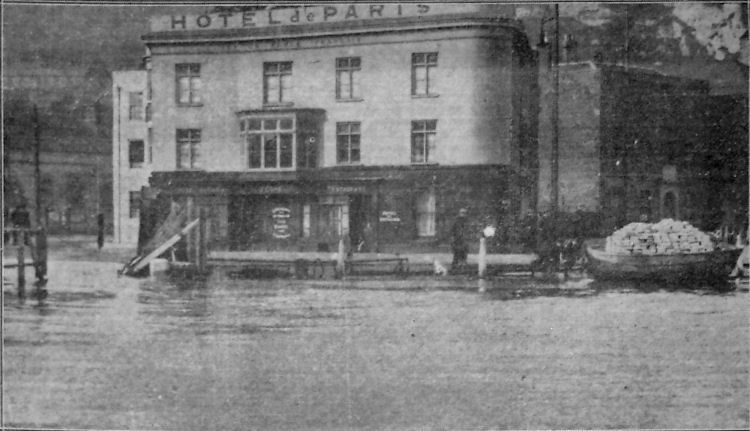
On Tuesday, about noon, the highest tide for over fifty years
occurred around the coast. At Dover the tide reached 22ft 6in., being
3ft above the normal limit of the Spring tides.
|
|
From the Dover Express and East Kent News. 11 February, 1938. Price 1½d.
ALTERATION OF PREMISES
Plans for alterations to the “Hotel de Paris” were approved.
|
|
From the Dover Express and East Kent News, Friday, 4
March, 1949.
DOCKS OVERFLOW
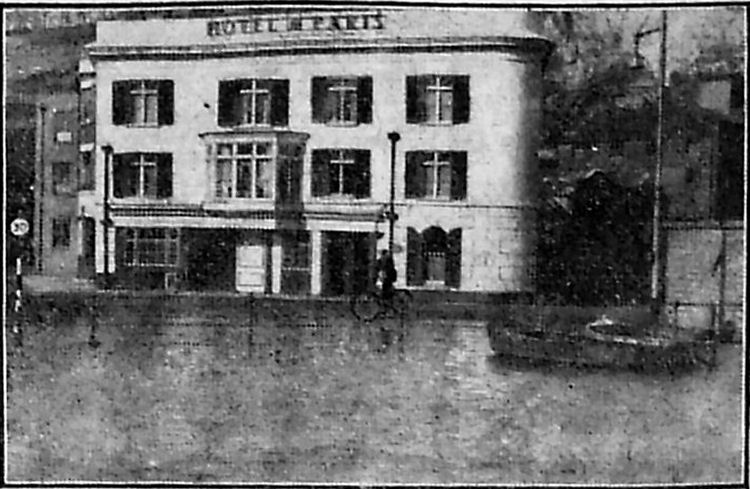
On Tuesday, at noon, a combination of Spring tides and a strong N.W.
wind caused an abnormal height of water round the coast. At Dover it was
5ft. 6in. above that expected. The water reached the top of the dock
sills and overflowed from Northampton Street to Crosswall. The view
shows the scene near the "Hotel de Paris."
|
|
From the Dover Express and East Kent News, Friday, 1
September, 1950.
HOTEL DE PARIS CLOSED
FOUR LICENSED PREMISES PUT UP THE SHUTTERS
Their leases having expired, the Hotel de Paris and the "Prince
Imperial" at either end of Strond Street, closed their doors last
week.
Strond Street comes within the area due to be developed by the
Harbour Board who own the properties there. Other occupiers have been
told that their leases will not be renewed.
Another licensed house which has closed down within the last week is
the "Hippodrome" Bars, in Snargate
Street while the "Clarendon Hotel,"
on the Northampton Street corner, put up the shutters some time ago.
The south side of Snargate Street is also to be demolished in
connection with the scheme for widening Snargate Street and
incorporating Northampton Street with the Harbour Board's other quayside
property.
On the western side of Wellington Passage there are now only two
occupied premises on the south side of Snargate Street. One of them is
the Working Men's Club, which will be closed when the new premises now
being built at Erith Street are completed.
|
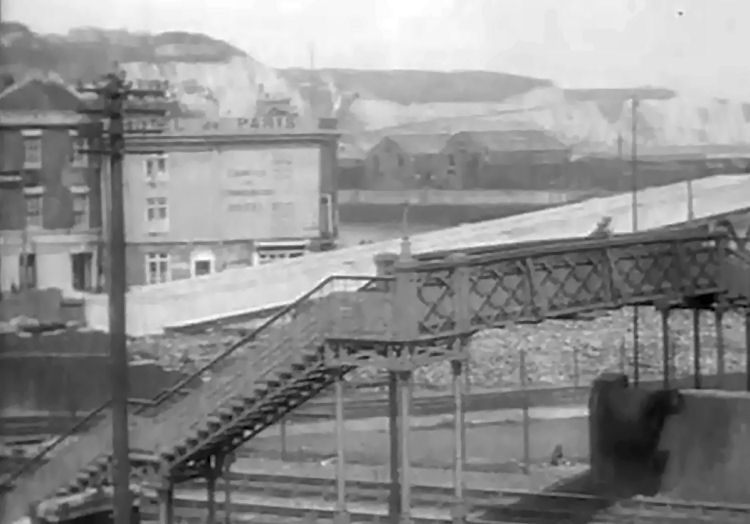
Above photo circa 1920. |
|
From the Dover Express 1 June 1951.
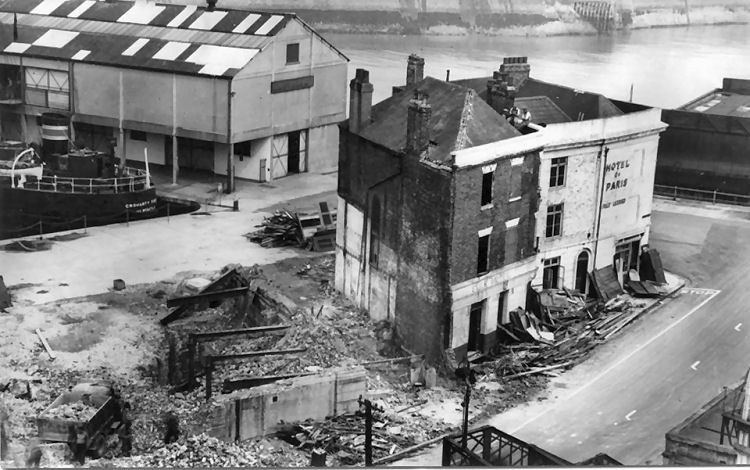
The area near the Crosswall will soon have an altered appearance with
the demolition of the properties in Strond Street and Customs House
Quay, to make way for dock-side improvements. The well-known "Hotel de
Paris" (right) is the last to go. Close by were the "Swan" (in the photo)
and "Pavilion Hotels" and the "Green Dragon" public house, better known to
older generations of Dovorians.
|
This thoroughfare ran from Union Street to Clarence Place when built in
1661. The hotel can be traced to 1868 but already established by then, and
previously operating as the "Crosswall
Shades." In
1913, as a family and commercial hotel, Gardner was the lessee, but it was
always a free house by agreement. In 1928, Worsdell was accused of selling
smuggled liquor and being jobless as a result, the lease passed to Cone.
Apparently without the knowledge of the brewer or the Bench, which seems
remarkable to say the least. Whatever the outcome, it must have been settled
amicably because Cone was succeeded by his wife in 1936.
The closure came in August 1950 when the lease expired. Dover Harbour
Board had redevelopment in mind and took down the house the following April.
The full licence then moved to the "Royal Oak" at River, replacing its beer
and wine 'on' licence.
LICENSEE LIST
 FUHR Henri C
(age 50 in 1891 FUHR Henri C
(age 50 in 1891 ) )
 & JONES H 1869-Jan/76 & JONES H 1869-Jan/76
  
BEECHING Charles Jan/1876-Dec/85
BAKER William Bishop Dec/1885-95+
MADGETT George 1897-1909+
 
NORMAN G Madgett 1910-12
WORSDELL Thomas 1919-Aug/27
 
CONE Joseph Aug/1927-36 dec'd

CONE Mrs Edith 1936-Dec/37
STRIFFLER AIgernon Frederick Dec/1937-48
 
From the Post Office Directory 1874
From Sinnock Directory 1875
From the Kelly's Directory 1899
From the Post Office Directory 1901
From Pikes Dover Blue Book 1923
From Pikes Dover Blue Book 1924
From Pikes Dover Blue Book 1932-33
From Pikes Dover Blue Book 1938-39
From Pikes Dover Blue Book 1948-49
From the Dover Express
Census
|

