|
23 The Street
Sholden
https://thesportsmansholden.godaddysites.com
https://www.facebook.com
https://whatpub.com/sportsman
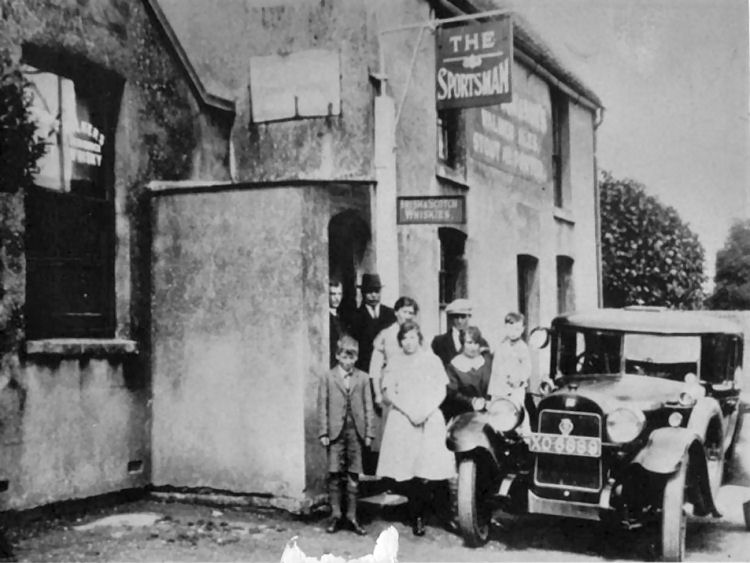
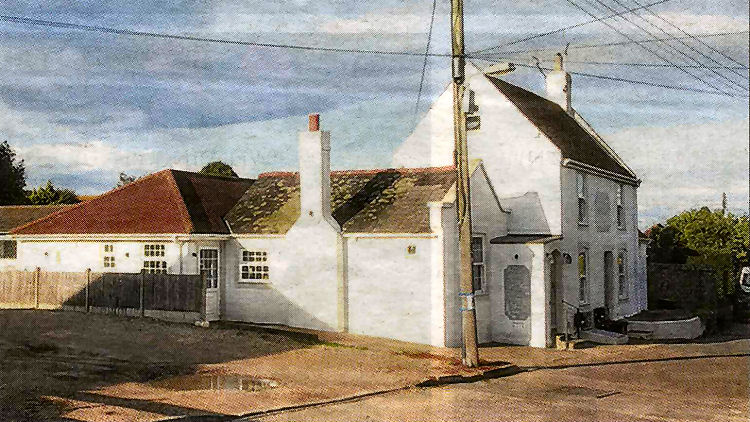
Above photo, date unknown, by Jim Davies. |
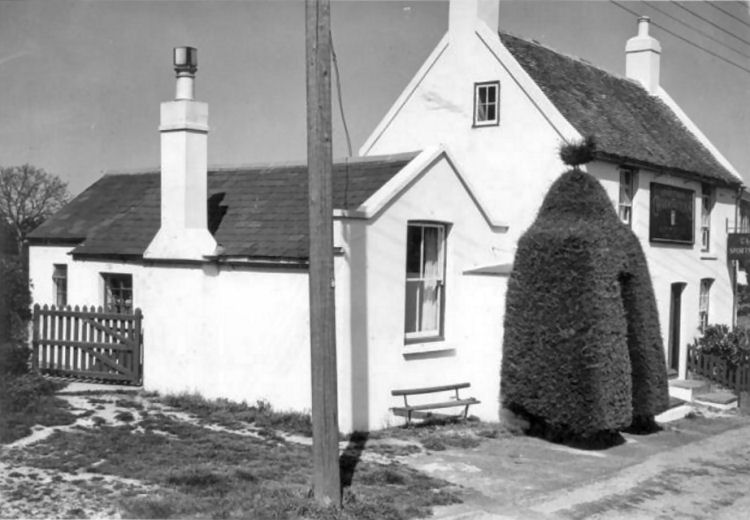
Above photo showing the "Sportsman" in 1952. |
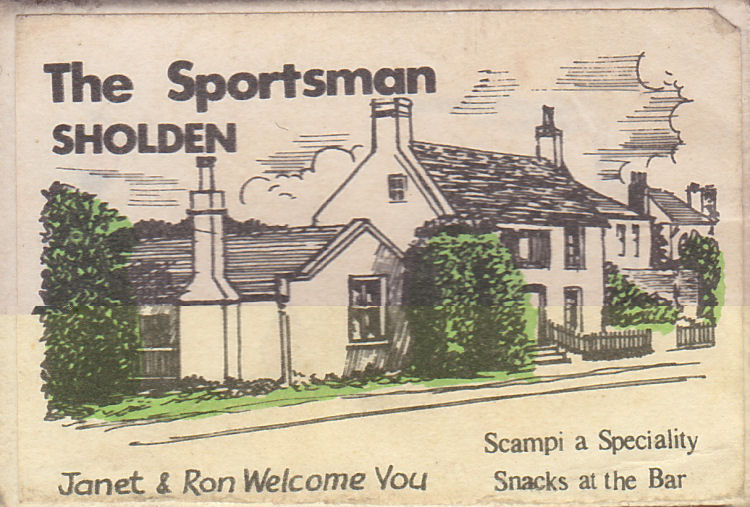
Above matchbox, circa 1974, kindly sent by John Gladish. |
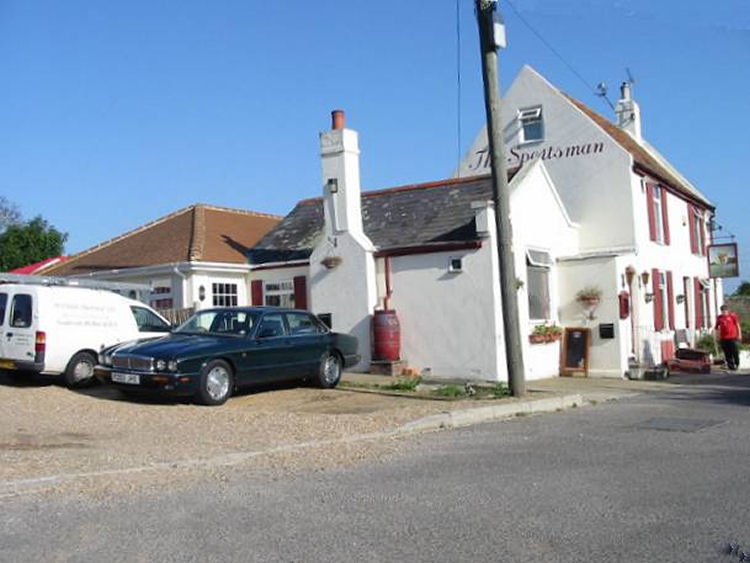
Above photo circa 2005 |
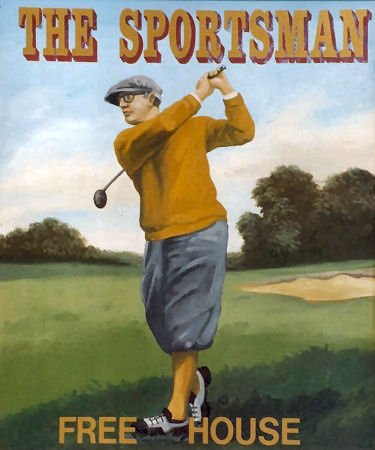 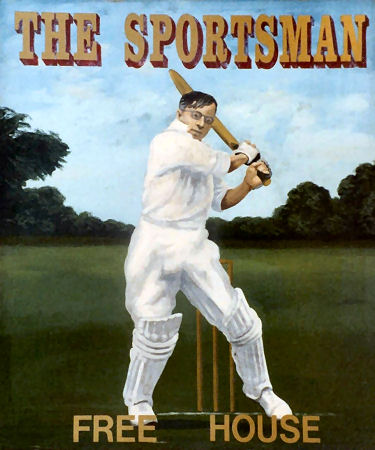
Above signs, 1998.
With thanks from Brian Curtis
www.innsignsociety.com.
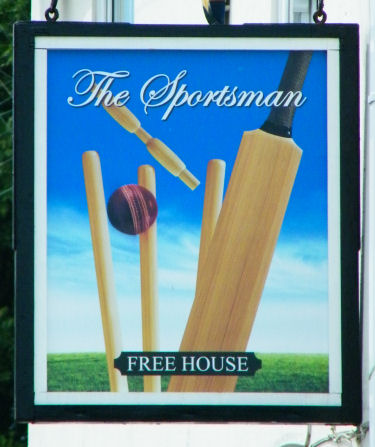
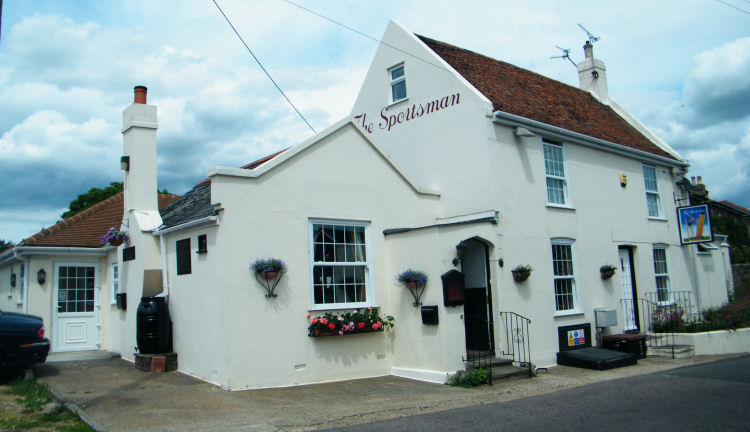
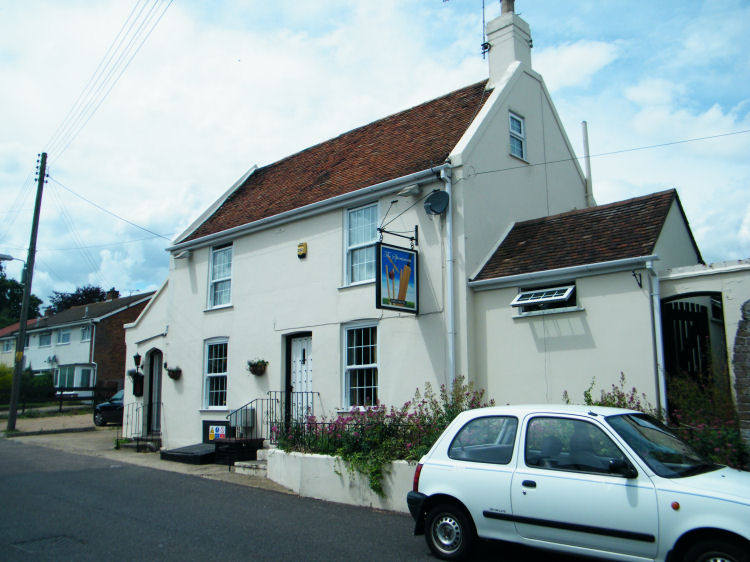
Other photographs by Paul Skelton, 17 July 2010. |
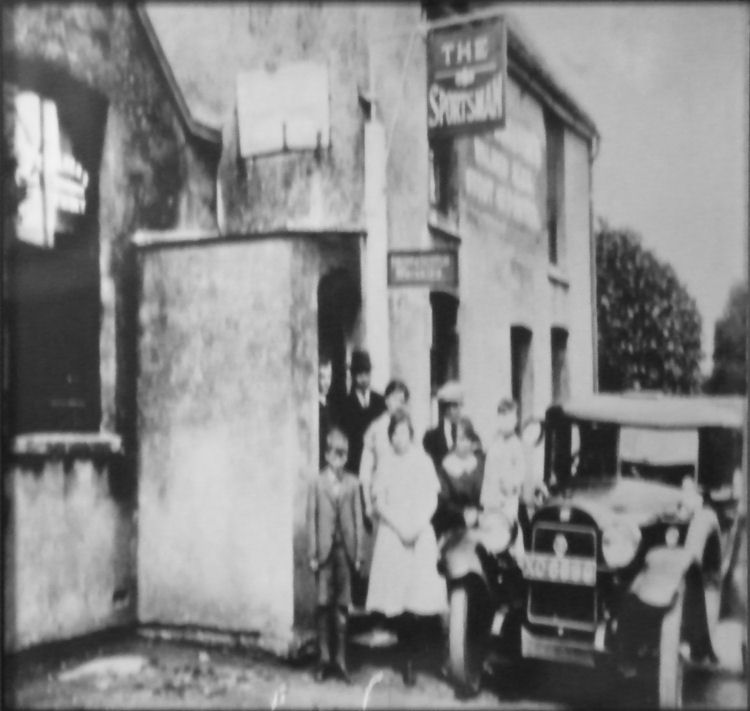
Above photo by courtesy of the Sportsman, date unknown.
From an email received 15 May 2012.
.... the registration plate on the car begins XO followed by 4
figures and these letters and configuration were issued only by the
London County Council, between April and August 1923. At least you know
the photo could not have been before then!
Regards,
Julian Stinton.
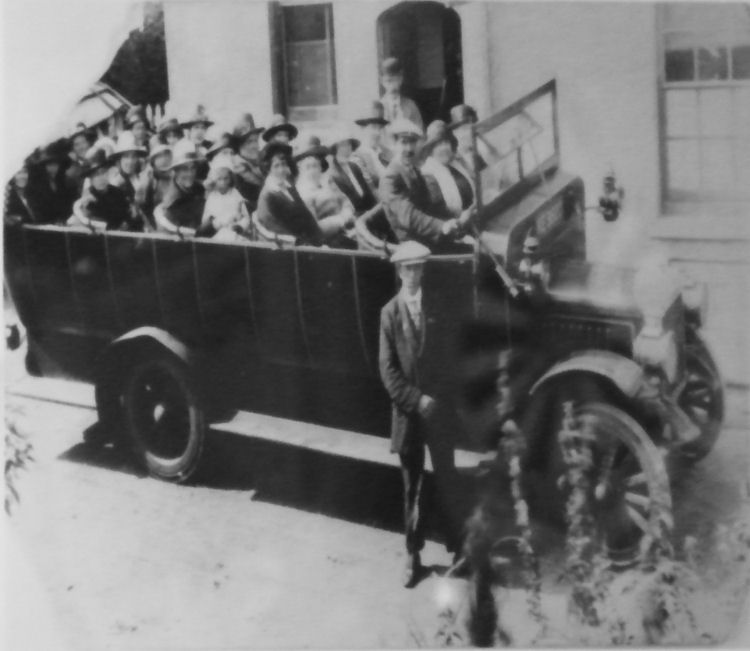
Above photo taken from photograph hanging up inside pub and says the
following:- "This super photograph of an outing leaving The Sportsman
public house at Sholden, probably in the 1930s, has been uncovered by
mine hosts thee:- Chris and Christine Liversidge. If any reader can
recognise themselves they are invited to dine, with partner, as guests
at The Sportsman. Contact Chris or Christine direct."
Unfortunately, that was in 1983.
|
This inn known by the name and sign of the "Sportsman" was built in part
during the latter years of Charles II, in 1684. This original structure
extends to the rear of the present edifice, which in itself was erected
during the reign of George II, in 1758, and was refaced during the reign of
Victoria in 1883.
During the 1680s Sholden or Shoulden as it was then written, was made up
of Manor Houses and clusters of cottages tied to those respected Manors. The
Manor of Sholden claimed paramount over these smaller Manors. The
inhabitants of the parish in 1700 were approximately 103, by 1801, it had
risen to 238, by 1831, 356, and by 1841, five years after this house was
licensed, there was 82 houses and 465 inhabitants.
In 1703, there resided in this house, the family of Isaac Cadde, who is
described as a cottager of the Manor of Sholden. His family consisted of his
wife Nyomi and five children, though she had bore nine children in all, but
as was usual of the times not all survived the perils of infancy. Isaac
Cadde lived in this cottage tied to the Manor of Sholden between the years
of 1703 and 1721, whereafter only the widow Cadde is recorded here with sons
Jacob and Daniel, the latter is described as a farm labourer whilst Jacob is
described as a woolstapler, which was one who measured wool.
In 1746, only Daniel Cadd (spelt thus) is recorded here, and was still
here in 1758, when the front of the present structure was built, and by 1760
had risen to the rank of land overseer to the Manor of Sholden. He died in
1766 whereafter one Samuel Wellard took up that position and lived here with
his family. In 1784 one Thomas Holburn lived here and although he had filled
the same role he is described as a farm bailiff. The house continued to be
occupied by bailiffs or land stewards to the Manor for the remainder of the
18th century and for early of the 19th.
In 1824, the Manor of Sholden gave up the house and it was sold to Mrs.
Elizabeth Reynolds of the town of Sandwich. In 1834, the house was leased to
Joseph Dewell, whose father William, some years before had been a farm
bailiff to the Manor, and was the last person to occupy the house before it
was split from the Manor. Joseph Dewell is described as a wheelwright,
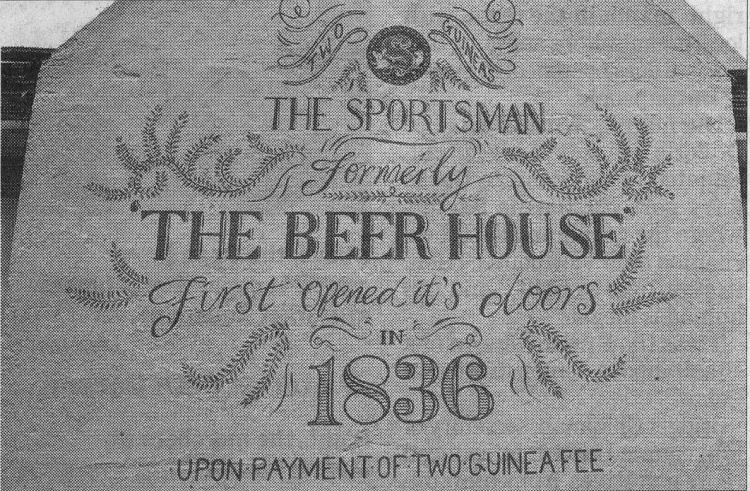
however in 1836, he obtained a beer licence under the terms of the 1830 beer
act, which enabled any house holder of good character to obtain a licence to
sell beer from a dwelling or tenement of rateable value, by merely paying
the small sum of two guineas to the department of excise, thereby avoiding
the necessity of applying to or being presented by Magistrates, who had no
control over these beer houses, and frowned upon the act, because many chose
their own hours of business, some remaining open all night.
And so in August 1836, after paying his two guinea fee to the excise,
Joseph Dewell opened the doors of this house and sold ale from it for the
first time. The house at this date bore no title of registration other than
that of a beer house in the Street, Sholden, and that the said Dewell, a
wheelwright and now beer seller was of that house. Joseph Dewell kept the
house until his death in 1861, whereafter his widow Eliza ran it for a
further two years, giving it up in 1863, to Edward J. Cracker, whereafter
her son Samuel took a lease on the house at Foul Mead, called the "Coach
and Horses."
Edward Cracker kept the house until 1887. In that year it was purchased
by the Flint Brewery of St. Dunstans, Canterbury. They carried out
alterations to the house, and upon the completion of these, leased it to
George Henry Walker, a builder and plumber of Fisher Street, Sandwich. He
was granted a full licence for the house which at the hearing he registered
under the title of the "Sportsman." He kept the house till 1893, when he was
succeeded by George Robert Mitchell, an innkeeper and marine store dealer of
Dover, and he in 1896 by Edward Young, a boot and shoe maker of Ramsgate,
who kept the "Sportsman" until 1902. In that year it was purchased by the
Bass Brewers, who installed one William Emmett Reed, an inn keeper and
tobacconist of Dover, as a tenant at an annual rent of 21 guineas. However
Reed kept the house for only a short while until his death in 1905, when his
widow Julia took over. She remarried in 1907 and became Mrs. Julia Marsh.
She died in 1913, whereafter her husband George took over. He remarried and
upon his death in 1926, his widow Elizabeth Ann took it for a year, as a
widows lease. She was succeeded in 1927 by George Graby and he in 1932 by
Albert Edward Cornwell, who stayed to many years to follow. In 1983, the
Bass Charrington Brewery sold the "Sportsman" to Christopher William
Liversidge, who was the owner and keeper who researched the above.
|
From the Kentish Gazette, 12 September 1865.
WINGHAM. Petty Sessions. Thursday. (Before C. J. Plumptre, Esq.,
N. H. D’Aeth, Esq., J. F. Harvey, Esq., F. Philips, Esq., Richard
Harrison, Esq., John Henderson, Esq., and J. F. Godfrey, Esq.)
Renewal of Public House Licenses.
This was the general licensing meeting, and authority was granted
for the renewal of the licenses of all existing public houses. There
were five applications for spirit licences for houses which have not
hitherto had them. Two only were granted and three refused. Mr. John
S. Fox obtained an authority for a spirit license for the
"Carpenter’s Arms," Coldred, and Mr. Francis Prescott, for the
"Canteen," at Charlton, near Dover.
The following were refused:—
Mr. John Curtis, "Black Mill," Barham;
Mr. Charles Golder, the "Hope," Lydden;
and Mr. Edward James Craker, the "Sportsman," Sholden.
|
|
From the Kentish Chronicle 16 September 1865.
WINGHAM PETTY SESSIONS
Thursday.—Renewal of Public House Licenses.
This was the general licensing meeting, and authority was granted for the
renewal of the licenses of all existing public houses. There were five
applications for spirit licenses for houses which have not hitherto had
them. Two only were granted and three refused.
The following were refused:— Mr. Edward James Craker, the "Sportsman," Sholden.
|
|
From the Deal, Walmer, and Sandwich Mercury,
26 April, 1873.
SUICIDE AT SHOLDEN
On Tuesday last, T. T. Delasaux, Esq., Coroner for East Kent, held an
inquest at the "Sportsman" public-house, Sholden, on the body of an old
farmer named William Ladd, who had hung himself in his own bedroom on
Sunday morning. Mr. Stephen Solley was chosen foreman of the Jury and
the following gentlemen being also sworn:- J. Adkins, L. Baker, J.
Brown, S. Capp, H. ????, W. Lawrence, G. Palmer, R. Quaif, R. Sladden, ?
Sladden, and R. Wellard.
The body having been viewed, Louisa Ladd said: Deceased was my
grandfather and aged 74 years. On Sunday morning last I went into his
bedroom and found him hanging from the bedpost. I could not see by what
he was suspended. I ran and told my father, who at once went up to the
room.
Stephen Ladd said: Deceased was my father, and has been living with
me about 15 months. In consequence of what my daughter stated to me on
Sunday morning last, I went into his bedroom and found him suspended to
the bedpost by a piece of bed-rope. I cut him down and saw he was dead.
He has been subject to fits for many years, and when he first came to
live with me he attempted to hang himself to a cherry tree, but I
prevented him, and afterwards cut down the tree. He has for a good
length of time been in a deranged state.
The Jury were unanimous in returning as their verdict - "That
deceased hanged himself when in a state of mental derangement."
|
|
From the Dover Express and East Kent News, Friday 27 September, 1878
COUNTY LICENSING SESSIONS
The Licensing Sessions for the Dover district of the county was held at
Dover on Thursday before Dr. Astley, Steriker Finnis Esq., Major
Stevenson, F. Fortescue, Esq., and C. J. Plumptre, Esq.
WANTED – A SPIRIT LICENSE
Application was made by George Henry Walker for a spirit license in
addition to his present beer license that he already has at the
“Sportsman Inn,” Sholden.
Mr. Mowll made the application, and said there was no fully-licensed
public-house within half-a-mile. There had been no complaint whatsoever
of the house or the applicant, and it had been in the present hands for
three years.
The license was granted.
|
|
From the Dover Express and East Kent News, Friday, 4 March, 1904. Price 1d.
LICENSING MATTERS
The license of the “Sportsman,” Sholden, was renewed to the
administratrix of Mr. W. E. Reed, deceased.
|
|
From the Dover Express and East Kent News, 26 January 1940.
Gertrude Elizabeth Smith, "Sportsman," Inn, The Street, Sholden, was
summonsed for showing light from her residence at 10.40 p.m. on 5t
December.
Defendant did not appear.
P.C. Ansell said that he saw a bright light coming from the front
sitting room of the public house, but could get no answer from his
knocks. Later defendant came along with her husband who had been recalled
to the Colours. Defendant said that the light had come from the kitchen
and the door of the sitting room must have been pushed open by the dog.
Fined 16s.
|
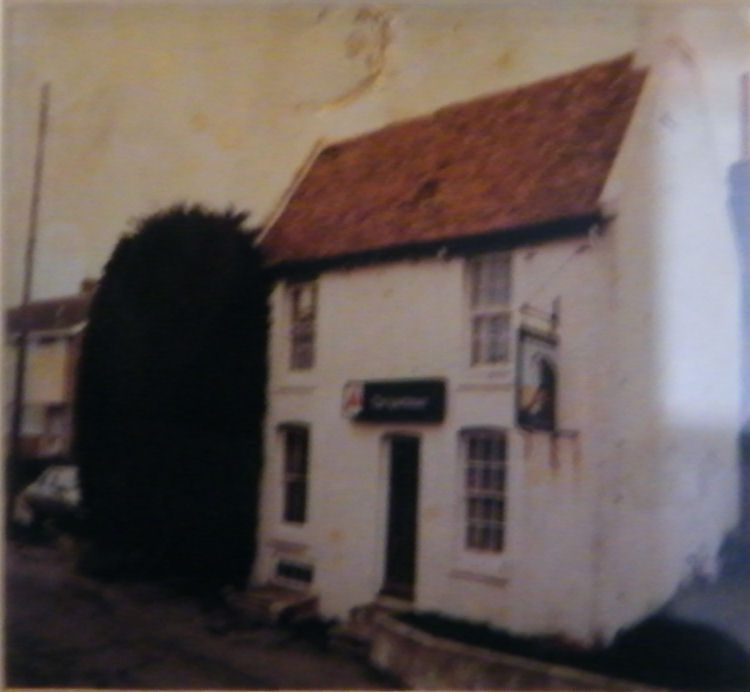
Above photo when under the reign of Charingtons circa 1974. |
|
From the Dover Express, 17 December, 1998.
THE INN PLACE FOR TOURISTS
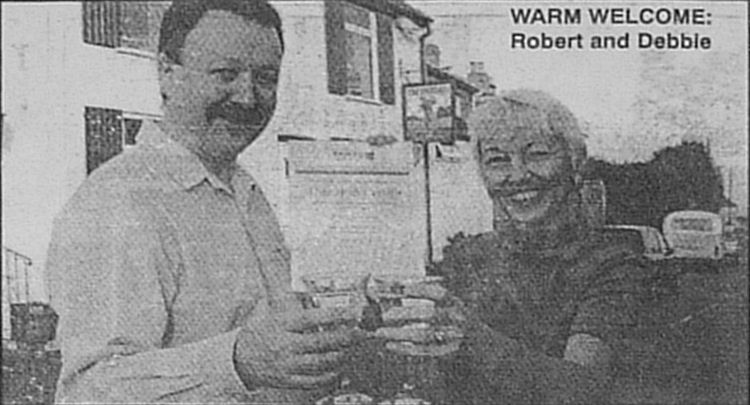
Tucked away in the little village of Sholden near Deal is the cosy
Sportsman Inn which has won this year's award for the best pub in the
Dover district for tourists.
The 17th century former coaching inn has seen many changes over the
years, but is still offering a warm welcome to visitors as it has done
for more than 300 years.
Today the low timbered ceiling of the bar, and the walls, sparkle with
horse brasses and other memorabilia associated with the days the property
was a blacksmiths.
The owners are Robert and Debbie Grimson who have just been presented
with their winners' certificate by the White Cliffs Country Tourism
Association.
It was presented by Phyllis Lear, a director of over company Eurosave,
who is co-vice chairman of WCCTA. She and two other judges toured pubs
throughout the district to find the best.
The couple have been at "The Sportsman" for nearly five years and have
greatly improved amenities.
Robert, 45, from Newcastle, was working as a bar tender on a cruise
liner when he met Debbie while she was a passenger on board.
Debbie, a former Dover Grammar School girl, is the daughter of Joe and
Pat Court of Kent Photos in Dover. Debbie went to St. Mary's School in
Dover before progressing to the grammar schools. Her parents live a
Shepherdswell.
She was a television producer and in advertising before she and her
husband took the pub.
Debbie said: "I understand these premises, dating back to 1684, were a
blacksmiths once, but travellers who stopped to have their horses shod,
stayed on and it became a coaching inn."
Since taking over, the couple have invested in bed and breakfast
accommodation and have achieved a three crown, highly commended grading
from the English Tourist Board.
Runner-up was the "Park Inn," Ladywell,
Dover.
|
|
From the Dover Mercury, 22 October, 2015.
Pub give a new lease of life.
Refurbished Sportsman now has new menu.
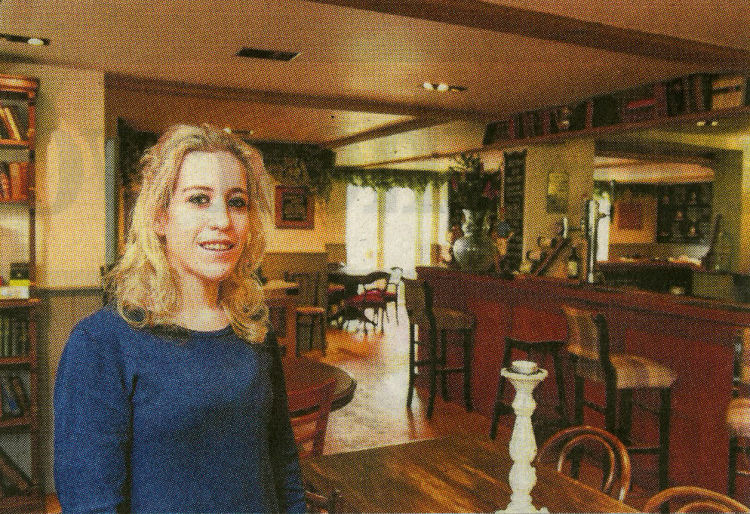
New landlady at the Sportsman Kate Coleman has refurbished the pub and
has devised a new menu.
A major renovation under new ownership signifies a new start for the
"Sportsman" in Sholden.
Landlady Kate Coleman has put her own stamp on the village pub in The
Street, and after refurbishing the kitchen, she is excited about the pub’s
prospects as an eatery. “We took over in January and did a massive
renovation for four to five months.
“The pub is pretty much finished now so it’s an exciting time.”
A wall that divided the pub and the function room has been knocked down,
opening the space up into one welcoming venue that’s ideal for village
locals and visiting diners to relax in.
There is a new central bar, solid oak flooring has replaced a tired old
swirly carpet, and dried hops and an open fire in the winter complete the
look.
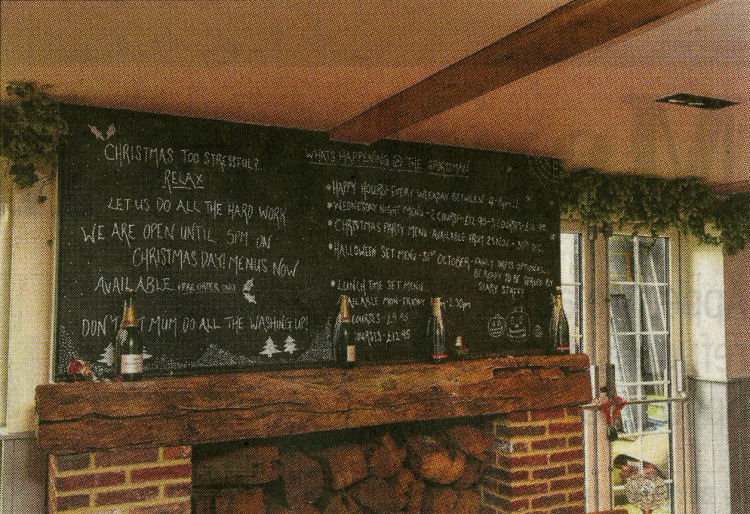
The hard work doesn’t end there. A new menu has been devised, including an
a la carte service and extensive bar menu.
Warming pies and comforting deserts will be served in the coming weeks.
Bookings are being taken for Christmas lunch and festive gatherings at the
Sportsman in Sholden. A Halloween party is planned for Saturday, October
31, from 7.30pm. All staff will be dressed up and a set meal can be
booked.
 |
|
From the Dover Mercury, 29 November 2017.
The Sportsman pub in Sholden is to go under the hammer.
The sale, as previously reported in The Mercury, includes three associated
chalets for letting as well as the car park and garden.
It is among 163 lots listed by land and property auctioneers Clive Emson
ahead of its next sale.
The guide price of the complex is £275,000-plus, and the property could
continue to be run as a pub/ restaurant.
Kevin Gilbert, auctioneer, said: “This could continue as a business and
there might be the possibility to develop the site as long as all
necessary consents are obtainable.
“It is an established business and would suit an entrepreneurial type.
“The chalets offer further potential for rental income, and the large site
provides a multitude of business opportunities.”
The Sportsman is just one of a number of properties featured in the
December 11 auction.
|
|
From the Dover Mercury,1 February 2018. By Sean Doherty.
3 eateries with infestations of vermin were told to shut.
WHEN you are about to settle down to a meal in a restaurant, the last
thing you want to consider is that the kitchen where the food was prepared
has an infestation problem.
But three businesses were ordered to close in 2017 and 2016 after
inspectors found evidence of cockroaches and mice.
A Hygiene Emergency Prohibition Notice can be issued when Food
Standards officers think there is a serious risk of food contamination,
whether due to poor equipment, maintenance, cleaning or structural
condition.
Officers can issue a notice instructing a business to immediately stop
using their premises or equipment for a purpose specified in a report.
Court orders can also be made stopping individuals from running a food
business if they are found to have repeatedly failed to meet expected
standards.
Business owners can apply for certificate of satisfaction if they
believe the health risk condition has been removed but those who do not
comply with the notice can be fined and sent to prison for up to two
years.
During the last two years, two restaurants and one pub in Dover and
Deal were issued notices demanding that they close.
The Sportsman, which was in The Street, Sholden, was issued a closure
notice on August 31 last year after an inspector found a mouse infestation
on the premises.
The Hygiene Prohibition Order said: “The premises was found to have
evidence of a mouse infestation throughout the kitchen, store room, bar
and cellar.” |
The pub closed on the 31 August 2017.
I am informed that this pub will be opening again in March 2020.
Owners list
CADDE Isaac 1703-21 dec'd (Cottager)
CADDE Mrs 1721-46 dec'd
CADD Daniel 1746-66 dec'd (son of above)
WELLARD Samuel 1766-84
HOLBURN Thomas 1784-1824 (farm bailiff)
REYNOLDS Elizabeth 1824-before 34
DEWELL William before 1834
DEWELL Joseph 1834 son of above and wheelwright)
LICENSEE LIST
DEWELL Joseph Aug/1836-61 dec'd (obtained beer licence) (no pub name)
DEWELL Eliza 1861-63 (wife of above)
CRAKER Edward James 1863-87 (age 47 in 1871 )(Flint brewery purchase) )(Flint brewery purchase)
WALKER George Henry Sept/1878-93 (builder and plumber) (Named "Sportsman" in
1887) (carpenter and wheelwright age 41 in 1881)

MITCHELL 1893-96 (marine store dealer)
YOUNG Edward 1896-1902
 (boot
and shoe maker) (boot
and shoe maker)
REED William Emmett 1902-Mar/04 dec'd (inn keeper & tobacconist) (Bass 1902) 
REED Julia Mar/1904-07 (wife of above and remarried as Marsh)
MARSH Julia 1907-13 dec'd
MARSH George 1913-26
 (remarried Elizabeth)
MARSH Elizabeth Ann 1926-Feb/29
GRABY George Feb/1929-32
CORNWALL Mr Albert Edward 1932-Jan/1939

SMITH Mr Reginald Charles Jan/1939-40+
NORRIS L B 1961+
WIDDETT Ronald 1974+
 Charrington & Co (sold in 1983)
LIVERSIDGE Chris & Christine 1983+
GRIMSON Robert 1993-2002
COLEMAN Ryan & Kate 2002-10+
 MULROONEY Ger & CLIFFORD Anne Mar/2020+
???? Dave & Paula 2026+
From
the Kelly's Directory 1899
From the Kelly's Directory 1903
From the Post Office Directory 1913
From
the Kelly's Directory 1934
Library archives 1974
From the Dover Express
|

