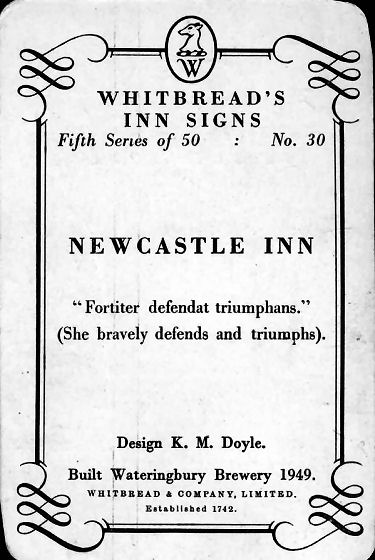
|
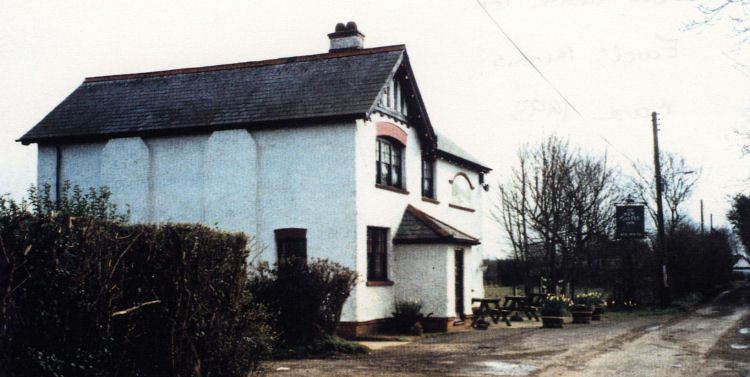
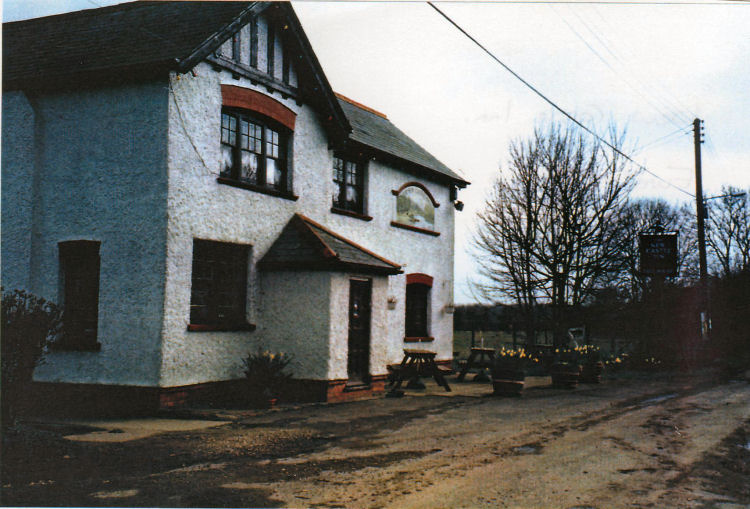
Ewell Minnis
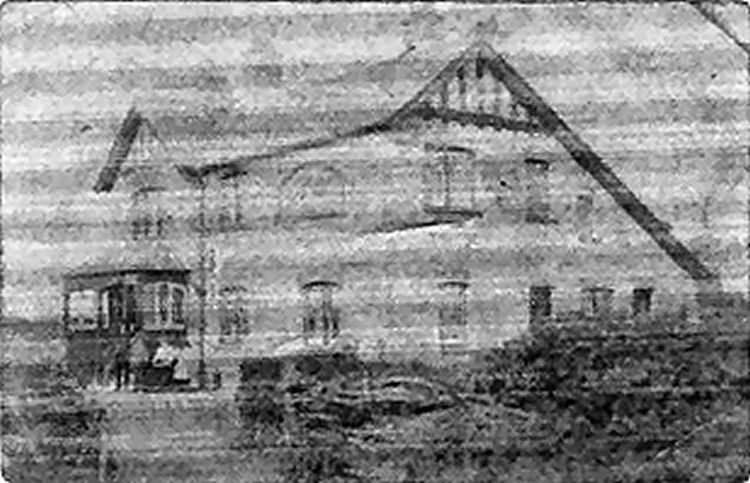
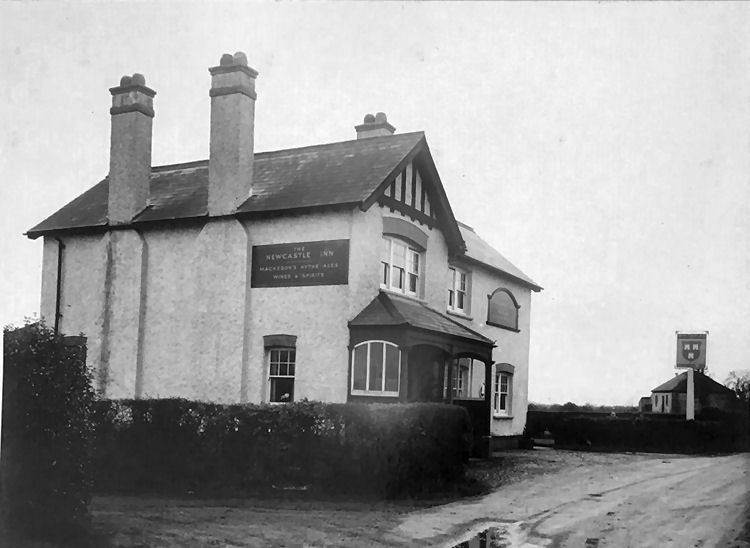
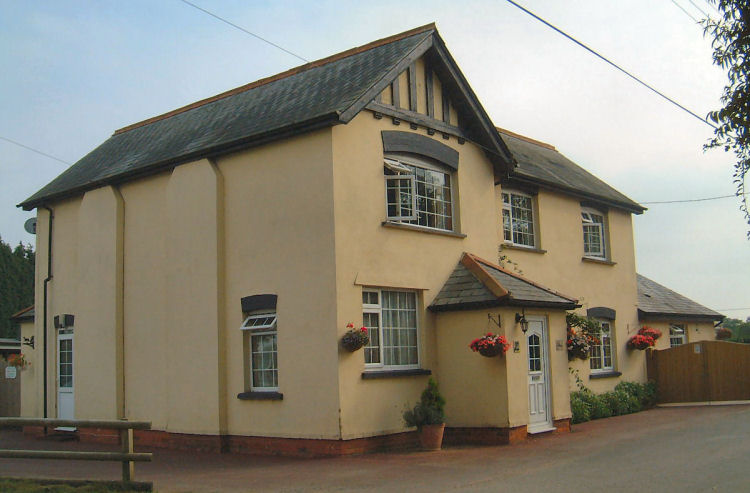
At present, I am not 100% certain of the information I have received
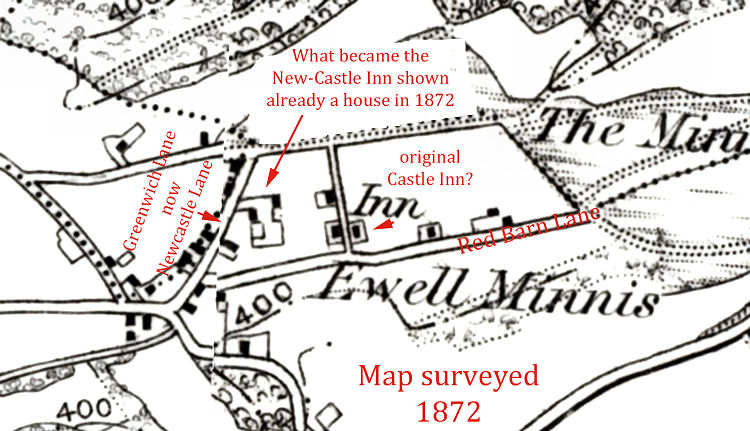
regarding this public house. I was informed that the original building, then
called the "Castle Inn"
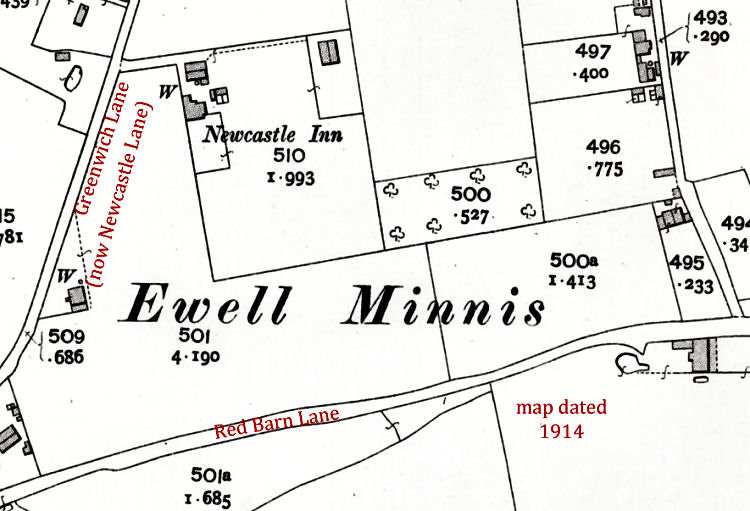
was burnt down near the turn of the 20th century. The new building, being
called the "New Castle Inn" was built just around the corner on what, today
is hard to believe used to be one of the main routes to London. However,
further research does make reference to a "New Castle" from a police report
of 1886, when some forged sovereigns were tried to be passed, so a "New
Castle" certainly existed before the one shown above.
The "New Castle" (two words), so I have been told, was built in 1902 just
around the corner from the original "Castle Inn" and at
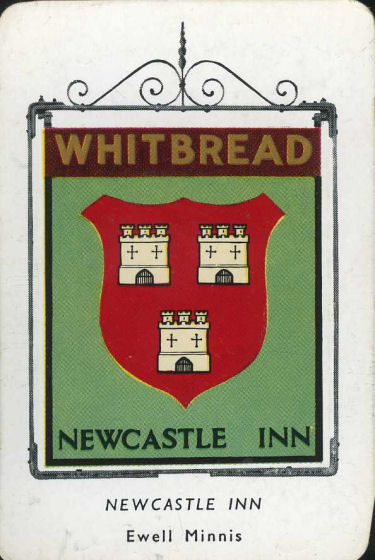
some point along its history became just one word:- "Newcastle," but this
information has not been validated yet. In fact, I am not even sure it was
ever officially called the "Newcastle Inn" with one word, and this may just
be how travellers referred or assumed it was named. However, the following email from
Neil Harrison proves the pub was there before 1902.
Further research has turned up this account of the pub in 1869 being
called the "Newcastle", so I think the story of the original one being
simply the "Castle" is no more than misguided hearsay.
|
Dover Express, Friday 8 January 1869.
The Remanded Charge of Poaching.
William Harris and James Whitehead, the men remanded from Saturday, on a
charge of poaching, were again placed at the bar.
Mr. Fox now appeared for the prosecution.
The evidence given by Knott on Saturday having been read over, the
following additional testimony was taken.
The witness Knott, by Mr. Fox:- The men had a dog with them when they
went out of the wood. I was struck with a barrel of the gun - the butt
end of the barrel.
Thomas Hubbard:- I am a labourer in the employ of Mr. Austin, of Denton.
In the early part of Saturday morning, about 6:30, I was called by Mr.
Knott, and we went along the turnpike Road, after the two prisoners, for
about 20 or 30 rods. Mr. Knott said to them, "You have been in my wood,
and I must take you for poaching. If you don't like to go with me, I
must go with you." The prisoners, after a little time, took to their
heels and ran away, and we ran after them. After we had pursued them a
short distance Whitehead said to the other prisoner, "If you will look
after the other, I'll stop this one from halloowing." Whitehead then
struck Knott with a wattle-stake, and the other prisoner drew the barrel
of the gun and also struck him on the head with it. Knott fell to the
ground after each of the blows. We ran after the prisoners for some
distance, and until Jarvis said that if we followed them any further he
would shoot us. The prisoners were them running in the direction of
Alkham Minnis. On the previous night I saw the prisoners in a public
house at Selsted. After losing sight of the prisoners, we went and gave
information to the police.
Ephraim Everett, under-keeper to Mr. Willatts:- On Saturday morning,
about 6 o'clock, I was called by Knott, who came to me and said he had
heard two guns fired in the wood. We still talking a few minutes, and
during that time we heard two more shots. Knott told me to go into the
wood, and said he would stand at the opposite corner, to see which way
the parties came out. I went into the wood, and left Knott outside. I
stopped in the woods some time, but neither saw nor heard anything, and
when I came to the spot where I expected to find Knott I could see
nobody.
John Hobbs:- I am a labourer and live at Swingfield. Early on Saturday
morning last I was going to work when I met Knott, Hubbard, and two two
men I believed to be the prisoners. Knott wanted me to go back, and I
did so for about 10 yards, till the prisoners ran away. Knott then sent
me after a policeman. I believe the prisoners are the same men, but I
cannot swear to them, as I did not see enough of them. It was moonlight.
Knott, recalled:- I was with the prisoners and the police at a public
houses the same morning. Police-constable Stone entered the house, and
brought with him a gun and four pheasants. He afterwards went out again
and brought back another pheasant and 21 rabbit nets. The gun, birds,
and nets produced are the same. When Stone came in the second time
Jarvis said to him, in the presence of the other prisoner, "How many
pheasants have you there?" Stone reply. "Five," and Jarvis said, "Then
you have one more and belongs to you." Whitehead remarked that it would
puzzle me to replace the pheasants. Stone asked me to examine the gun,
and as I knew more about it than he did; and on examining it I found it
loaded. Jarvis then ask the landlord to fire it off, remarking that it
had not been fired off for a week. When I came to Dover I drew the
charge, and found that the gun had been recently used. I had the gun in
my possession from the time it was brought in by Stone till the charge
was drawn. Stone was in my company all the time.
Police-constabulary Edward Kay:- I am stationed at Swingfield. On
Saturday morning last I was sent for by Knott, and in consequence of
what was told me I went towards Alkham. I met Stone, and on going to the
"Newcastle Inn," Alkham Minnis, we found the two prisoners sitting in
the taproom. I asked Knott if they were the two men, and he said, "Yes."
In company with Stone I apprehended the prisoners on a charge of
poaching at Denton and of assaulting the keeper. Whitehead said, "You
must be mistaken, old boy, as we have been here for the last 2 hours."
Jarvis said nothing. I asked her landlord, in the presence of the
prisoners, how long they had been there, and he said, "About 20
minutes." The prisoners had nothing with them when they were taken.
Stone went away, and I kept the prisoners in the house till they were
brought to Dover. I was present when the charge of the gun was drawn.
Police-constable Stone:- I'm stationed at Hougham. On Saturday morning I
saw police-constable Kay and Mr. Knott at Evenden Farm, in the parish of
Alkham, about 7:30. Knott was bleeding from a wound on the head. His
face was covered with blood. In consequence of what he told me we went
to the public house described by the last witness, where we found the
prisoners sitting in the taproom. Knott having identified the prisoners
in my presence, I went to Jarvis's house, which is close to the
"Newcastle Inn." In consequence of something I said to Mrs. Jarvis she
gave me the gun produced, in which her son had brought home that
morning. It was standing against the wall in the front room. I found
four peasants in the pantry. They had been recently killed, as they were
still quite warm. I took the gun and the four birds to the public house,
where the prisoners were detained by Kay. Whitehead asked for his over
jacket and said it was round at Jarvis's, where he had been lodging. I
went back to Mrs. Jarvis's for the jacket. I asked her for the jacket
Whitehead had worn home that morning, and he pointed it out in the front
room and I took it up. On further research I found another pheasant
lying between the brine tubs in the pantry, and also 21 rabbit nets. On
returning to the public house the second time Jarvis asked me how many
pheasants I had, and on my telling him I had five, he said I had one
more than I ought to have. I don't remember that Whitehead said
anything. I saw the charge drawn, and produced it.
The prisoners, who had nothing to say in their defense, were committed
for trial at the Kent Adjourned Sessions, commenced yesterday at
Maidstone.
|
|
Whitstable Times and Herne Bay Herald, Saturday 16 January 1869.
Alkham. Poaching.
On Tuesday last at Dover, before S. Finish, E. F. Astley, and E. P.
Elsted, Esq., William Jarvis and James Whitehead, of Alkham, were
charged with poaching, and a salt in Samuel Knott, a gamekeeper.
Samuel Knott, gamekeeper to Mr. Willatts, Denton Court, Canterbury,
deposed:- On Saturday morning about 10 minutes before 6, I heard of a
gun fired in Denton wood, and directly afterwards I heard a second
report. Whilst I am my man were talking we heard two more shots. I sent
my man into the wood while I watch myself on the road. I then crossed to
the pheasantry and heard some men go out into the road. I followed and
saw the prisoners go into the road from Denton wood. Their pockets were
filled out. Jarvis had the barrel of a gun in his inside pocket, and
Whitehead had the stock. I called a labourer named Thomas Hubbard, and
when I got up to the prisoners another man of the name of Hobbs, who
works for Mr. Willatts, came up. I told them they were suspected of
poaching; and if they would not come with us we would go with them. I
then told Hobbs to fetch a policeman, and they ran off. I and Hubbard
followed them till they got into a hollow where Jarvis pulled the barrel
out of his pocket, and Whitehead pulled out the stock. Jarvis said,
"Give me the stock and I will shoot them. Keep them off till I get the
gun in the stock." Whitehead, Having a rail in hand, struck me on the
head. I returned the blow with a life preserver and knocked him down.
Jarvis who had hold of the barrel end of the gun, struck me on the head
and knocked me down, cutting my head open. Hubbard picked me up, and
Jarvis said, "Come on and I will knock you down again." I stood still a
minute and Jarvis put the stock on and swore he would shoot me if I
stirred another inch. Then ran off again and I and Hubbard ran after
them. Jarvis stopped a second time, swore he would shoot me if I came
any further, and ran on again. We then lost them, and I went to fetch a
policeman.
I went to the "Newcastle" public house, Alkham, and pointed out the two
prisoners. They had a dog with them when they came out of the wood.
While at the public house, I saw P.C. Stone come in, and bring a gun and
four pheasants. He then went out and brought in another pheasant and 21
rabbit nets. When Stone came in the second time, Jarvis said, in the
presence of the other prisoners, "You have got one more than belongs to
you," and Whitehead said, "It would puzzle me to replace them again."
Stone wanted me to examine the gun, which I did and found it loaded.
Jarvis asked the landlord to fire it off, as it had not been fired off
for a week. I can swear that the gun had been recently used.
Hubbard, Hobbs, and Everitt, under-keeper, corroborated Knotts
statement.
P.C. Stone said:- I met Mr. Knott and P.C. Kay, and went with them to
the public house at Alkham. I saw Mr. Knott bleeding from the head. Mrs.
Jarvis gave me this gun and four pheasants, which were lying on the tubs
in the pantry. They seemed to have been recently killed, for they were
quite warm. I took the gun and the pheasants to the public house, and
Whitehead said he wanted his jacket, which he had left at Mrs. Jarvis's
where he had been lodging. I went again to Mrs. Jarvis's and asked her
for the jacket that Whitehead had worn that morning. She pointed it out
to me in the front room; it was covered with mud. On further searching I
found another pheasant between the tubs, with 21 rabbit nets and an old
hat. The nets were in the hat. When I returned to the public house
Jarvis asked me how many pheasants I had got. I told him 5, and he said,
"You have got one more than you ought to have.
The magistrate submitted the prisoners for trial at the County Sessions.
|
|
From the Dover Express and East Kent News, Friday, 18 May, 1900.
TEMPLE EWELL
Mr. Hatton Brown applied for the license of the “New Castle Inn” at
Ewell Minnis to be altered in regard to the name of the license holder
from Ellis Keeler to Mrs. Ellis Harnett, as the lady had married.
|
|
From The Dover Express, Friday, July 10, 1903; pg,1; Issue 2349.
FOR SALE.
A Capital Milch Cow, with Calf, suitable for dairyman.
Apply H. F. Goldfinch, "Newcastle Inn," Ewell Minnis, near Dover.
|
|
Dover Express 22 September 1905.
DECEIVING A PUBLICAN.
John Hearn George Burgess and Frederick Prescott, of Alkham were
summoned and pleaded guilty to a charge that on Sunday, September 10th,
at the hour of 11.30 a.m., they, by falsely pretending to be travellers,
obtained intoxicating liquor, beer, from Amy Elizabeth Harnett,
landlady of the "Newcastle Inn," Ewell Minnis. They told the landlady
that they came from Folkestone, but when a surprise visit was paid by
Police Constable Walker they admitted that they lived at South Alkham.
Fines
of 10/- each including costs were imposed.
|
|
Dover Express 06 October 1905.
THE ANNUAL HARVEST SUPPER took place at the "Newcastle Inn" on Saturday
last, when about 60 guests sat down to a most excellent spread provided
by the Hostess. Mr. W. Laker, of the Maxton Brewery, presided, assisted
by Mr. V. O. Golder as vice. The music and singing of Messrs. Reeves and
Roberts were highly appreciated, and applause was given to the rare old
country songs rendered by Messrs. Shelvey, Everett, Mathwes, Wickingham,
Couchman, and Brooks. Thanks to Mrs. Harnett for catering and success to
the Maxton Brewery were proposed and drunk most cordially, and a very
pleasant evening was brought to a close by the company singing "Auld
Lang Syne."
|
|
Dover Express 11 October 1907.
TEMPLE EWELL. HARVEST SUPPER.
A harvest supper was held at the "New Castle Inn," Ewell Minnis, with
Mr. W. Laker in the chair. About 75 were present, including the
employees from the Maxton Brewery. After supper the evening was spent in
harmony, etc. |
Further research has identified the date the time the original house burnt down as
being November 1912, and the following articles from the Dover Express shows
the article published regarding the fire and permission being sought for a new public house to be built.
|
From the Dover Express and East Kent News, Friday, 7
November, 1912. Price 1d.
FIRE AT EWELL MINNIS. NARROW ESCAPE OF INMATES
On Monday at 1.15 a.m. a fire broke out at the "Newcastle Inn," Ewell
Minnis, which resulted in the total destruction of the building and the
narrow escape of the inmates. The landlord is Mr. Charles Hawkins and
during the night he was seized with cramp in the leg and jumped out of
bed, upsetting a table on which a paraffin lamp was standing. The room
was at once in a blaze but the landlord and his wife got two of the
three children out of the house. A neighbour, who came to the
assistance, got the other child, but could not get downstairs, the
centre of the house being in a blaze. he was, however, able to hand it
out of the window, and then jump out himself. The alarm was given to the
Dover Police from the fire-house at Kearsney, and the fire engine
despatched in charge of Chief Inspector Lockwood. It arrived on the
scene very promptly considering the very difficult approach to the
Minnis. The house was then burnt out to a great extent, but the
outbuildings attached to the house were still intact. A good supply of
water was obtained from a pond and tanks, and the fire extinguished at 5
a.m., the outbuildings were saved but the house destroyed. Both the
house and its contents are insured, the former in the Ocean Accident and
the latter in the Northern Assurance Co.
The whole of the contents were insured in the Northern Assurance Co,.
Ltd., by Albert White, estate and insurance agent, 319, London Road,
Dover.
|
|
From the Dover Express and East Kent News, Friday, 17 January, 1913. Price 1d.
PLANS
Mr. Rutley Mowll applied for the approval of plans, submitted by Mr. F.
G. Hayward for the rebuilding of the “Newcastle” public house, Ewell
Minnis, which was recently burnt down.
The plans were approved.
|
|
Dover Express 30 May 1913.
TO LET.
Upon completion of building "Newcastle Inn," Ewell Minnis.
For particulars apply to Mackeson and Co. Ltd., The Brewery, Hythe.
|
|
From the Dover Express and East Kent News, 12 June 1914.
STRANGE SUICIDE IN A WOOD.
ALKHAM MAN’S BODY FOUND IN A LONELY GLADE.
On Saturday afternoon, the Coroner for East Kent (Mr. Rutley Mowll),
enquired into the strange case of suicide of an Alkham man, Frank Thomas
Keeler, whose body was discovered in a lonely glade in Lord's Wood, on
Thursday evening, a piece of rope being round his neck and a broken
piece hanging from the bough of the tree above. There seemed to be no
reason why he should have committed suicide, and the jury raised the
question whether there had been foul play and robbery, but there was no
evidence of foul play and nothing to point to robbery, and ultimately a
verdict of suicide during temporary insanity was returned.
The foreman of the jury was Mr. Bucktrout. and the inquest was held at
Cold Blow Farmstead, a house standing on an elevated peak overlooking
the Lydden Valley.
William Henry Keeler, Catherine’s Cottages, Alkham, a farm labourer,
said:- The body is that of my brother, Thomas Frank Keeler. He lived
with me. He was 59 years of age. He was a wattle maker. I last saw him
alive a fortnight ago last Thursday morning, the 21st May. He left home
at eight o’clock in the morning, and I understood that he was coming to
Cold Blow Farm to do some wattling. He was a single man. He complained
of his head being a bit queer at times. He used to go away for a
fortnight or three weeks at work, and so I did not think much of it. He
did not appear to be depressed then. I could not identify him by his
face, but by his clothes and watch. The watch was going when handed to
the Coroner, but the Police said that it started going itself when taken
off the body.
In reply to Mr. Davis, witness said that his brother was never in any
trouble to cause him to take his life.
In reply to the Coroner, witness said that the deceased was in good
health.
The Coroner:- It seems a very strange thing for a man in good health to
take his life. I suppose you have no doubt from what you have heard that
the deceased did so.
Witness:- I suppose he did.
The Coroner:- You cannot account for it at all?
No.
Edward Dawkins, living at Lydden, a labourer, said:- I saw the deceased
a week ago last Monday, the 25th of May. He was then coming away from
the "Newcastle Inn," Ewell Minnis. He said that he did not feel very
grand as he could not eat anything. He came in this direction as if to
work. He had his dinner basket on his back.
Mr. J. Aedy, Landlord of the "New Castle Inn," said:- I know the
deceased very well. I last saw him in the morning of May 25th. He had a
pint of beer. My wife tells me that he called in again on the Tuesday
morning between six and seven. He had a pint of beer and took a pint
away in a port wine bottle. He was a very quiet man, and did not speak unless some one spoke
to him. He did not mention that he did not feel very well, and that he
could not eat anything. He only stopped in the house a very few minutes,
and was apparently going to work, but I did not know where.
In reply to a juror witness said that the deceased paid for his beer,
and generally had money.
Mr. Davies, the juryman, said that he wanted to see if he had any money
in order to see if there was a robbery.
The Coroner:- Some money was found on him.
William Marsh, Cold Blow Farm, said:- The deceased last worked for me on
Wednesday, May 20th. There was enough work for him to continue another
month. I do not know why he did not continue to work that week. When he
left he seemed in good spirits. He had had 12/6 due to him, and that had
since been paid to his brother. On previous occasions he had stopped
away from his work for six or seven days. He was not at work by the day,
but was paid according to the number of wattles he made.
Thomas Coshall, living at 4, Blucher Row, Dover, a quay labourer, said:-
On Thursday afternoon about 5.15 my son, a man named Bishop, and myself
were in Lords Woods in the parish of Temple Ewell, getting a hamper of
fern tips. I was on one side of the footpath, and saw the deceased some
20 yards from the path. He was lying on his face. He was fully clothed
with his hat on. I went back and told Bishop there was a man asleep in
the wood. Bishop and I went back and saw his head was in a state of
decomposition and we rushed off for a policemen at Alkham. I came back
with P.C. Poole.
By Mr. Friend:- Witness said that there were no signs of a scuffle. He
apparently got into the tree, and threw himself off and the rope broke.
If it broke after he had been hanging he would have fallen nearer the
tree. He was three or four paces away. He did not lie the side where the
string was on the tree. There was a piece of string round his neck.
P.C. Poole, K.C.C., stationed at Alkham, said:- At 5.45 on June 4th, the
last witness reported that a dead body lay in Lords Wood. I accompanied
the man to the spot, and found the deceased at the Ewell end of Lords
Wood about 20 yards from the footpath. He was lying on his stomach, and
had a piece of rope round his neck. He was quite close to the tree. On
the tree there was a piece of similar rope. He had the appearance of
being dead several days, in reply to the Coroner, said that the man
apparently fell from the tree.
The Coroner asked whether there was any place where the deceased could
have jumped off after having made the rope fast round his neck and the
tree, and the witness said there was a small stump.
In reply to the jury, the witness said that the bough of the tree was 7
feet high.
The juryman:- How much rope was there?
Witness said that he had, by an oversight, left the piece of rope that
was on the tree, at home. It was wound twice round the tree.
The Coroner:- The bough is 7 feet, high, and the man was 5 feet 7
inches, the distance between his neck and the bough was a foot, that
would only bring it to 6ft. 7in.
Witness said that the string was tied at the junction of the bough and
the tree trunk. The rope was similar to that he would use in his wattle
making. It was of fibre, and he compared the two pieces. There was 1
1/2d. in a purse on the deceased and a metal watch and chain. There were
two bottles in a flag basket, one containing a quart of tea, and the
other a pint of beer. There was no letter found, and no sign of a
struggle. He lived next door to him.
In reply to a juryman, witness said that the rope was attached in a way
that deceased could have done himself.
P.C. King, K.C.C.. Temple Ewell, said that be got to the spot at 8
o’clock, and he found
he got to the spot at 8 o'clock, and he found the deceased on the ground
under the tree. There was a small piece of rope attached, to the fork of
the tree, although there was about a yard of rope on the tree.
The Coroner said that the point that troubled the jury was whether it
was sufficiently short for the man to hang himself from the bough.
Witness:- I should say it was possible for him to stand on one side of
the tree and tie it, and then jump off on the other side.
The jury being unable to understand how the deceased could tie the rope
round his neck and the tree, and then hang himself in the way described,
decided to visit the spot, and accompanied by witness and the Coroner
they proceeded to the spot, which is in the midst of the wood,
three-quarters of a mile away. The tree, a young oak with forked
branches, was on falling ground, and on the top side a man's neck was
level with the fork, but on the underside there was a drop of some three
feet. The witness explained the position of the rope and the body, and
stated that there were no signs of violence on the body.
The Coroner, in summing up, said that having viewed the place they would
all agree that there was no reason for thinking it impossible for a man
to hang himself at that point.
The jury without any hesitation, returned a verdict of suicide during
temporary insanity.
|
So, that at least dates the house we see today, and so I believe it still
a myth that the old house was called just the "Castle."
|
From the Dover Express, Friday 29 December, 1922.
GIPSIES AT EWELL MINNIS.
CHRISTMAS EVE FIGHT. POLICE CONSTABLE SERIOUSLY INJURED.
For a good many years gipsies have assembled at Christmas time in Ewell
Minnis. they have come from all over Kent, and last year not only
terrorised the women inhabitants but in addition helped themselves to
anything that was about. The inhabitants, in order to protect
themselves, made arrangements for the police to deal with them this
year. The gipsies started to arrive on the Saturday, and quite a large
number were encamped on the Minnis just outside the hamlet of Ewell
Minnis. On Sunday morning Superintendent Russell, of the Kent County
Constabulary, with over a dozen Constables and a large number of Special
Constables from temple Ewell appeared on the scene. The gipsies made no
difficulty and moved off, and the police forces afterwards dispersed.
The most serious affair happened in the evening. Two families, the
Clubbs and the Wilsons, had gathered together in the "Newcastle Inn,"
and a family quarrel occurred. The landlord, Mr. Milne, at once sent to
a house in Wolverton Lane which is connected with the telephone, and
Sergeant Stanford and P.C. Holmes at once set out from Alkham to the
landlord's assistance. Sergeant Stanford on arriving called on the men
to leave, and they all set upon him kicking him and knocking him down.
P.C. Holmes went to his help, and after Stanford got to his feet they
were getting the men out when someone threw a pint glass with great
force at P.C. Holmes. It struck him full in the forehead, knocking him
down insensible and causing a nasty wound. After the house had been
cleared Holmes was attended to, and after first aid treatment recovered
consciousness, but was so much hurt that he had to remain at the inn for
the night, being taken home on Christmas Day in a taxi. It is reported
that he is now progressing satisfactorily, and that there is no danger
unless complications set in. It has not been possible yet to identify
the man who threw the glass, but those who created the disturbances will
be charged before the magistrates later on.
The assembly of gipsies from time to time at Ewell Minnis seems to be an
old custom of these wanderers. It will be remembered that some years ago
a large band of Serbian gipsies gathered on the Minis, and caused
considerable difficulty before they could be got to move away.
Ewell Minnis, a very isolated spot, is at the western end of the
Common, which is of considerable size. There are quite a number of
houses forming the hamlet, and, they are in excellent order. The
"Newcastle Inn," one of Messrs. Mackeson's houses, has been recently
rebuilt, and stands in the middle of the hamlet.
|
|
From the Dover Express and East Kent News, Friday, 30 January, 1925. Price 1½d.
BOY'S SUDDEN DEATH AT EWELL MINNIS
An inquest was held on Wednesday afternoon, by Mr. Rutley Mowll (East
Kent Coroner), at the “Newcastle Inn,” on Leonard Brooks (14), of the
“Newcastle Inn,” Ewell Minnis, who died on Sunday morning.
The Jury numbered nine, and Mr. Kirby was chosen foreman.
Charles Edward Brooks, licensee of the “Newcastle Inn,” identified the
body as that of his son. The deceased was fourteen years and eight
months old, and had left school just before Christmas. On Friday night
at 10.30 the deceased complained of toothache, and witness told him to
go to bed. Witness saw him in bed at about twelve o'clock on the
following day and did not notice anything unusual about him, except that
he was very quiet. He said he “felt rotten,” but would not have the
doctor. Witness' wife drew his attention to some vomit, which made
witness think the lad was suffering from bile. The deceased asked
witness for a drink, and he gave him some ginger wine with two
teaspoonfuls of Epsom Salts in it. He took the medicine all right. At 6
p.m. he seemed to be much the same, and witness called up Dr. Adamson on
a neighbour's telephone. The doctor asked if he thought it was very
serious, and witness said he did not. Dr. Adamson advised witness to
poultice the boy and to send round for some medicine which he would make
up, and said he would call in the morning. Witness visited the boy on
three occasions between 7 p.m. and 10 p.m., and there seemed to be no
change in his condition. Witness gave the boy another dose of medicine
at about 11.30 p.m., and then gave him a glass of milk and water, and
made him comfortable. Witness' wife lay down beside the deceased, and
turned his head towards her. Witness was sitting by the bedroom fire,
reading the paper, and his wife called “Dad, he's going.” The deceased's
nose had gone white, and his eyes were staring, but he was still
breathing. He passed away just after twelve o'clock. It was the first
illness he had had. Witness never noticed any signs of his being
delicate. He got tired of a night sometimes, but witness thought this
was caused by his habit of reading in bed.
Dr. C. H. Adamson, F.R.C.S., medical practitioner at Kearsney, said that
he received a message from his last witness on Saturday night, and mad
up the medicine, which was called for. He had an appointment at Deal at
eight o'clock, but if the case had been urgent he would not have kept
it. The medicine he made up was a simple expectorant. He got a message
to say that the boy was dead, and went along to the house immediately,
arriving there at about 1.30 a.m. on Sunday. There was nothing then in
the deceased's appearance to indicate the cause of his death. Witness
was shown some vomit which was of a peculiar green colour. He made a
post mortem examination on Tuesday afternoon, and found no evidence of
any acute disease, but in the heart he found a congenital defect of the
mitral valve. There was congestion of the liver, which was larger than
it should have been. The spleen had a developmentary fault, and there
was an extra lobe on it. Both the plural sacs and the cardiac sacs
contained a small amount of fluid. The spleen and the heart indicated a
want of development. The enlargement of the liver and the fluid in the
sacs were secondary to the heart condition. In addition, the deceased
had a large thymus gland, which should normally disappear when the age
of puberty was reached. There were also indication of a recent cold.
People who had this thymus gland were liable to sudden death. Their
resistance to infection was very much lowered, and if they did catch
anything their resistance to the poison was also lowered. He found that
the deceased died from status lymphaticus, brought about by the presence
of the thymus gland.
The Coroner said that it was apparently one of those things which were
impossible to detect.
The Jury returned a verdict of death from natural causes, and expressed
their sympathy with their neighbour in his bereavement.
|
|
Dover Express 19 February 1926.
ALKHAM.
THE WEDDING took place Alkham Parish Church on Monday of Miss Gracie
Brooks, eldest daughter of Mr. and Mrs. C. Brooks, of the "New Castle"
Inn, Ewell Minnis, Mr. Reginald Hinds. The bride, who was given away by
her only brother Mr. C. Brooks, was tastefully dressed in cream satin
and shadow lace, with pearl trimming, a veil and wreath of orange
blossom. She carried a sheaf of trumpet lilies which was afterwards
placed on the grave of her brother Lennie. The bride was attended by her
sister and the bridegroom's niece. The bridegroom's brother, Mr. H
Hinds, was best man. A reception was held at the "New Castle" Inn. The
honeymoon is being spent at Maidstone and London. Mr. and Mrs. R. Hinds
were the recipients of many useful presents including a gift of treasury
notes from Mr. and Mrs. Munro, the bridegroom's employers.
|
|
From the Dover Express and East Kent News, Friday, 20
September, 1929.
LICENCE EXTENSION GRANTED
An extension was granted to the "Newcastle Inn," Alkham, for a
harvest super on October 5th, Supt. Golding stated that it was a revival of
an event which had not taken place for some years.
|
|
From the Dover Express and East Kent News, Friday, 20
December, 1929.
EXTENSIONS
"Newcastle Inn," Ewell Minnis, January 4th, to 10.30 p.m. for new Year's
Supper.
|
|
Dover Express 24 May 1946.
DEATH.
On Monday, May 20th, Herbert G. Putland, the beloved husband of
Elizabeth Putland, "The Newcastle" Inn, Ewell Minnis, passed away
suddenly.
|
|
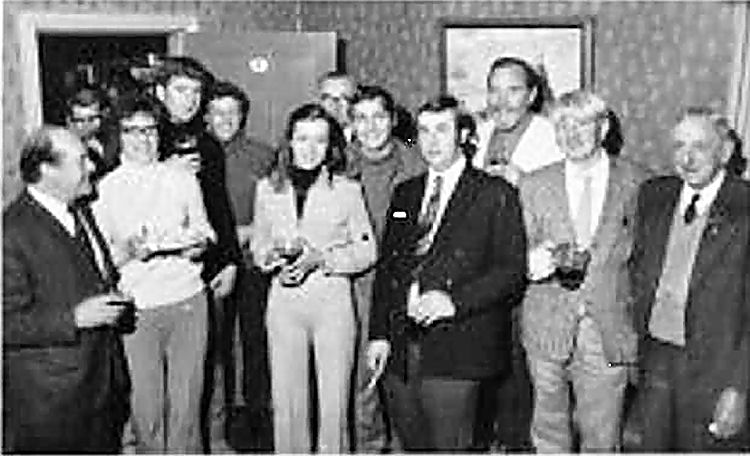
From the Dover Express, 6 August, 1971.
PENNY PUSH
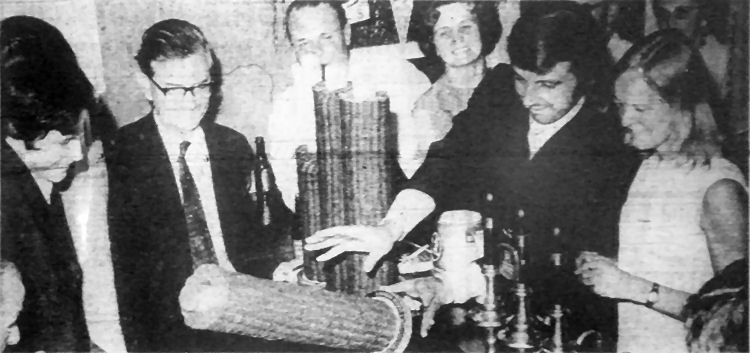
David Emery, journalist, sends a pile of pennies cascading into a
blanket at the "Newcastle" public house. With his is Irene Board, whose
sister Lilian, the Olympic athlete, died so tragically of cancer. In the
centre is licensee Mr. Percy Board, former Dover Football Club chairman,
and Mrs. Board. When the pennies were counted up, the grand total was
£90.70, which will be used for cancer research.
|
|
From the Dover Express 21 March 1986.
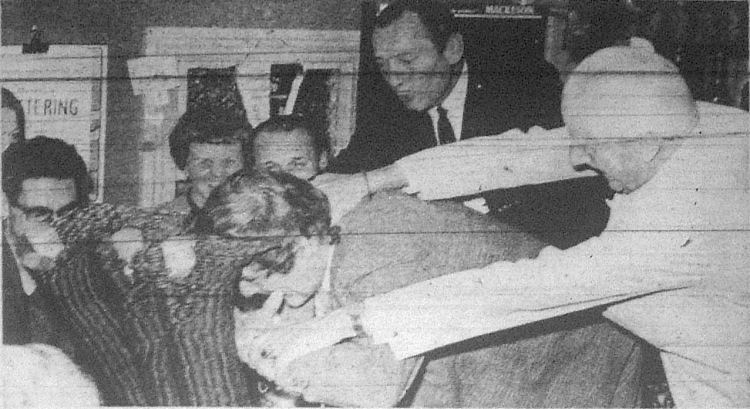
Actor Victor Maddern, who is often called on to play tough-guy roles,
chose the hard way to knock down piles of pennies at the "Newcastle"
public house, at Ewell Minnis. He did it with his head.
Maddern fellow actor, Owen Berry and Wing Commander Stamford Tuck,
the Battle of Britain pilot, shared the task of knocking down nine piles
of pennies which when counted, were found to total £95 17s. The total
raised during the evening - it all goes to the British Empire
Cancer Campaign - was £131. |
|
From the Dover Express 21 March 1986.
 |
|
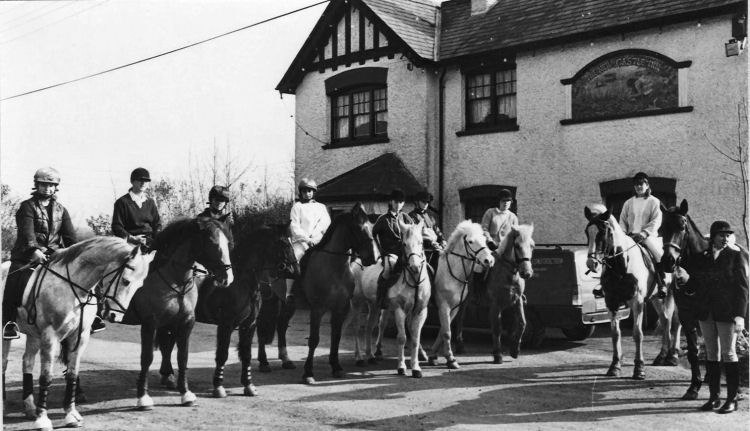
DOVER and District Horse Society raised £66 for club funds with an
eight-mile ride on Sunday.
The riders set off from the Newcastle Inn at Ewell Minnis on a
two-hour trek along local bridleways.
The society holds rides, normally on a more competitive basis, every
month. The next is on April 20 1986.
Open to those with or without their own horse, the society has about
170 members, and as well as riding offers social events such as discos.
Anyone interested in joining Dover and District Horse Society - there
is no age restriction - should contact Gill Sladden.
|
As shown above Percy Board used to have penny pushes for various
charities at his pub and used to invite celebrities along to push the
pennies over. I have been informed by John Richards that celebrities
included Henry Cooper and Jenny Agutter of the Railway Children fame.
Above photo, 1970s showing Jenny Agutter and John Richards with his
arm round her. Kindly sent by John Richards. In the background is
Film Director Don Chaffey who lived along the Valley, roughly
opposite the Windmill. He played Cricket for Alkham but not too much
to be said about that!
Jenny was at the Pub that evening to push over some pennies.
An old Pal, Bill Harvey is also in the photo, plus the deceased
first husband of Brian Luckhurst’s wife. |
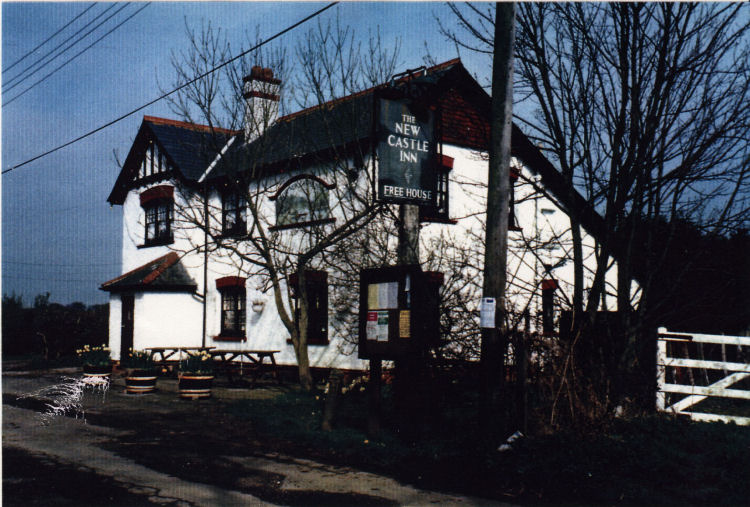
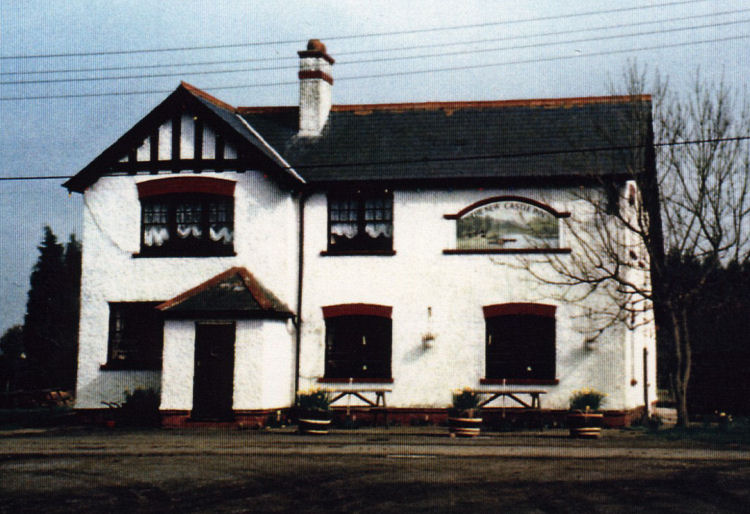
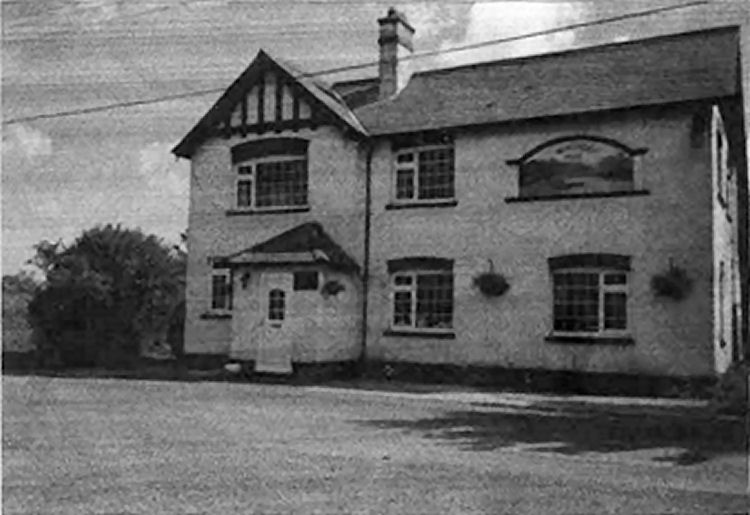
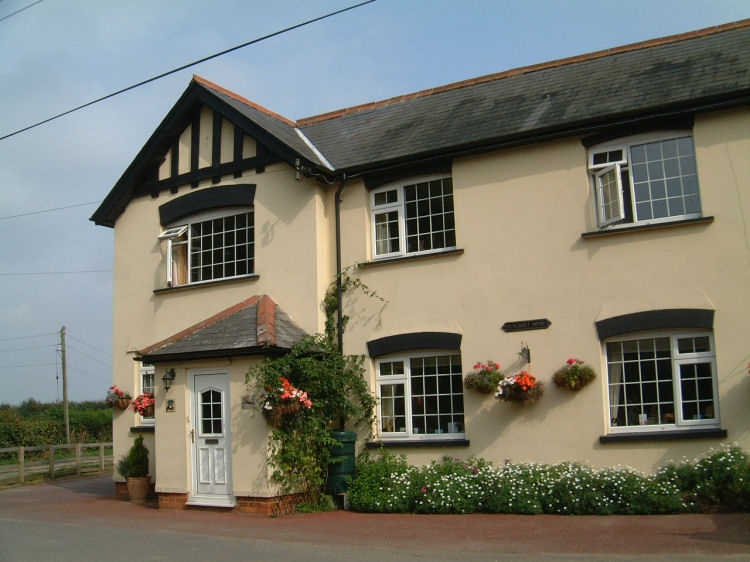
During its life the pub was frequented by the local gypsy community.
The pub was unfortunately closed in about 1995 and was converted into a Canine
Beauticians.
|
Email received on 28 September, 2010
Hi there.
My 4 x great grandfather was William G Keeler. The record of his
death on 26th May 1896 lists him as the landlord of the Newcastle inn.
This throws up a couple of questions. Firstly, it definitely refers
to it as the Newcastle (one word), yet your page says that it didn't
become the New Castle (two words) until after the fire of 1900. My
ancestor's death record shows that it was already known as the Newcastle
in 1896. I wonder if the fire date you have is correct?
(Info now updated.)
Secondly, you have the landlord in 1899 listed as William Keeler.
This obviously can't be the one who died in 1896 (!), so either this
info is wrong or, more likely, his son William (b. 1840) took it on. If
this is the case, then there were two William Keelers who were landlords
there.
Hope this helps!
Neil Harrison.
|
|
From an email received 12 November 2013.
I have fond memories of living at the pub. I can vividly remember the hunt coming to
the pub and my father going outside with trays of sherry. My mother and
I watched from the window as she disapproved of fox hunting.
I can also remember playing in the back garden. I remember as you
entered the pub there was a large open fire to the left and I can recall
Mr. Matcham the farmer sitting there with his dog. The bar was to the
right and there was a snooker room at the back. My bedroom was at the
front of the house. I remember we had a hatch and sold alcohol and
chocolates like an off licence. I also remember the gypsies that used to
camp nearby.
One of the saddest days I remember was driving away from the pub in
our Humber Supersnipe and our dog running behind the car barking. We had
to leave our dog with the new tenants as we could not take dogs with us
to our new residence.
I went back for a visit 10 years ago. I asked for directions and was
told 'oh you mean the old pub'. I was sad it was closed. I knocked at
the door of the private house it is now but no one was in. I had my
photo taken outside. It would have made my year to have been able to go
inside again but I know the new owners would be cautious to let a
complete stranger in!
I am living in Perth Western Australia but hope to visit the UK early
next year.
Best wishes.
Wendy Welburn.
|
|
From an email received 30 August 2018.
My Great grandfather, John Aedy,
was a police constable in the late 1800s, he was also a market gardener,
and a poor rates collector & labour master before he worked at the
"Chequers Inn," Challock and then the "New Castle" with Sarah until he
died there in 1918.
John was quite a lad. Born in New York, married twice or 3 times 17
children that we know about.
He also may have worked at the "Rose & Crown" Stelling Minnis, as many
years ago, we camped in a field behind the pub, when I told my
grandmother about this, she said her father had worked there, when she
was a child.
John died in the pub on 25th May 1918 of Apoplexy age 70 years.
Barbara Patton.
|
LICENSEE LIST
HALKE John James to May/1882


DAWKINS George May 1882+
CUSHMAN Henry 1886+
KEELER William G 1891-May/1896 dec'd (age 79 in 1891 ) )
KEELER William 1899+
 (Son of
above) (Son of
above)
KEELER Miss Alice to May/1900
HARNETT Mrs Alice May/1900-05+ (nee Keeler)
HARNETT George 1903+ 
HARNETT John to July/1905 dec'd (widower age 25 in 1901)
HARNETT Amy Elizabeth July/1905+
New pub built 1913 after old one burnt down.
HAWKINS Charles Augustus 1911-Sept/1913 (age 40 in 1911)

AEDY John Sept/1913-25/May/18 dec'd

AEDY J L (widow) July/1918-22
BAILEY Robert 1922+

MILNE Mr W S Dec/1922-Sept/23
(Ex
Metropolitan Constable and Steward of the Canterbury Conservative Club)
BROOKS Charles E Sept/1923-Apr/26
SWAIN Joseph Apr/1926+
PUTLAND Herbert George 1930-20/May/1946 dec'd (age 61 in 1939)
  
PUTLAND Mrs Elizabeth E (widow) July/1946+
BOARER H 1961
BRITTAIN Edgar & Elsie 1961-64+
BOARD Percy A J 1971-74+
 Fremlins
https://pubwiki.co.uk/NewcastleInn.shtml
http://www.closedpubs.co.uk/newcastleinn.html
From the Kelly's Directory 1899
From the Kelly's Directory 1903
From the Post Office Directory 1913
From the Post Office Directory 1914
From the Post Office Directory 1922
From the Post Office Directory 1930
From the Kelly's Directory 1934
From the Post Office Directory 1938
Library
archives 1974
From the Dover Express
Census
|