|
Derringstone
Barham
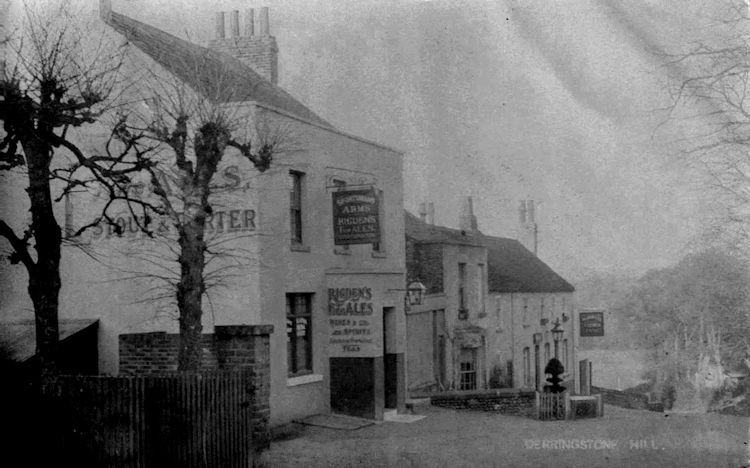
Above postcard circa 1906, kindly sent by Rory Kehoe. Also showing
the "Sportsman" pub on the left. |
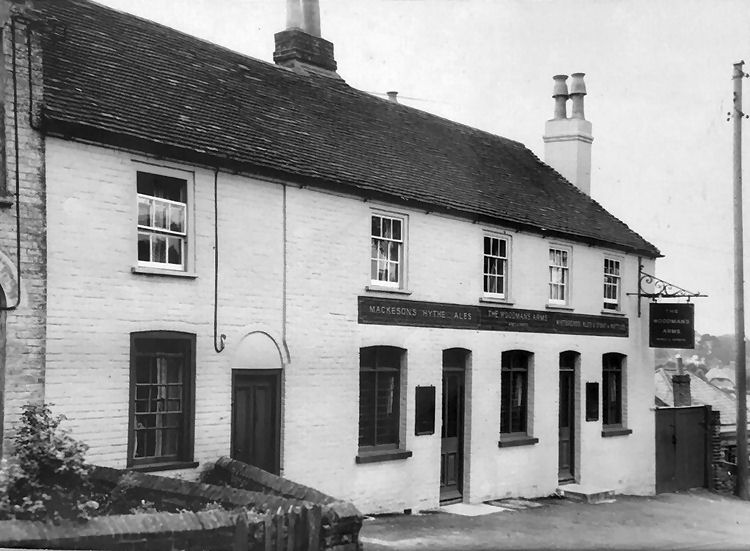
Above photo, date unknown, kindly sent by Debi Birkin. |
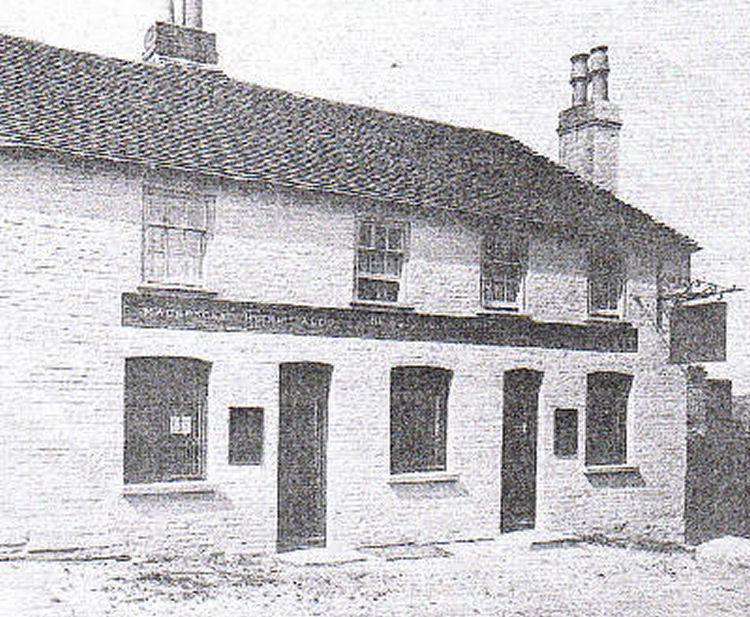
Above photo shows the Woodman's Arm's in Barham, circa 1930.
|
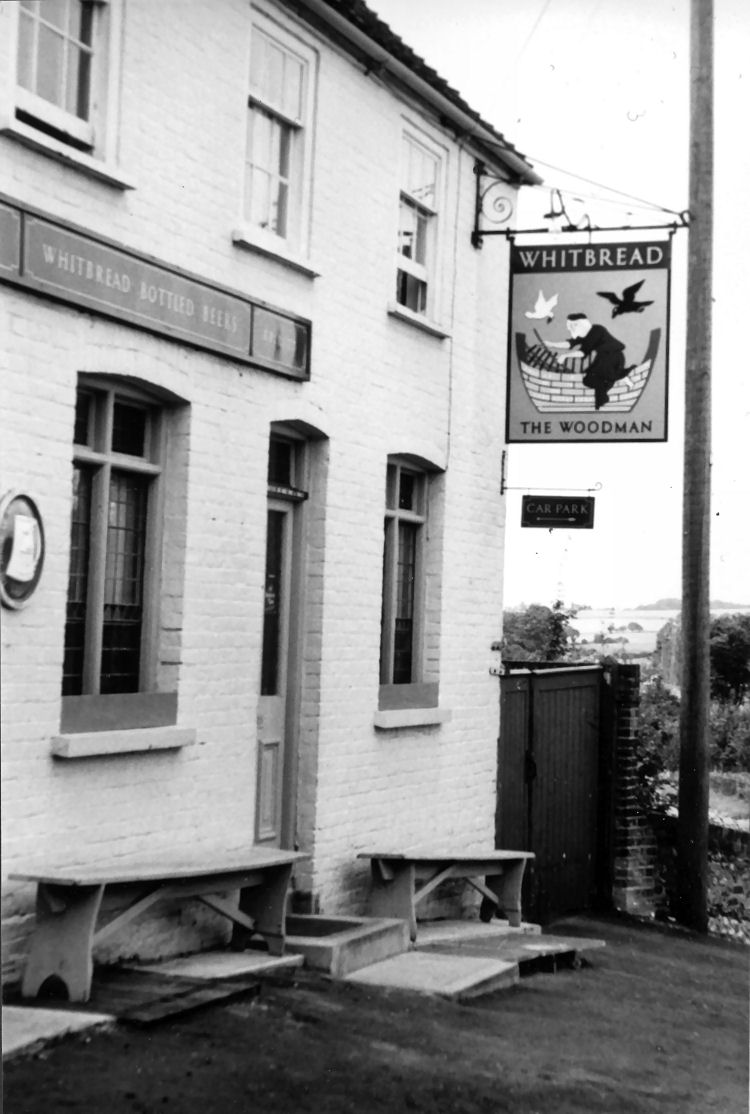
Above photo 25 August 1960, kindly sent by Clive Bowley. |
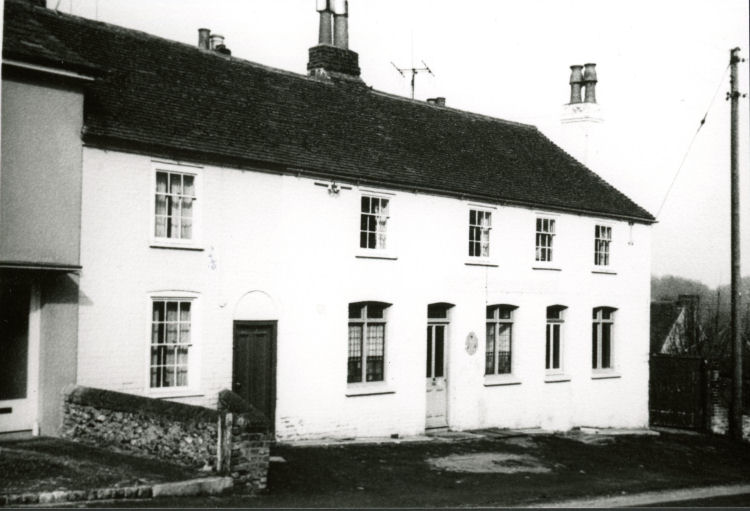
Above photo 5 March 1963, kindly sent by Clive Bowley. |
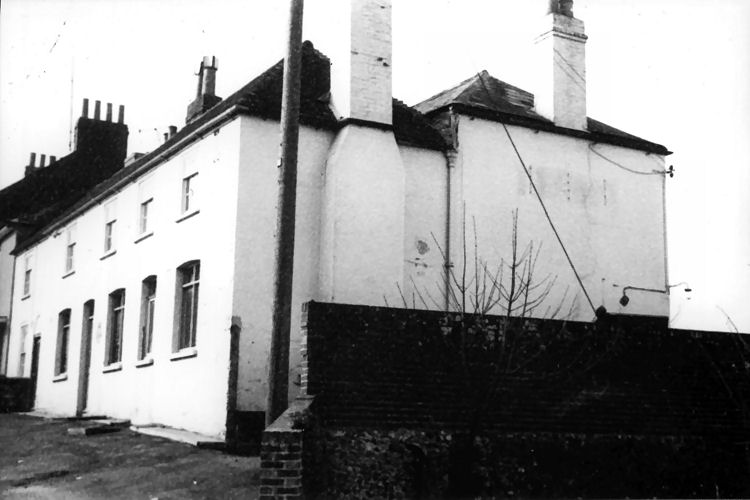
Above photo 5 March 1963, kindly sent by Clive Bowley. |
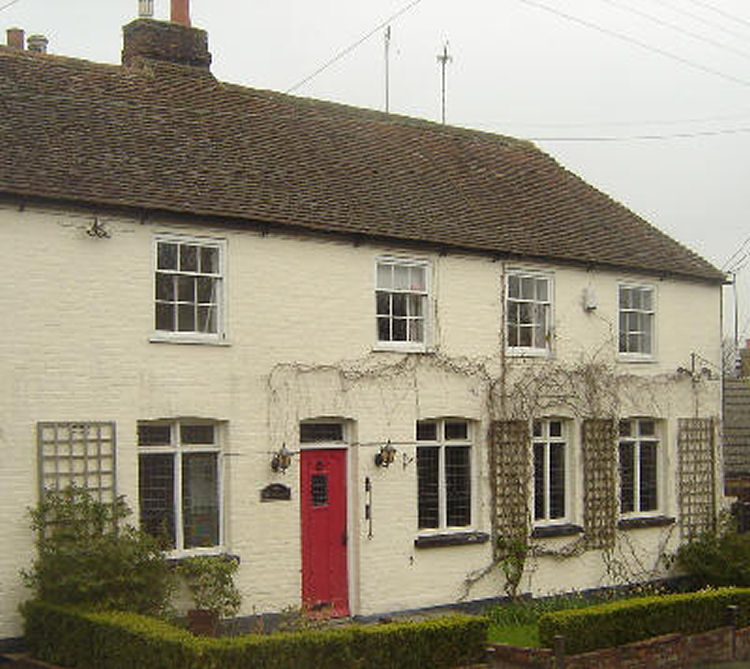
Woodman's Arms, 2008.
|
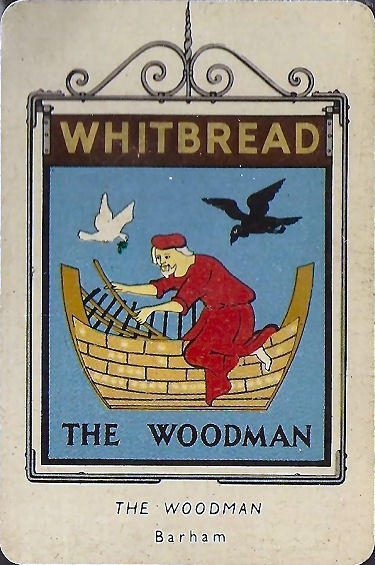 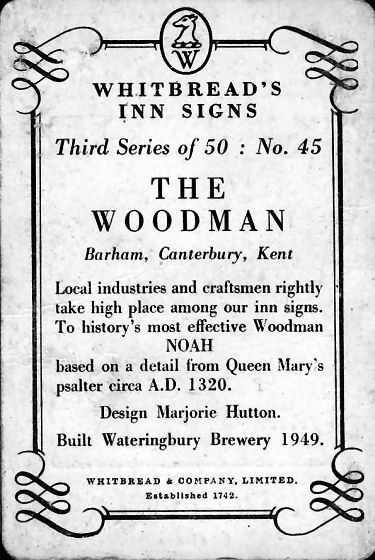
Above aluminium card issued June 1951. Sign series 3 number 45. |
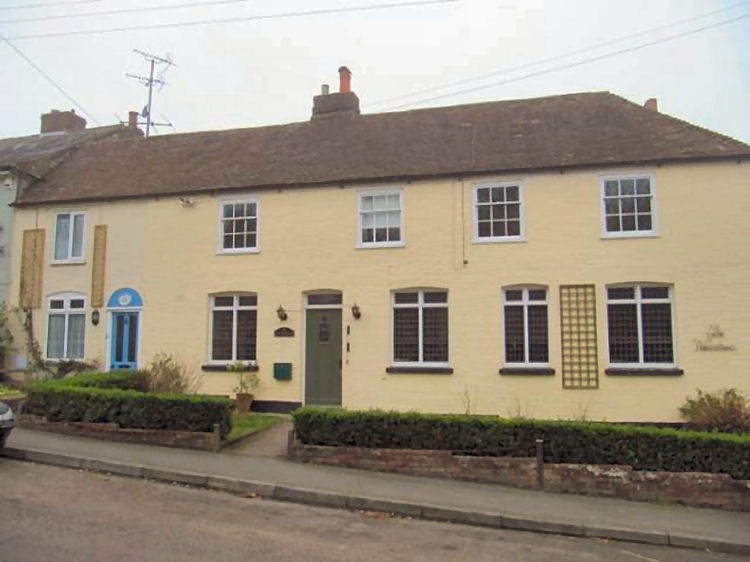
Above photo, date unknown by Darkstar. |
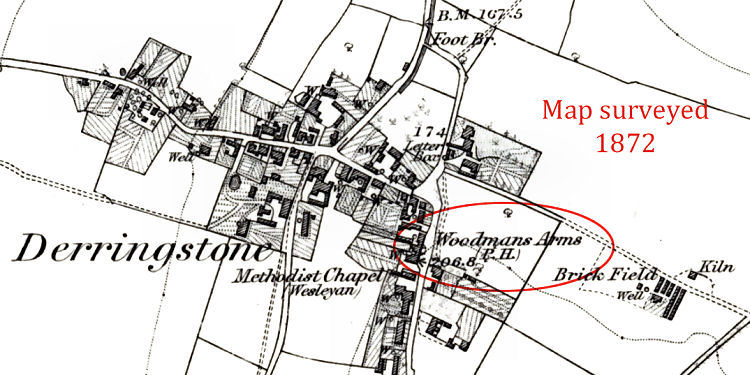
Barham map 1872. |
The building as a whole is grade 11 listed and dating back about to at
least 1761.
The pub occupied two of three original small cottages and was reputedly
owned by the then Mayor of Canterbury.
It is rumoured that the Duke of Cumberland stayed at the pub whilst
training his troops on Barham Downs.
It was converted into a pub in 1847 (although not specifically mentioned
as such in the 1851 census) with Josiah Page being the first inn keeper
until 1882.
I have also found reference to another pub called the "Woodman's Arms"
addressed at Bridge, but I'm not certain that wasn't a location error on
behalf of the newspaper editior.
|
From the Kentish Gazette, 21 March 1848.
Highway Robbery at Barham.
Matthew Fagg, 26, William Stone, 17, John Chandler Maxted, 25, James
Moody, 25, were indicted for assaulting and robbing Stephen Cannon, of a
quantity of herrings, and two baskets, value £1. 2s., his property at
Barham.
Mr. Russell prosecuted; and Mr. Horn defended Stone and Maxted.
Stephen Cannon deposed, that he was on the 25th October, selling
herrings, at Barham; he had between three and four hundred in two
baskets; went to Page's beer shop and stood there sometime; left between
ten and eleven to go to Dover; went through a brick field leading to
Gravel Pit Lane; a man who was in the road asked him to let him ride to
Dover, which witness agreed to do, and he got into the cart; after they
have got a few rods another man jumped out of the hedge and took some
herrings out of his cart; witness told him to leave the fish alone or he
would hit him with his whip; the man had on a long open gabardine; two
other men jumped over the hedge and seized his pony, and witness then
jumped out of his cart; and men's said that if he (witness) followed
them, they would knock out his brains; his fish were all taken from the
cart; he then went back to the beer shop.
Cross examined:- did not know the man in the cart; never said he thought
it all a joke.
John West deposed, that he was a labourer, at Burnham; knew the
prisoners who also lives there; on the night of the 25th October, he was
in company with the prisoner at Hobday's "Beer
Shop" till half-past eight,
and went to Page's; Maxted came down to Page's beer shop, where they saw
Cannon in the tap room; Maxted stayed about 20 minutes and then left;
witness then went back to Hobday's when he saw the prisoner standing
against the well; they had some conversation about taking some of
Cannon's fish, and went in the directions of which Cannon would go on
the road home; Maxted and Moody laid up in the hedge until the cart came
up when they got behind the cart and Maxted took the whip from Cannon;
Fagg was in the cart with Cannon; the fish were taken into a wood; where
they divided them, and threw one basket into the park; witness and Stone
gave their fresh Herrings to Maxted; Maxted was dressed in a long
gabardine and witness in a jacket and gaiters; did not recollect how
Fagg and Moody were dressed.
Cross examined:- Had always lived in Barham, and worked sometimes from
Mr. Quested; was out of work at the time of the robbery.
By the Judge:- Was sure he saw two baskets of fish.
William Foster deposed, that he lived at Barham; was at Hobday's "Beer
Shop" on the night of the robbery, where he saw the last witness and the
prisoners who left together about 10 o'clock.
Josiah Page deposed, that he kept the "Woodman's Arms," in the parish of
Barham; prisoners and West were there on the night of the robbery while
Cannon was in the tap room; Cannon Returns in about half an hour after
he left and told him of the robbery.
Cross examined:- Maxted bore an excellent character throughout the
parish.
Thomas Quested, the constable of Barham, deposed, that he approached
Stone and Fagg, but could not find the other prisoners.
Frances Goldpin deposed, that she lived at Barham, and heard of the
robbery; in the afternoon of that day Moody came to her house with some
fresh herrings which he had on a basket; she did not buy any.
William Pratlin, constable of Sheerness, stated, that he apprehended
Moody and Maxted in the dockyard, on the 31st January, where they were
at work; he told them he book them on the charge of highway robbery
between Barham and Canterbury, of some herrings; as they were going from
the magistrates Moody told him that they used no violence but only took
the hearings; they were both ill with the argue; Maxted did not deny
what Moody stated.
West re-called:- Cross examined:- Did not threaten to knock down Cannon,
he was one of the two behind the cart; Maxted had a few hearings; the
robbery was planned among themselves.
Moody received a good character from Mr. Pile his former master.
Fagg, 18 months' hard labour; Moody, 12 months hard labour; Stone and
Maxted, acquitted.
|
|
From the Dover Express and East Kent Intelligencer, 31
December, 1859.
COMMENCING BUSINESS IN A RURAL DISTRICT
Samuel Pollard, a young man described on the charge-sheet as a
draper, was brought up by Kent County Constable Hasmore, charged with
stealing on the previous Friday sixty turnips, the property of Mr.
Joshua Page, inn-keeper, of Barham.
It appeared that the defendant had recently taken up his about at
Barham, where he has a brother living carrying on the trade of watch and
clock maker. The brother, it would appear, had a fancy for rabbits, and
this, unfortunately, led the defendant into his present dilemma; for on
the evening of the 23rd inst., having assisted his brother to carry home
a clock to a neighbouring farmer's, it occurred to the brother, as they
were passing Mr. Page's turnip field that a few turnips would be
relished by the rabbits. They without more ado filled a clothes basket
with the esculent favoured by a rabbit tribe; but before they could
convey it home, they were met by constable Hasmore, whose suspicions
were excited. The defendant was taken into custody in consequence; but
the brother ran away, and had not up to that time been heard of.
James Hasmore, Kent county constable, said that on the evening of the
23rd, he was near Barham Church when he saw the defendant and his
brother carrying between them a basket full of turnips. He asked them
where they had got them, when the brother said he had been to carry home
a clock to Denne Hill Farm, and had had permission to bring back a
basket full of turnips. Their conduct excited his suspicions he detained
the turnips to make enquiries respecting them, which he did on the
following morning, when he discovered that they had been taken from a
field belonging to Mr. Page. He then took the defendant into custody;
but on going to look for the brother he found he had disappeared. When
he apprehended the defendant he told him he did so for stealing some
turnips, when defendant begged him not to press the charge.
Bt defendant - I am positive you were assisting your brother to carry
the basket containing the turnips when I met you on Friday evening.
Joshua Page, farmer, living at Barham - On the evening of the 23rd,
at about half-past seven, the defendant and his brother came to me at my
house, saying that the police had taken some turnips from them, and
wished me to tell the police I had given them permission to take them. I
told them I could do no such thing, because I had given the police
strict orders to look to my turnips, having lost a great many. I told
them, however, that if they went to the police and they chose to
overlook it I had no objection. At that time I was not aware of the
number they had stolen. From what they said I gathered that they had
taken only from half a dozen to a dozen, or a dozen and a half, but
finding, on the following morning, that the basket taken from the
defendant contained a great number, I went to the spot at which the
defendant and his brother were apprehended, and between that and my
field I picket up here and there a turnip to the number of eleven,
corresponding exactly with those in the basket. The turnips are a
peculiar sort, viz., red rind and green rind mixed together and I should
think you would not find such another sort in this country - certainly
not in the parish of Barham. I traced the turnips along to a spot in my
field where a number of turnips had been freshly pulled. The turnips
produced resemble mine exactly, and I have no doubt they were taken from
my field. The lowest value I can put on the sixty is 1s.
In reply to enquiries from the Bench, Mr. Page said he believed from
what he had heard that the defendant was a very respectable young man,
and had filled good situations in London. He had come to Barham for the
purpose of opening a draper's shop, he believed. He, (Mr. Page) thought
that he had thoughtlessly allowed himself to be led into the scrape by
his brother.
The defendant, in reply to the charge, said that he was asked by his
brother to assist him in carrying home a clock to Denne Hill Farm, the
evening in question, and that on their return his brother proposed they
should "get a turnip or two" for his rabbits. He admitted helping his
brother to pull up the turnips and to carry home the basket.
Dr. Astley fined him 5s., 1s., the value of the turnips, and costs
9s.; in all 15s. In default of payment he would go to prison for
fourteen days. The worthy Magistrate remarked that it was very
disgraceful for a young man in the defendant's position to go and
pillage the field of his neighbour, and he should have thought better of
him had he when taxed by the policeman, at once acknowledged what he had
done instead of endeavouring to cover the theft with a lie.
Defendant said he would pay the money if allowed to return to Barham
in charge of the constable.
The Magistrates said that if the constable liked to become
responsible for the payment of the fine he might, but the defendant
could be suffered to depart on no other understanding.
The constable declined, and committal appeared the only alternative,
when the prosecutor stepped forward and said he would pay the fine on
defendant's behalf reiterating what he had previously said as to his
good opinion of the defendant, and his belief that he had been led into
his present dilemma by his brother.
The Magistrate remarked that whatever influence the defendant's
brother might have had over him, defendant himself must have known that
he had no right to assist in carrying off a clothes basket full of
another person's turnips. The prosecutor was certainly behaving very
kindly to him and he trusted that, although he was now escaping easily,
what had transpired would be a lesson to him for the future.
THE TURNIP STEALING BY TRADESMEN
James Pollard, a clock-maker carrying on business at Barham, and the
brother of the young man fined on Monday, was brought up charged with
stealing a quantity of turnips from a field belonging to Mr. Josiah
Page, inn-keeper, of Barham.
The evidence is the same as that given on Monday, and after some
severe animadversions by the Magistrate on the nature of the offence and
the position of the parties committing it, the defendant was fined 10s.
and the costs, which he paid.
|
|
From the Kentish Chronicle and General Advertiser, 21 December, 1861. Price 1 1/2d.
A CHILD BURNT TO DEATH AT BARHAM.
On Saturday last, T. T. Delasaux, Esq., the county coroner, held an
inquest at the Wooodman’s Arms,” in this parish touching the death of
Matilda Maytum, aged four years. The following was the evidence:- Jane
Kennett said. On Saturday, the 30th ult., I heard a child cry in
consequence I went to the back of the premises occupied by the father of
the deceased. I saw the deceased child in flames and extinguished them.
There were only two children at home at the time, the deceased, and a
younger one, the mother having gone down the street, and the father
being from home. There was a fire in the room in which the children had
been left.
Mr. Charles Long, surgeon, deposed that he was called to attend the
deceased about three o’clock in the afternoon of the 30th ult. She was
suffering from the effects of burning on the chest and arms. He
continued to attend the deceased until she died on the Wednesday from
the effects of the burning.
Verdict, “Accidental death.”
|
|
From the Dover Express and East Kent News, Friday 2 January, 1885.
DISORDERLY HOUSE
Josiah Page, an old man, was summoned for allowing drunkenness and
riotous conduct upon his premises, The “Woodman's Arms,” Barham.
Mr. Mercer, of Canterbury, appeared for the defendant.
It appeared from the evidence that the house had been watched a good
deal lately, as it was stated that the house had not been kept in the
orderly way it used to be. Defendant had the house from his father, and
had occupied it 40 years.
The magistrates took a lenient view of the case and fined defendant 10s.
and 13s. costs.
|
|
From the Dover Express, Friday 16 October, 1903.
The Woodman’s Arms, Barham, was temporarily transferred from Jesse Wise
to Percy Death.
|
In 1923 the pub was valued at £365 and by 1934 this had been increased to
£1,300.
Water was laid on in 1929 at a cost of £8/9/-.
|
Dover Express 4th May 1945.
Wingham Sessions.
The licensee of the “Woodman’s Arms”, Barham was granted an occasional
licence for Victory celebrations on the field opposite Barham school
from 3 p.m. to 10 p.m. on the day following VE Day. |
During WWII there are indications that the two large bedrooms were
utilised by ENSA with the room between being used as a dressing room. Both
bedrooms contained a large number of wooden pegs 6 to 8 inches long on which
to hang heavy or wet clothing.
The demise of the Woodman was unique as on 11th March 1960 Mrs. Rose
Murphy, an ex-licensee, objected to the renewal on the basis that The
Sportsman's Arms was only two doors away and it was unfair to take a man's
money for a pub that could not provide a living. She had only survived by
also taking on catering and the kitchen was used to store casks of beer for
no rent, rates or licence duty.
Official visits showed that the greatest number of customers at any one
time was 10 and the average during the day was 2.27 and in the evenings
3.75.
The pub and adjoining cottage were purchased by a Mr. C. A. Lindridge for
£2,250 on the 13th January 1961 and the pub closed at the end of August. The
property was then converted to a private residence within which a bed and
breakfast business was established.
From 1898 to 1925 it was under the ownership of Bushell, Watkins and
Smith, brewery from Cudham in Kent. From 1925 to 1931, Jude Hanbury.
Mackeson held ownership from 1931, eventually being bought out to Whitbread
until it's closure in 1961. 1953 saw it mentioned as a beerhouse when a wine licence was granted,
the address given by the
Dover Express was then Bridge.
LICENSEE LIST
PAGE Josiah 1845-1886+ (also farmer age 67 in 1881 ) )
  
WISE Jesse 1891-Oct/1903 (age 56 in 1901)
 
DEAK/DEATH Percy Oct-1903-Apr/04

FARRELL Robert Henry Apr/1904+
WILLIS Arthur to Jan/1908
 MOSELEY Richard Jan/1908-July/09
STAMBRIDGE Mrs Ada Mary July/1909-May/10
PAGE Thomas Fox May/1910-13+

JARVIS Mr A to 1918
DUKES Mr D H 1918-7/Sept/22
GURD George Frederick 8/Sept/1922+
MURPHY Joseph 1925-57
 (died Oct 9 1967 age 76)
Temporary tenants 1957-60
LINDRIDGE C A 1961
https://pubwiki.co.uk/WoodmansArms.shtml
http://www.closedpubs.co.uk/woodmans.html
From Bagshaw Directory 1847
From the Post Office Directory 1874
From the Post Office Directory 1882
From the Kelly's Directory 1899
From the Post Office Directory 1913
From the Kelly's Directory 1934
From the Dover Express
Census
|

