|
2 South Street & 107-8 Beach Street

Deal
01304 375248
https://www.facebook.com
https://whatpub.com/walmer-castle
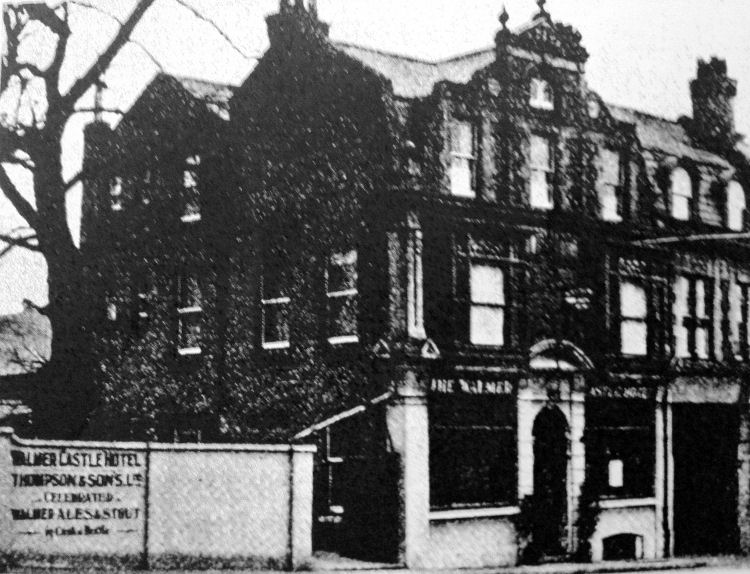
Above photo 1932. Kindly sent by Brendon Carrick. |
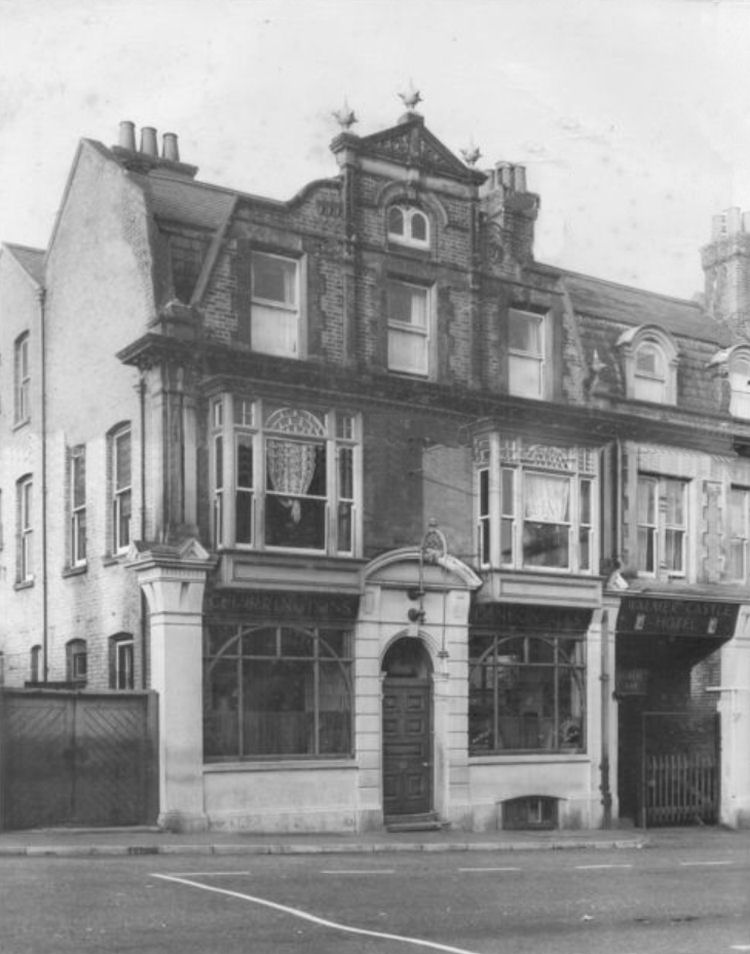
Above photograph showing the "Walmer Castle" in 1952. |
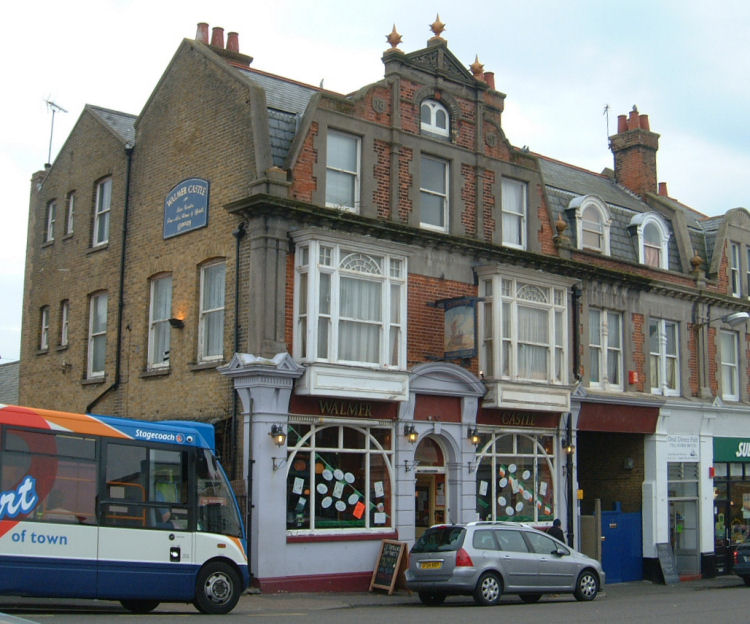
Above photo by Paul Skelton 16 March 2008. |
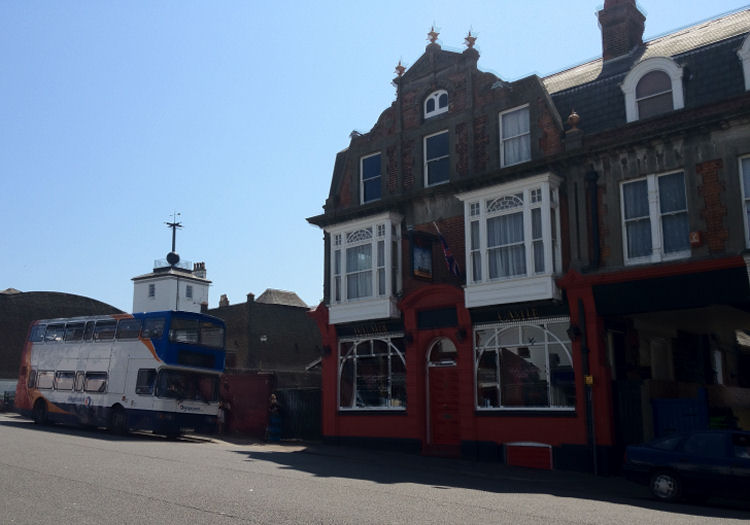
Above photo 2014. Kindly sent by Brendon Carrick. |
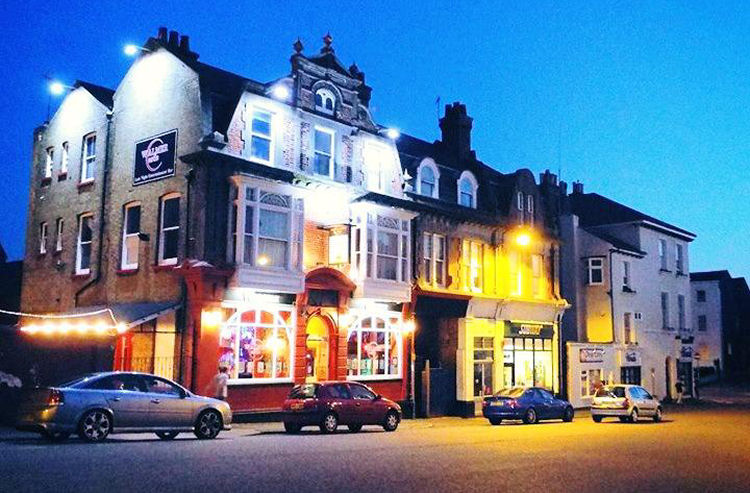
Above photo 2014. Kindly sent by Brendon Carrick. |
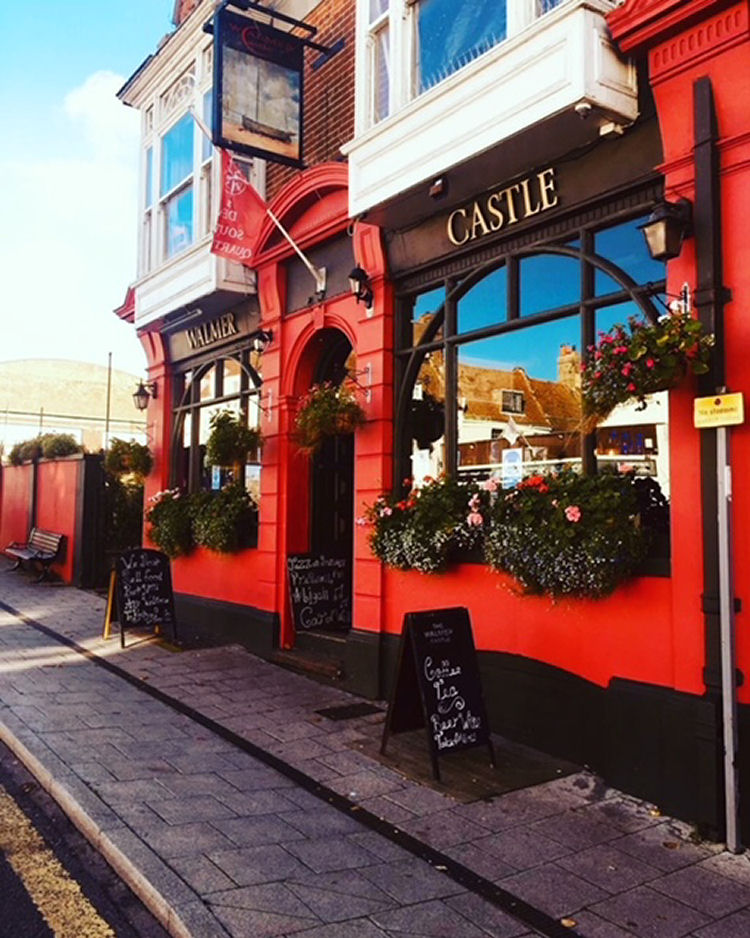 Above photo 2022. Kindly sent by Brendon Carrick. |
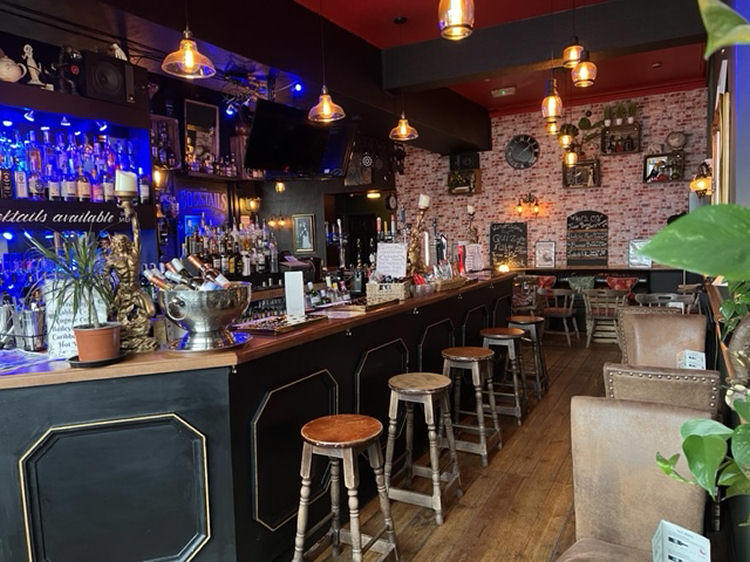
Above photo 2022. Kindly sent by Brendon Carrick. |

Above photo 2022. Kindly sent by Brendon Carrick. |
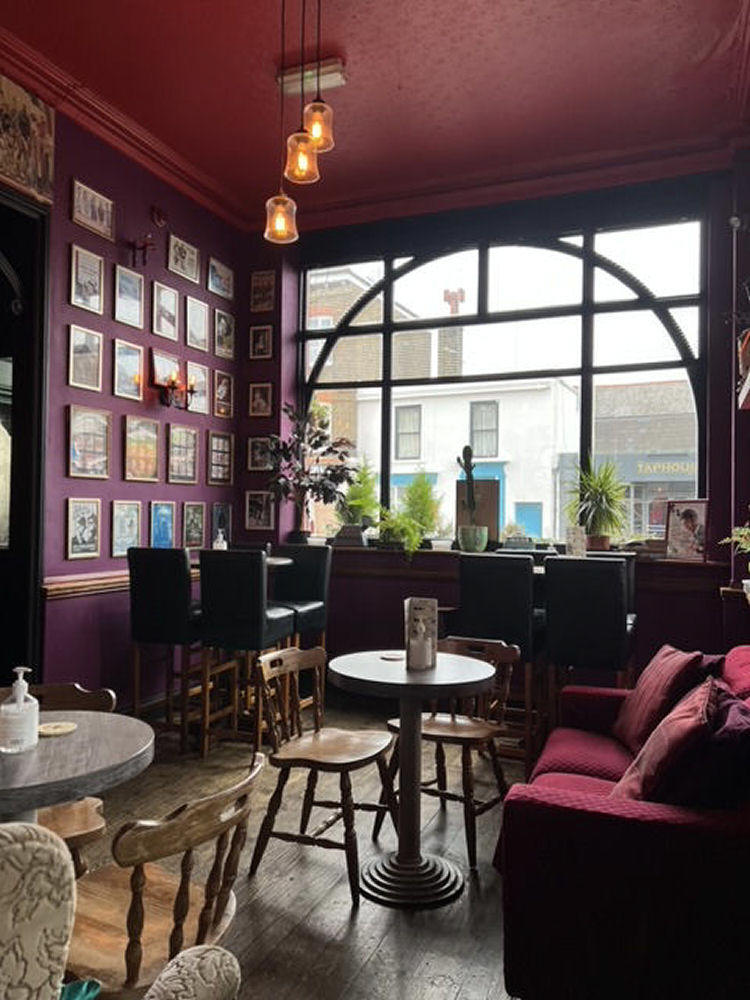
Above photo 2022. Kindly sent by Brendon Carrick. |
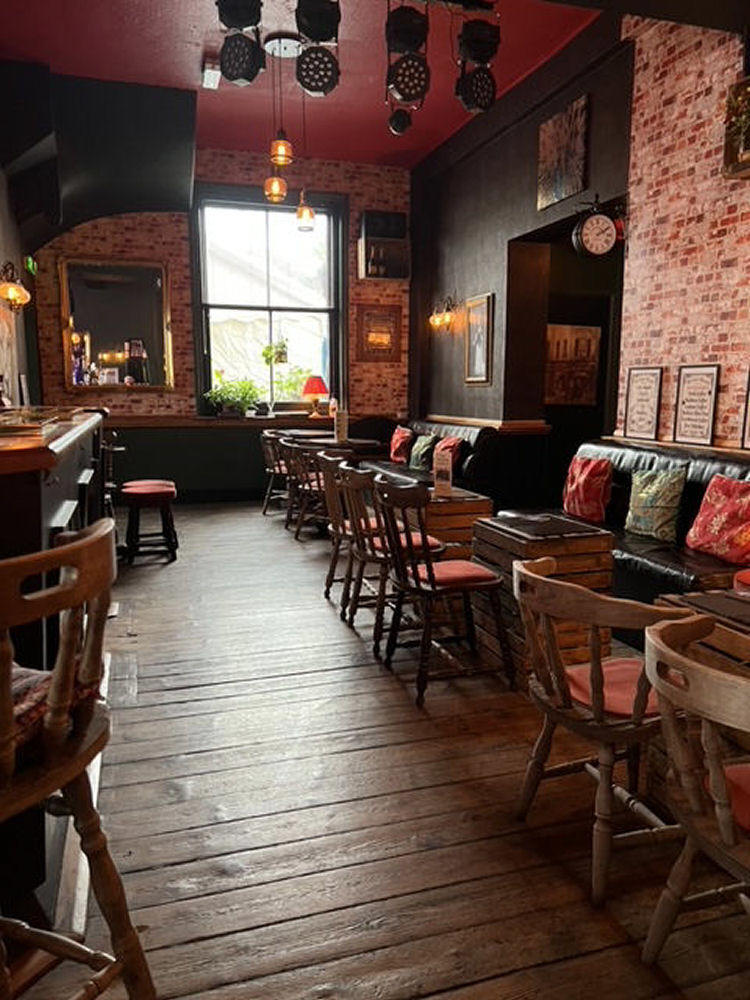
Above photo 2022. Kindly sent by Brendon Carrick. |
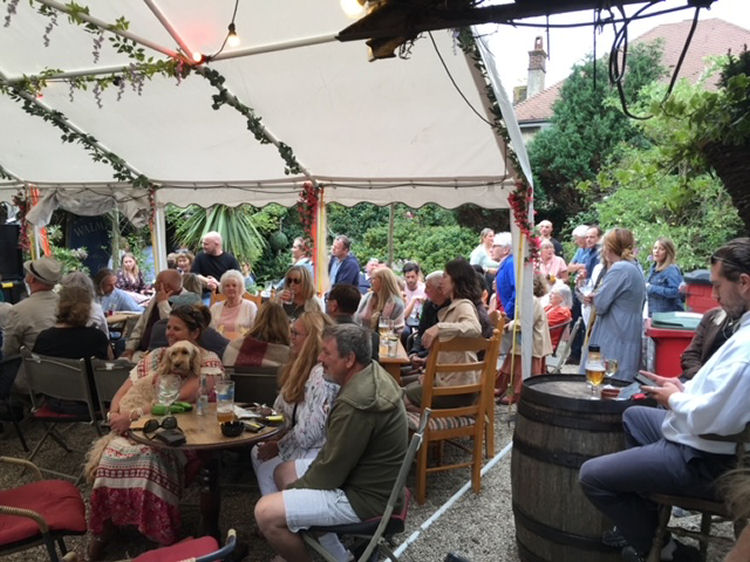
Above photo 2022. Kindly sent by Brendon Carrick. |
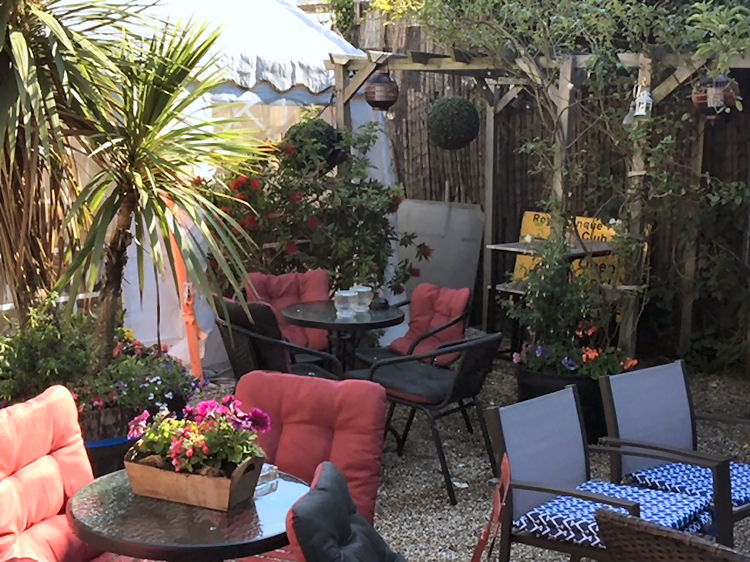
Above photo 2022. Kindly sent by Brendon Carrick. |
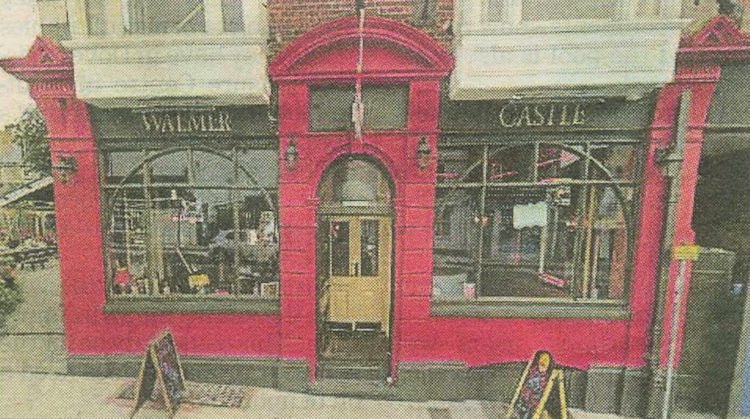
Above photo, 2024. |
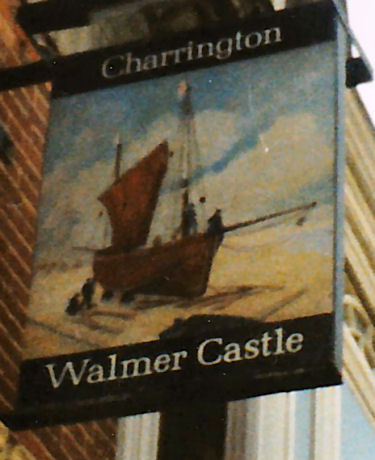
Walmer Castle sign above, November 1987.
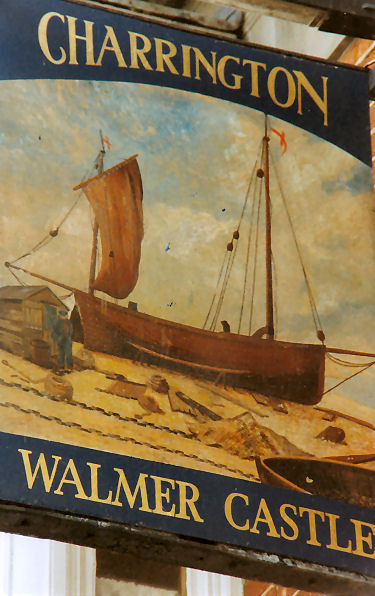 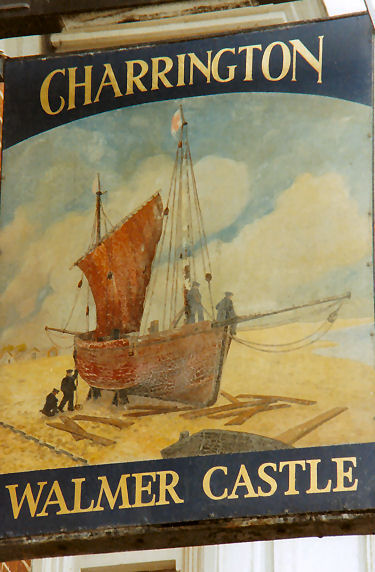
Signs above March 1991.
Above with thanks from Brian Curtis
www.innsignsociety.com |
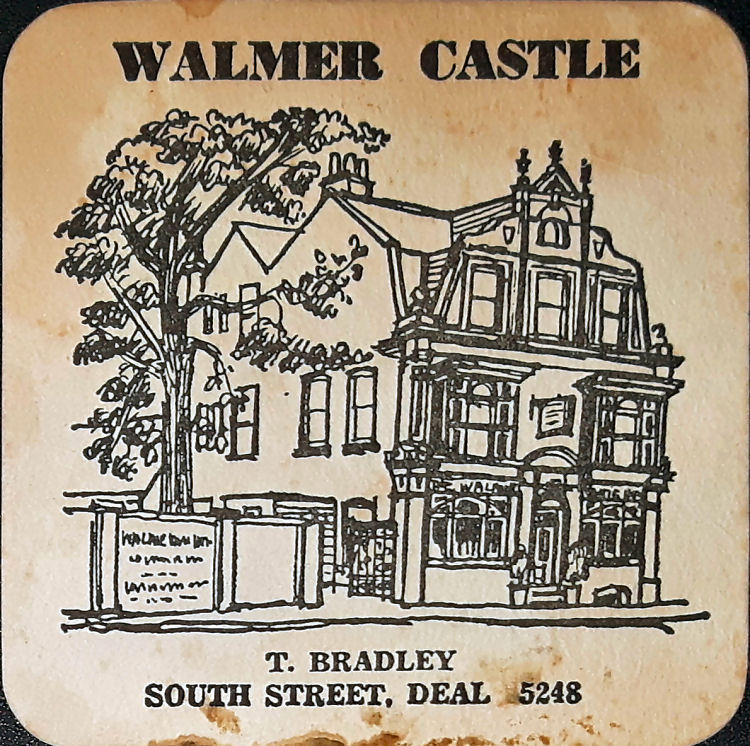
Above beermat circa 1980, kindly sent by Mike L. |
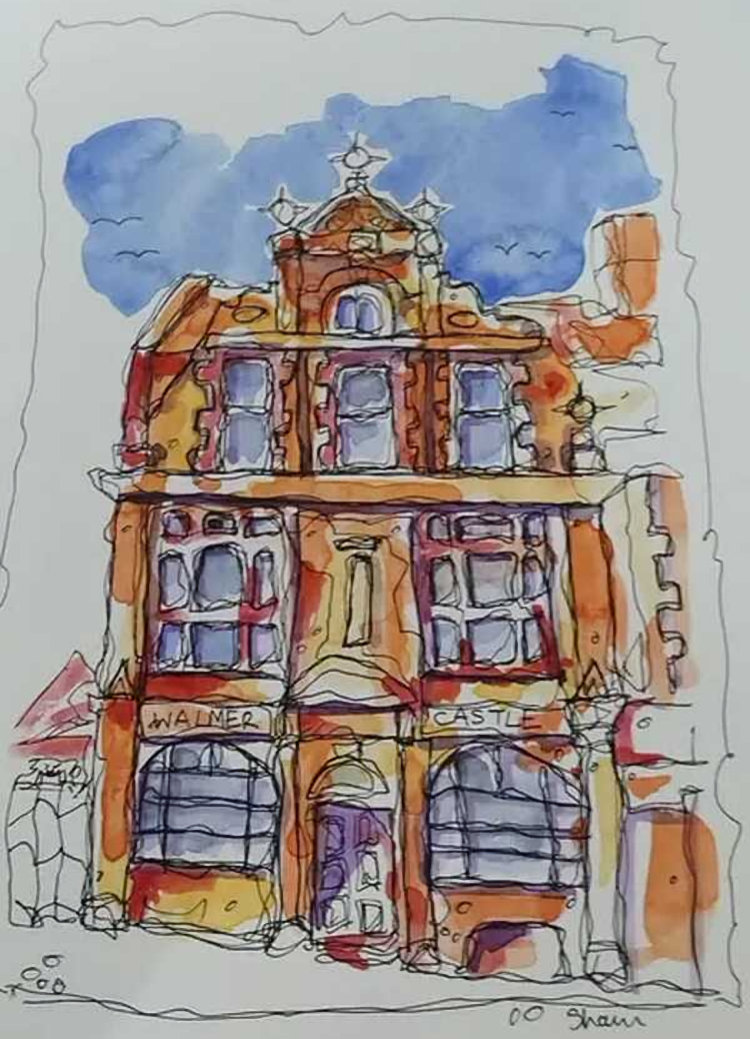
Above poainting 2026 by Shaun Smith. |
|
From the Kentish Gazette, 19 October 1810.
SALMON, "Walmer Castle Inn," Deal, RESPECTFULLY informs his Country
Friends, &c. that he commences, for the winter season making MOCK
TURTLE.
On MONDAY next, the 22nd October.
Families served at Three Shillings per quart.
|
|
Kentish Gazette 20 October 1812.
MOCK TURTLE, WALMER CASTLE INN, DEAL.
Mr. Salmon's respectful compliments to the Resident Families, and
Non-Residents, of Deal, and informs them that he will commence making
Mock Turtle for Sale, on Monday the 20th October, 1812, and continue
during the Winter, at the usual price of 3s. per quart.
N.B. All Soups and Made Dishes sent out - to be paid for on delivery.
|
|
From the Kentish Gazette, 30 May 1843.
DEATH.
May 27th, at Deal, after a short illness, deservedly respected Mrs.
Elizabeth Sympson, of the "Walmer Castle lnn," relict of Mr. E
Sympson, formerly of the "Hoop and Griffin Inn," Deal.
|
|
Kentish Gazette, 10 August 1847.
IMPORTANT SALE, DEAL.
TO BE SOLD BY AUCTION, By MR. RICHARD CASTLE,
AT the "Walmer Castle Inn," in DEAL, on WEDNESDAY, the 25th of AUGUST,
1847, between One and Two o’clock in the Afternoon,
the following VALUABLE PROPERTY in Twelve Lots:
Lot 4:— Another FREEHOLD MESSUAGE or TENEMENT, with the Yard and
appurtenances thereunto belonging, situate in Silver
Street, now licensed as a Beer House, and called the "Globe," and in the
occupation of Henry Epsley Norris.
Far Particulars apply at the Offices of Messrs. Mercer and Edwards,
Solicitors, Deal.
|
|
From the Deal, Walmer & Sandwich Telegram, 30 June 1858.
WALMER CASTLE HOTEL, DEAL
Is now open, newly decorated and refitted with every accommodation.
The Billiard room has one of Thurston's best Slate Billiard Tables
and a first class marker.
Luncheons, Dinners and Teas - Beds on the shortest notice - Good
stabling - Ostler always in attendance.
Conducted by W. Cooke.
|
|
From the Borough of Greenwich Free Press, 23
April, 1859.
THE RAMSGATE MURDER. RAMSGATE, Saturday.
By the exertions of the police sufficient light has been thrown
upon this sad occurrence to lead the belief that it is a case not of
murder but of deliberate suicide. It will seem from what follows,
that the object of the deceased was to conceal his identity, and
this would explain almost all the mysterious circumstances connected
with the case.
The deceased landed at Southampton at the end of March from
America, and went to the "Hotel de L'Europe," in that town. He there
gave a name which sounded like "Maitinger." He left Southampton for
London on the 31st of March, and there put up at "Hahn's Hotel,"
America-square. where he remained till the 7th of April. He wore his
left hand in a bondage, and said it had been injured on board ship.
On leaving the house he stated that he was a German, travelling for
pleasure, and that he intended to make the tour of Scotland before
returning to Germany, but must first go to Paris. The people of the
hotel believed him to be a native either of Baden or Wurtemberg.
During his stay he appeared perfectly rational, but on an occasion
when asked to write an address card he said he would do it at once,
as his memory had been very had since he suffered so severely from
brain fever in America. On the 7th of April he left by the South
Eastern Railway for Dover, and as has been already stated, in the
same carriage with Mr. S. Kidd. It has been said that Mr. Kidd
noticed two of the deceased’s finders to be wanting. The fact was,
however, that Mr. Kidd only observed that the fingers were bandaged
— that is to say, concealed, as they were at the hotel in London. On
the 8th, the deceased bought the hatchet at Mr. Green s shop at
Dover, as described, and stated himself to be a Russian. There is
now no doubt that he was a German.
On the same day he went from Dover to Deal by omnibus, and while
on the wav the deceased being the only inside passenger, a German
Bible was thrown or dropped outside the omnibus, and was picked up
by a travelling hawker, who sold it at the "Swingate
Inn" adjoining. The Bible has been examined by the police, and
contains no name or marks. The motive of deceased in getting rid of
it was probably because the possession of the book would have
pointed out the country to which he belonged, and thus have given a
clue to his Identity, for from this time the deceased always
declared himself to be a Russian.
On arriving at Deal the deceased went to the "Walmer
Castle Inn," stayed there on Friday night, and on Saturday
came from Deal to Ramsgate by train. On arriving at Ramsgate he had
his beard and moustaches shaved off. He then put up at the "Royal
Oak." While there, a gentleman in the coffee-room addressed him
in French and in German but he shook his head saying, "Me Russ, me
Russ." On Sunday he visited Margate, as already described, and after
dining at the "Elephant
and Castle" went to the house of Braiser. He then went for a
walk with his carpet-bag under his arm, and returned to the railway
without it. The bag was found near Westbrook empty, and near it two
shirts and a white handkerchief with the marks picked out. He
returned to Ramsgate the same afternoon, and at half-past five
o'clock entered an oyster shop, where he partook of some
refreshment. At a quarter to seven he was at the inn at Broadstairs,
and at a quarter past seven he was seen near Sir Moses Montefiore’s
wall upon the cliff. At a quarter past eight a man whose clothes and
hat (the latter of large size and peculiar shape) exactly resembled
those of the deceased, was seen by a young man named Jackson at the
eastern end of the Parade on Mount Albin. The man walked rapidly,
with his arms folded and his eyes fixed on the ground. Here all
trace of the deceased is lost till he was found at six o'clock next
morning, dead, under the East Cliff.
The following are among the circumstances which point most
directly to suicide. The spot where the body was found was
twenty-five feet from the cliff, and the tide had risen some feet
above it, high enough to have washed the body to the place where it
lay. About eighty yards lower down the beach in nearly a direct
line, cuts were found in one of the chalk rock exactly corresponding
with the blade of the hatchet found close by. The rock would be
covered as soon as the water rose above half flood. Now half flood
on Monday morning was about half-past one o'clock, and the death
consequently took place between a quarter-past eight and half-past
one. The rick is as high as a chair, so that a man might easily have
knelt beside it, placed his fingers upon it, and chopped them off.
The hatchet, fingers, boots, and umbrella (the articles moat likely
to sink) were found near this latter spot, while the clothes were
found among the seaweed near the body, It is stated by experienced
boatman that if the deceased add chopped off his fingers at the rock
alluded to, and had then stabbed himself to the heart and fallen
instantly dead, his body would have been washed by the regular set
of the rising tide right in shore, and a little to the northward, or
exactly to the place where, in point of fact, the body was found.
The knife, which has been searched for without success would
probably have been knocked out of the wound by the body washing
against the low rocks, and if the knife had a wooden handle, as many
sailors' knives have it might have floated and been carried out to
sea. The medical evidence was that that the skin was frayed, which
would have resulted from the body washing up the beach.
Why, It may be asked, did the deceased chop off his fingers? The
answer is, for the same reason that he had previously bandaged them,
viz., to conceal his identity. One joint of the first finger and two
joints of the second had been amputated some years age, and were
perfectly healed. By this mark the deceased would be recognised, and
therefore he determined to take all his fingers off. There was no
sign of disease or other injury upon his hand to requires a bandage.
The absence of his watch and ring is now easily accounted for. Both
being of peculiar appearance, and likely to lead to his
identification, he would destroy them. If there was a name written
inside his boots, to cut off the tops would effectually get rid of
it. The wristbands of the shirts were torn off and the marks picked
out with a similar object. The unfortunate man, however, forgot a
scrap of paper which was found near the body in the storehouse. and
which there is no reason to doubt belonged to the deceased. It
contained these words, written in pencil in indifferent German:—
"Dear Mother, here are five dollars — little, but from a good heart.
Henry Mattereigh.
The fact that the deceased's money was gone has led many persons
to believe that a murder had been committed. Now, when the body was
found the tide was two hours ebb, and long before that time country
carta may have gone down to the beach, as in frequently the case,
for gravel, or persons may have been, as one was known to be,
looking for shells. It is not improbable that the deceased was
robbed after death. The pockets of his coat were turned inside out
and two front pockets in his angola shirt were ripped open. We may
add that it is very doubtful whether the deceased had so much money
as has been represented. The few words addressed to his mother led
to the belief that be was poor. His cloth es were scanty, much worn,
and of the coarsest description. He never paid in gold, always in
silver and his watch was silver and not gold, as has been stated.
Had the unfortunate man been murdered there are three ways by
which the body must have been carried to the beach, viz., past the
harbour, where police are stationed all night, down Augusta stairs,
where a coastguard is stationed, or by Dumpton stairs, where there
is another guard. To suppose that the man was murdered on the beach
is contrary to all the evidence to suppose that he was carried down
past the guard is nearly incredible; or indeed that it should have
been attempted, when the body might so much more easily have been
dropped over the cliff.
The facts point, we think, clearly to the conclusion that the
deceased returned from America a disappointed man, reduced in means,
and that this circumstance, affecting a brain previously weakened by
disease, led him to determine on suicide. At first intending to send
his mother some little money, he changed his mind, and endeavoured
by the means we have described to do away with all trace of his
identity, and thus lead his family to the belief that he had
perished at sea or in a foreign land.
Melancholy as such a solution of the mystery is it in some
satisfaction to know that what at first appeared an atrocious murder
can be thus explained. No circumstance that has happened for many
years has created so deep a sensation in East Kent as this shocking
affair.
At the adjourned inquest held on Wednesday the jury found the
following verdict:- "That deceased died from a wound in the left
breast, but by whom it was inflicted there is not sufficient
evidence to show."
|
|
From the Kentish Chronicle. 16 July 1859. Price 1½d.
Mr. G. WEST, IS INSTRUCTED TO SELL BY AUCTION.
AT THE “WALMER CASTLE INN,” IN DEAL. on THURSDAY, the 21st July, 1869,
at Two o'clock precisely.
IN TWENTY-FIVE LOTS.
A Large Building formerly the Town Hall and Market Place of Deal, in the
very best part of the Lower street, with an extensive frontage thereto,
and capable of conversion into a range of first-class shops. Also, a Dwelling House and Shop, with Bakehouse, on the South Esplanade,
Deal, commanding fine sea views. Also, Thirteen Dwelling-Houses, at the north end of Deal, and several
other eligible Plots for Building, with sea views. All the Estates are Freehold, and the Land-tax is redeemed. For further particulars apply to Messrs Mercer and Edwards, solicitors,
Deal and Ramsgate. |
|
From the Deal Walmer and Sandwich Telegram, 4 January, 1860.
Petty Sessions
3 soldiers fined 12/- and 4/- costs or 21 days imprisonment in
Sandwich Gaol with hard labour for breaking the tap room of the "Walmer
Castle."
|
|
From the Deal Walmer and Sandwich Telegram, 4 January, 1860.
Advertisement.
"Old's 'Times' Omnibuses leave Hill's "Railway Tavern" and the
"Walmer Castle Hotel," Deal for Dover each evening at 5.30 - Fares:
Inside 2/-; Outside 1/6d.
|
|
From the Deal Licensing Records, 3 March, 1870.
3rd March, 1870 at a
Special Sessions, "Walmer Castle Hotel" - the former hotel having been
burned down and the same having been rebuilt but no licence was granted
at the last Annual General Licensing Meeting. Thomas Gould is licensed
to keep an Inn, Alehouse and Victualling House.
|
|
Maidstone Telegraph and West Kent Messenger. 3 September 1870.
From the London Gazette of Friday, Aug/ 26.
BANKRUPT. [In this County]
Thomas Gould, Deal, Kent, licensed victualler, Sept. 14, Canterbury.
|
|
From the Deal, Walmer & Sandwich Mercury,
4 April, 1874.
ALLEGED ASSAULT.
William Carterfield, school-master, was summoned by Daniel George
Frederick Simmons, law-clerk, for unlawfully assaulting him at the "Walmer
Castle Hotel" on the evening of Good Friday, the 3rd inst.
Mr. M. Martin, jun., appeared for complainant, and Mr. T. C. Hall for
defendant.
Defendant pleaded not guilty.
Mr. Martin said the case was a complaint for a common assault, but
the circumstances out of which he believed it arose were of a private
nature, and such as the present court could not interfere with; and for
that reason he did not think it at all necessary to bring them into the
case. Mr. Martin then proceeded to inform the Magistrates of the
circumstance which occurred at the "Walmer Castle" on the night in
question, and his statement was fully borne out by the evidence of
complainant and his witness.
D. G. F. Simmons, the complainant, deposed: I am a law-clerk. On Good
Friday evening, the 3rd April, I went into the "Walmer Castle Hotel"
about ten o'clock. I went into the bar parlour, and there were also
present Mr. Hills, Mrs. Hills, Mrs;. Rawlings, and Mr. Egbert Hayward,
the latter having accompanied me in. A few moments after I entered
defendant and two more gentlemen came in. I then asked Mr. Hill for an
explanation of some matter in which myself and defendant were concerned.
As soon as I had done so defendant rose from his seat, addressed some
observation to me, and appeared to take the matter into his hands. I
told him that I did not recognise him or anything like him in the
matter, whereupon he immediately struck me a blow in the face between
the eyes. I was sitting in a low chair at the time, and was leaning
back. He struck me with his closed fist. It was a pretty violent blow,
and the mark thereof showed for a day or tow afterwards. I did not
attempt to return the blow, and I appealed to those present, and said,
"You see what has taken place." He then seemed to try to draw me into a
quarrel with him so as to cause me to strike him back, and he heaped
abuse on me. An altercation took place between us, during which he
called me several names, and said I was the son of a carpenter, and I
told him my family connections would bear investigation as well as his
would, and that I was not in the town under as assumed name. He then
collared me by the throat, dragged me into the passage, tore my
neck-tie, and half strangled me. When there he threw me down, and struck
me several times whilst I was down, and ultimately some one from the
kitchen came and took him from me. I then got up and left. I did not
strike defendant at all. I had been to supper at Mr. Hayward's, and left
there about ten o'clock. I went straight there to the "Walmer Castle,"
and I arrived home a few minutes after half-past ten.
Cross-examined by Mr. Hall: I had not been imbibing very freely that
night, and I will swear that I was not drunk. To the best of my
recollection I had only been in the "Walmer Castle" once before that
day, and that was in the morning. After I had taken a seat in the bar
parlour some conversation took place between me and Mrs. Hills, but I
don't know who commenced it. When defendant and his companions came in,
I asked Mrs. Hills to use her mediation in this private matter which had
previously been mentioned, but she shook her head. I did not hear her
say that it was not a matter for a public bar. I did not insist on
having the matter explained. Carterfield came on me suddenly and almost
dumfounded me. He struck me as Mrs. Hills was speaking to me. I believe
he made some observation, but I did not hear what it was. I don't know
if he said "Mrs. Hills says it is private." When defendant spoke I did
not say, "Don't take any notice of that thing." I used the words I have
said. I did not insinuate that defendant's real name was not Carterfield
until the first blow was struck. I have not sought opportunities of
insulting defendant, nor have I said that if ever I met him in public,
that I would expose him. Defendant did not say that if I repeated the
annoyance he would turn me out of the room. I will swear that he struck
me a violent blow with his fist in the first instance. I went into the "Walmer
Castle" with Egbert Hayward. He is a companion of mine. I made no
observation when Carterfield took hold of my collar to put me out, nor
am I aware that Hayward said "That will do, Simmons; that's just what he
wanted." I won't swear that Hayward did not say that, or that I did not
reply "Yes, that will do." I will swear that I did not hold up my fist
to defendant. I remained sitting in the chair after Carterfield struck
me, and he then commenced heaping insults on me, calling me a
carpenter's son. I did not continue to insult Carterfield, but after he
had insulted me I did tell him that his name was not Carterfield. I did
not call him an impostor. I said my family affairs would bear
investigation as well as his, and that I was not in the town under an
assumed name. I did not offer to strike Carterfield, but I protected
myself as well as I could because he was using very rough means. He
struck me after I was down in the passage, I did not strike him then.
Nobody requested me to leave the room, nor was Hayward asked to take me
out, as I was drunk.
Egbert Hayward deposed; I was in company of the complainant the whole
of Good Friday evening. He had tea and supper with me that day at my
house, and I accompanied him to the "Walmer Castle" about ten o'clock. I
went into the bar parlour. Mr. and Mrs. Hills and Mrs. Rawlings were
there, and Mr. Hall and Mr. Stubbs came down from the billiard room. A
short time after that in came Mr. Carterfield, Mr. Abram, and Mr.
Browne. Mr. Simmons talked to Mrs. Hills about a private affair, and
after defendant came in I heard complainant ask Mrs. Hills to explain
something of what had been said. She refused to do so, and said she did
not want to know anything about it, or words to that effect. After that
Carterfield made an observation to complainant, but I could not hear the
words, and then complainant said to him, "I don't recognise you. You are
a thing." Carterfield then got up, put his arms round complainant's
neck, and struck him in the face. He struck Simmons two or three times
whilst the latter was sitting in the chair. Simmons did not get up from
the chair, and I heard him appeal to Mr. Hall, I think it was, but he
did not reply. I said to Simmons, "You have got the law in your own
hands, and you can do what you like." An altercation took place between
them, and Carterfield got up again, put his arms around Simmons' neck,
and struck him in the face, as hard as he could I should say. The blows
caused Simmons' face to swell. Carterfield then dragged him into the
passage, where Simmons fell down, and then Carterfield shook him.
Simmons was quite sober.
Cross-examined: I will swear that Simmons was not drunk. I was not
asked to take him home because he was intoxicated. I had been to the "Walmer
Castle" several times that day. There was no anxiety on our part to meet
these parties. We did want to meet defendant and others. Both Simmons
and I have said that if we ever caught them in a private room we would
expose them. Complainant sat in a chair, and did insist that Mrs. Hills
should introduce a certain subject, but she said she did not want to
know anything about it. I did not hear anyone say it was a private
matter and aught not to be discussed in public. Simmons said to
Carterfield "I don't want to have anything to do with a thing like you."
Carterfield said "If you call me a thing again I will put you out of the
room." He continued to call him a "thing." I heard no such expression as
"He's drunk, and aught to be put out." I will swear that I saw
Carterfield strike a blow. I did not see complainant hold up his hand to
Chesterfield. I will swear that Simmons was not drunk.
By the Bench: I can't be certain, but I don't think complainant had
been into the "Walmer Castle" that day but once before with me.
Mr. Hall, before calling witnesses on behalf of his client, said
that, according to his instructions, the complainant was the worse for
liquor on the night in question, and was so excessively disagreeable and
insulting that it was the general impression amongst those present that
he ought to be put out. Scornful and opprobrious names having been
addressed by complainant to his client in particular, the latter
considered himself justified, both on his own account and on behalf of
the company generally, in putting complainant out of the room.
There could be no doubt, according to his instructions, that the insult
offered to his client was a premeditated one, for both complainant and
his witness had been repeatedly heard to threaten an exposure, whatever
that might mean, and they had from time to time gone into this hotel for
the purpose of meeting the defendant.
After some further observations, Mr. Hall called Mr. Hills, who
deposed: I was present at the bar of the "Walmer Castle" on the evening
of Good Friaday, the 3rd. I saw the complainant and defendant there, and
the latter spoke to my wife about some scandal, but she objected to talk
of the subject as it was not a matter to be brought up in a public room.
Simmons almost demanded my wife to mention the matter. From his manner I
do not consider that he was sober at the time. Finding that Simmons did
not desist from his mandatory manner Carterfield said he thought my wife
was quite right, and drew complainant's attention to what my wife said.
Simmons then said to my wife, pointing to Carterfield, "Don't listen to
that thing. He has nothing to do with it." Carterfield took hold of
complainant and shook him. I did not see any blows struck. Carterfield
went back to his chair, and Simmons again referred to him and continued
his annoyance, when Carterfield said that if he did not leave off he
would put him out, and after more annoyance from Simmons he did get up
and put him out. I heard someone advise Hayward to take Simmons away as
they thought he was drunk. Simmons' conduct was gross and abusive, and
most decidedly calculated to provoke and irritate Carterfield. It was my
opinion that he ought to be removed. I have several time heard
complainant and Hayward say that the first time they met Mr. Abram they
would make him explain certain private matters. Carterfield and Abram
are relations, I believe, and are mixed up in this private matter.
Cross-examined by Mr. Martin: I was present when Simmons entered the
bar, and he was quiet until this affair between himself and Carterfield.
I consider he was drunk from the fact that he could not sit properly in
his chair - he sat on the arm first and fell from that into the chair,
and afterwards kept sliding out of that. Also when he was talking to
Carterfield his speech was imperfect. I was in a position to see whether
Carterfield struck or shook Simmons. I will say positively that he did
not strike him, but I am pretty sure that he did not. I saw no blow
struck. Carterfield took it upon himself to put Simmons out of the room.
Mrs. Rawlings was the next witness called, but as the Magistrates
hinted they did not require any further evidence, Mr. Hall said he would
merely question her as to the condition of complainant. Witness then
said: He was decidedly tipsy. I saw him come in, and was there all the
time. He was not steady in his walk, and not very so in his seat. He
also looked rather silly.
Cross-examined: he had a little brandy to drink in the "Walmer
Castle." It is not usual to serve a drunken person, but he was not so
bad that he could not walk.
By the Court: I heard some one ask Hayward to take Simmons away.
Mr. hall: did they say why?
Witness; because there would be a row, and he was tipsy.
By Mr. Martin: That was after the shaking or striking.
The magistrates then retired, but were only absent for a moment or
two. On their return the Mayor said they had very little hesitations in
coming to a decision, as the case was very plain and simple. It would be
dismissed with costs; and it aught never to have been brought before
them.
|
|
Whitstable Times and Herne Bay Herald, Saturday 8 January 1887.
A Pleasing Testimonial.
Mr. Alfred Weston, formerly proprietor of the "Walmer Castle Hotel,"
in Deal, and who has just entered upon the
proprietorship of the "Queens Head Hotel," Maidstone, was presented
on his leaving Deal with a valuable gold
watch and chain, in recognition of the services he had rendered the
tank. The presentation was made by the
Mayor, at a meeting of the inhabitants held at the town hall. The
watch bears a suitable inscriptions. Mr. Weston
was a member of the Town Council of Deal, and it may be said that he
comes to Maidstone with the highest
credentials.
|
|
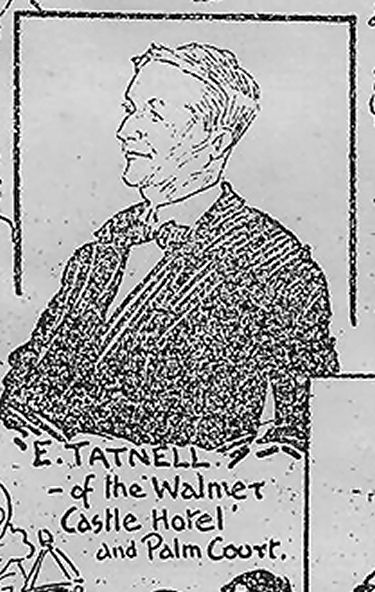
From a drawing titled "Sketches at Deal" by George Davey 1923.
|
|
From the East Kent Mercury 11th February, 1975, kindly supplied by Deal library.
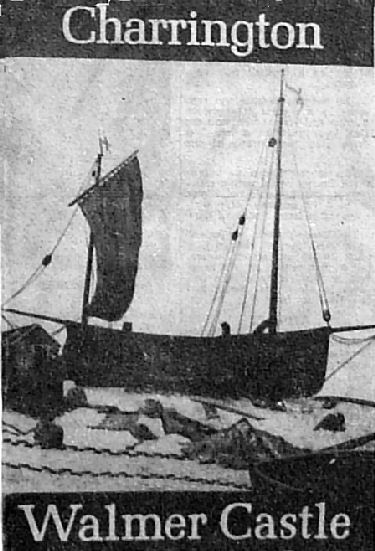 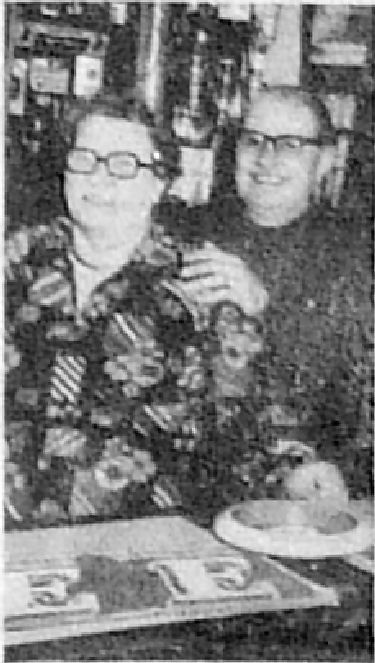
Above left, new sign, right landlord Bill and Min Chaffey
A new sign makes its appearance in the centre of Deal in the next few
days. It will be swinging high on the wall of the "Walmer Castle" public
house in South Street, where Bill and Min Chaffey dispense the
hospitalities. The inn-sign is the work of the talented Bass-Charrington
artist Bill Pierce, and depicts the ill-fated Walmer lugger, Walmer
Castle, lost with all hands off the Isle of Wight in 1892.
|
|
From the East Kent Mercury 12th November, 1980.
WALMER CASTLE REOPENS.
An old public house with a brand new look opened its doors in Deal
last night (Wednesday). After six weeks of rebuilding the "Walmer
Castle," in South Street is back in business in a big way. Licensee
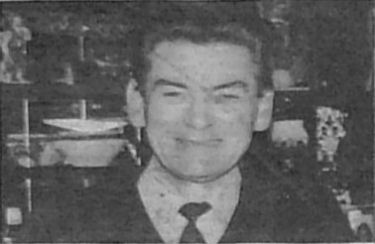
Tommy Bradley and his wife Brenda, are pleased with their new bars and
they hope customers will find the changes to their liking too.
The total cost of the refurbishment of the historic hostelry is more
than £50,000. Charrington the brewers have spent some £40,000 while
Tommy has invested over £11,000 in the facelift.
Tommy and Brenda, who have been at the "Walmer Castle" for two years,
say: "We have confidence in Deal as a town for the future and especially
in the "Walmer Castle" as a public house.
But it is Tommy and Brenda's warm and pleasing personalities which
will attract people to the new-look pub.
Tommy comes from Londonderry an has all the charm of those from the
Emerald Isles. On top of this he has a lifetime of hotel and public
house experience. His father was a hotelier and Tommy has been in the
business since he came out of school at the age of 14.
In the business, that is, with the exception of six years he spent in
the Army, much of it with the Devonshire Regiment active against the
terrorists in Malaya.
Those who recall the "Walmer Castle" as it was should look in without
delay. They will not know where they they are... the bars have been
transformed and enlarged. There is a completely new decor and
furnishings and there's little doubt the pub is now one of the most
comfortable in the area.
There is going to be a number of misses busses now. Those dropping in
for a few minutes to escape the wind and the rain that bears down South
Street will find time playing tricks with them - it could be Tommy's pet
leprechaun - and five minutes will multiply into 50 in no time at all.
The origins of the "Walmer Castle" are lost in time but it is
believed to have been one of Deal's first coaching inns and doing a
smart business accommodating ship masters, pilots, Royal Navy officers
and civil servants visiting the Naval Dockyard at the hotel's back.
The hotel was completely destroyed by fire in the early hours of
October 22, 1867. In those days Deal had no fire brigade so fire
appliances from the barracks were called out.
But their hoses would not fit the mains and the fire soon had a
complete hold on the building. So it was not long before adjoining
premises were burning too.
In the end troops did put out the blaze but the heat was so intense
windows on the opposite side of the road cracked.
The present structure dates from 1897 and is named after an ill-fated
Walmer lugger Walmer Castle and not the Henry V fortress which is now a
home of the Queen Mother as Lord Warden of the Cinque Ports.
The floundering of the Walmer Castle off Ventnor, Isle of Wight, on
March 15, 1892, was one of the great local sea tragedies of the last
century.
The lugger had first been named Petrel and was missing for six weeks
before being found full of water off Brixham. Four Walmer boats were
lost in the unexplained disaster.
The lugger was brought back to Walmer and refitted. And she was
renamed Walmer Castle.
At the time of the second tragedy, the lugger had cruised down
Channel - "gone to the west'ard" said local folk - in search of ships
needing a pilot.
In storm conditions the lugger was trying to find shelter when she
was over-whelmed by a huge sea only a few hundred yards from safety.
Among those drowned in the Walmer Castle was the skipper and owner,
Henry Axon, who had missed the Petrel disaster having left the lugger to
act as pilot to a ship going up Channel.
The swinging inn sign outside the "Walmer Castle" depicts the doomed
lugger in all her glory on the beach at what was then called Walmer
Road.
It is the work of Charrington artist Bill Pierce, and recalls
something of Deal and Walmer's maritime past.
The inn sign may well recall the past but inside the "Walmer Castle"
the atmosphere is very much of the present. The "Walmer Castle" is now
part of the 1980s.
Tony Arnold.
|
The public house was not licensed in 1869 as the original burnt down on
October 22 1867 and a new premises had to be rebuilt, so this, the second
"Walmer Castle" on the site, built 1867-70, was preceded by an even older
one. I do not know yet what caused the fire to destroy the original.

Again in 1896, the licence was not renewed by arrangement.
1899 the Deal Licensing Register was referring to this as the "Walmer
Castle Hotel" and "Skating Rink and Gardens,"
South Street, and again the same by Pikes of 1908.
The original "Walmer Castle" was on the site of the now Lloyds bank and
is on the opposite side to the one that is with us today.
An outlet for Charrington & Co. in 1974.

|
From the Dover Express, Thursday 6 June, 2019.
By DEAN KILPATRICK
Pub garden plans passed despite noise concerns.
DOORS STAY OPEN UNTIL MIDNIGHT
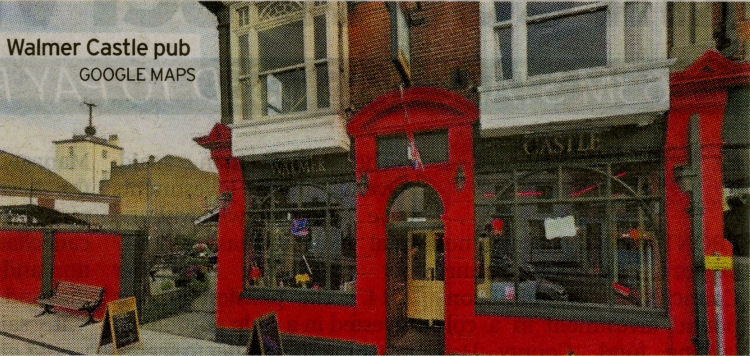
A PUB will be able to keep its garden open to customers for longer
despite some residents claiming it will make their lives “a misery"
Patrons of the Walmer Castle in South Street, Deal, can now remain
outside until midnight on Fridays and Saturdays and 11pm on Sundays to
Thursdays - initially on a six-month trial basis.
Four people had objected to the initial proposal put forward by manager
Brendan Carrick, which would have seen the garden used until 1am at
weekends, amid fears the hours would make it more difficult for locals
to sleep. But the pub said the plan would actually reduce noise levels
by removing the need for smokers to congregate outside the front door
earlier in the evening - a
suggestion dubbed as "laughable" by complainants.
A letter written by resident Alan McGlashan, read out at the hearing on
May 31, read: "If he is able to keep the garden open for longer, it will
not just be the smokers using this area - but possibly the whole pub on a
warm evening.
"The noise will be no different whether people are standing and smoking
outside the front of the pub or in the garden as the noise will come
directly through the gates or over the garden wall.
"My other concern is people not being able to gain access to the pub
will stand on the public footpath and shout out to their mates. This
happens occasionally anyway, but this practice will just continue on
much later and make our lives a misery."
Other representations from locals
focused on current issues with "noise nuisance" while another described
the area as a "police hotspot" with "sex and defecating (taking place)
outside my property" Representing the pub, solicitor Stephen Thomas
said: "The 2am problems happen - kebab customers are there smoking,
customers using other premises in Deal are there smoking, people waiting
at the taxi rank are smoking - but that's
nothing to do with my client."
He went on to say there had been no complaints about any of the extended
hour events held at the pub in the past year, and suggested the outside
areas were "fully controlled" by members of staff.
Other changes including pushing back the final entry and re-entry times
by an hour, and the removal of door staff on Thursday nights were also
approved.
|
|
From the East Kent Mercury, 25 September 2024.
Driver given interim ban by magistrates.
Man with drugs outside pub had knife in Mercedes.
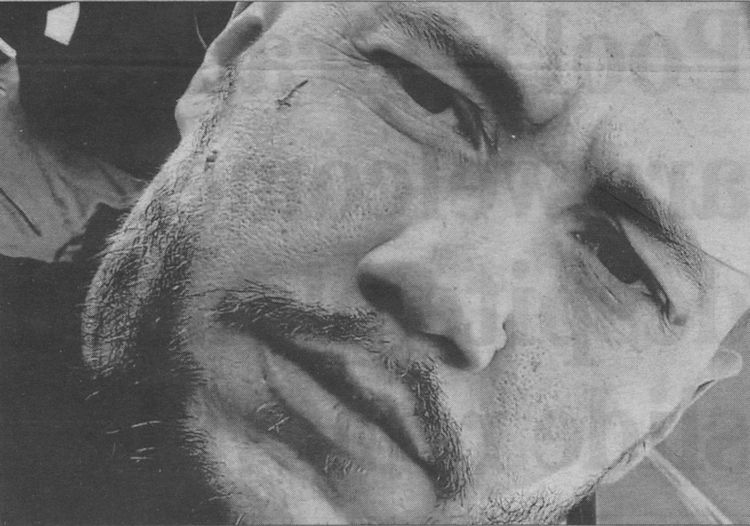
A man caught on CCTV taking cocaine outside a pub was found to have a
knife in his Mercedes. Not only was Charlie Atkin spotted sniffing the class A drug outside
Deal’s Walmer Castle, he was also caught showing a friend a “white
substance” before driving off in his C220. The 34-year-old was later arrested after police used blue lights and
sirens to pull him over when they spotted him behind the wheel in The
Strand. And when they searched him and his vehicle, they found a lock
knife inside the car as well as several cocaine wraps in his pocket. Atkin, of Mill Hill, Deal, was later charged with possession of cocaine,
possession of a bladed article, drink driving and drug driving. He admitted the offences when he appeared before magistrates in
Folkestone on September 13. Sidumiso Moyo, prosecuting, said: “It was just after midnight and
council cameras saw him sniff some white powder and thought it was
suspicious and operators suspected he was taking drugs and police were
called.” However, when officers located his car nearby it was empty. They could
see no sign of Atkin so officers told council CCTV operators to give
them another call if he returned to the area. Ms Moyo told the court he did return to the area and was again spotted
acting suspiciously by the council camera operators. She added: “He was then seen with a white substance in his
hand and was showing a friend and then returned to his car and drove
off. Then police officers saw him driving and he made some poor
manoeuvres and they decided to pull him over because of the manner of
his driving and they used the lights and sirens to stop him. “He had some cocaine in his pocket and told the officers he had just
bought it and there were another six packs of white powder in his jeans
pocket and a sum of money. “He was given a roadside saliva test which proved positive for
controlled drug and there was a female passenger in his vehicle, but
nothing was found on her. There was also a knife found in the vehicle in
the centre console and it had a lock mechanism which activated the blade
extension.” Magistrates also heard in total he was found with 3.51 grams of cocaine
and when given a breath test, that proved positive too and he was in
fact over the legal drink-drive limit. Atkin gave a drink-drive reading of 45 micrograms of alcohol in 100ml of breath. The legal limit is
35. Magistrates were also told when his blood was tested he was found to
have 78 micrograms of Benzoylecgonine (a cocaine by-product) per 100ml
of blood in his system. The legal limit is 50. The bench also heard Atkin had previously been banned in 2009 for drink
driving, so was looking at a three-year ban because he had now been
convicted of the offence twice within a 10-year period. Maggie Biglou, mitigating, asked the court for an adjournment so Atkin
could have a presentencing report carried out on him to find out more
about him. Magistrates agreed but said they were looking at all options as the
offences were so serious. Atkin was placed on an interim driving ban until then and bailed until
he learns his fate at Margate Magistrates’ Court on October 15. |
LICENSEE LIST
SALMON William 1804-12
SYMPSON Elizabeth 1812-27/May/43 dec'd (age 60 in 1841 ) ( ) (  South
End)( South
End)( Lower Street) Lower Street)

COOKE W 1858+

GOULD Thomas 1870+
OUTWIN John Thomas & Co Mar/1874+

ASHDOWN Middleton Mar/1875+
WESTON Alfred 1882-Dec/86


SCHURIG Paul Alex 1891+

REDGRAVE Adeline Carlotta to Feb/1900
ABRAHAMS Horace Feb/1900+
LOGAN John 1913-22+
 
TATNELL E 1923+
PURKIS William E 1934-38+
 
CHAFFEY William C 1974-75+
Charrington & Co
BRADLEY Tommy 1978-80+
???? Sam & Renée to 1989 (Moved to the "Antwerp"
CARRICK Brendan 9/Aug/1999-2022+
https://pubwiki.co.uk/WalmerCastle.shtml
According to the Deal mercury Horace Abrahams was lately of 42,
Wellington Street, Strand, and formerly of the Shakespeare Head, Wyatt
Street. (No idea where that is.)
From the Pigot's Directory 1828-29
From the Pigot's Directory 1832-33-34
From the Pigot's Directory 1840
From Bagshaw Directory 1847
From the Post Office Directory 1874
From the Post Office Directory 1882
From the Post Office Directory 1891
From the Post Office Directory 1913
From the Post Office Directory 1922
From the Kelly's Directory 1934
From the Post Office Directory 1938
Library archives 1974
From the Deal Telegram
Deal Licensing Register
From the Deal Walmer & Sandwich Mercury
|

