DOVER KENT ARCHIVES
PUB LIST   PUBLIC HOUSES Paul Skelton

Earliest 1812

Palm Tree

Latest 2008

Wingmore

(Elham)

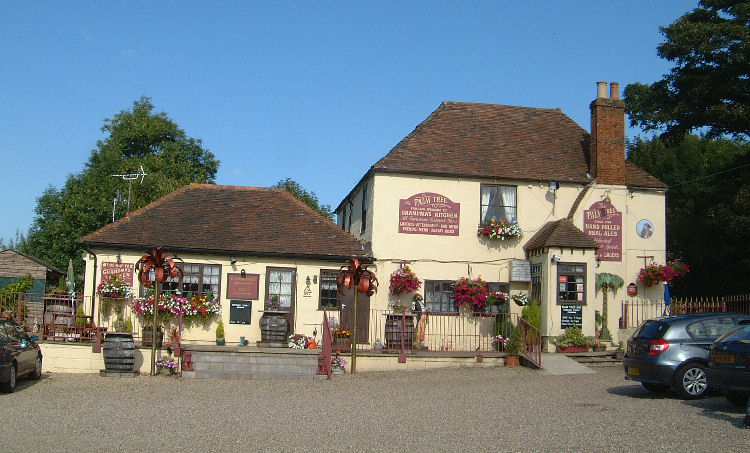
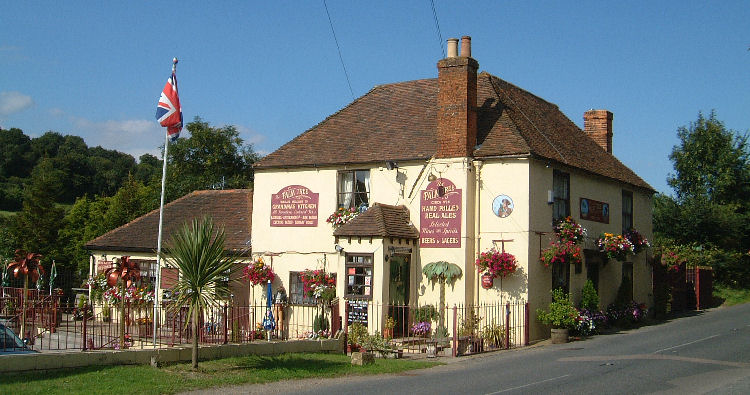
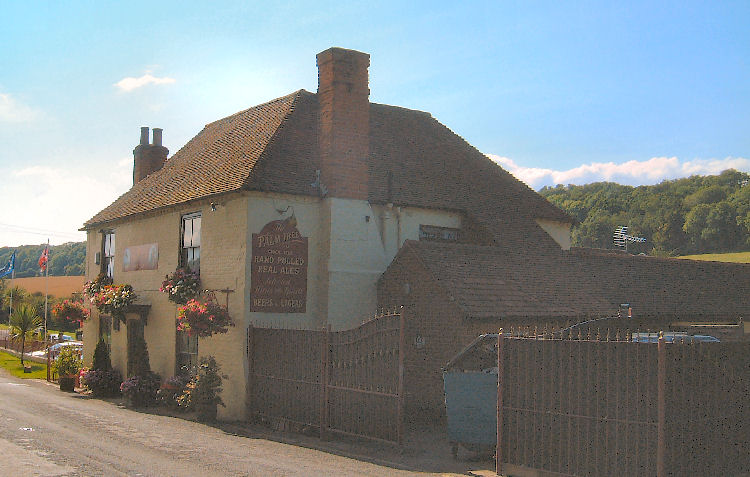
Palm Tree at Elham Palm Tree at Elham Palm Tree at Elham

All photos by Paul Skelton, 22 Aug 2008.

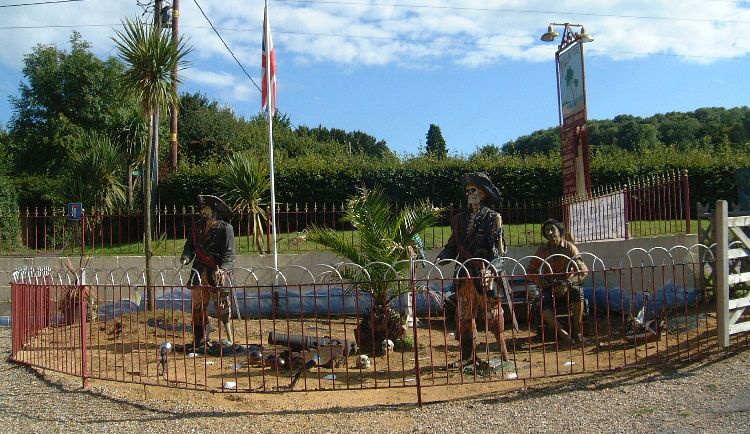
Palm Tree pirates at Elham

Above photo show the pirates in the garden.

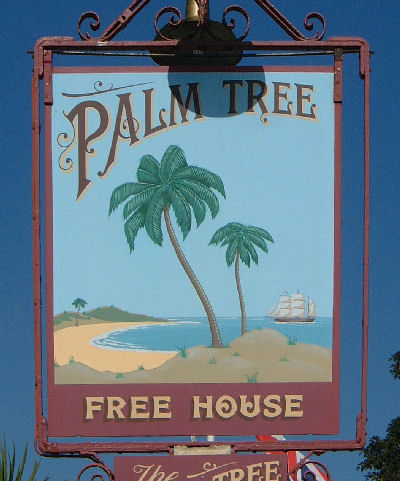
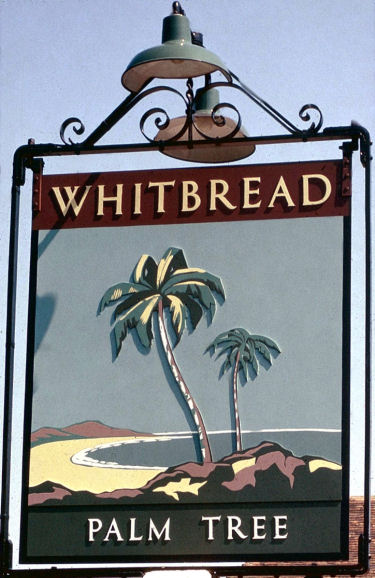
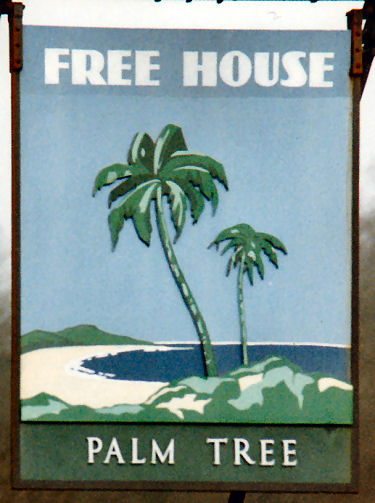
Palm Tree sign at Elham Palm Tree sign at ElhamPalm Tree sign 1966

Sign left 2008. Sign right May 1966.

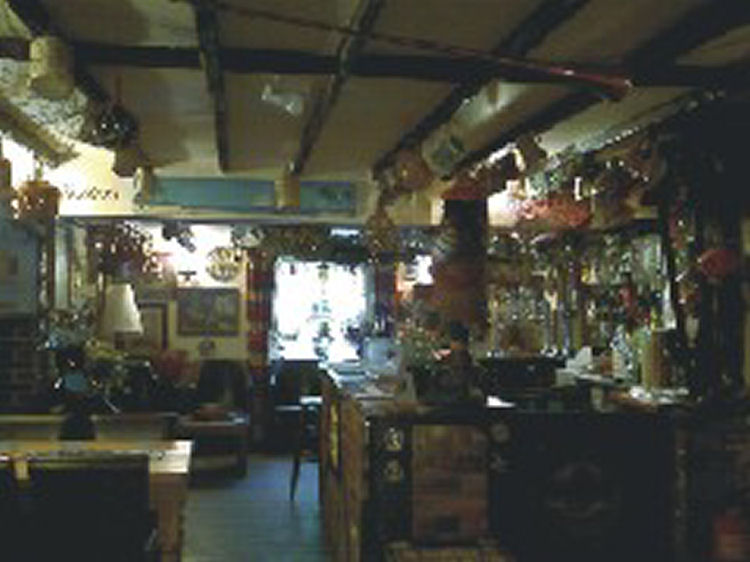
Below the inside of the bar.

Palm Tree bar in Elham

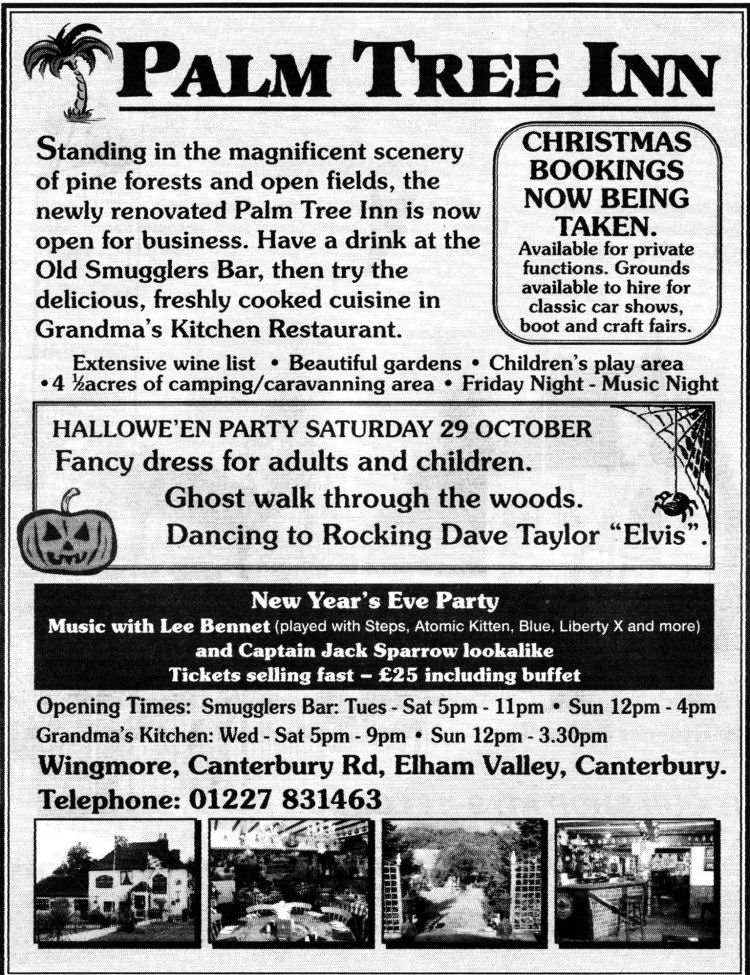
Advert below appeared in the Dover Express, 27 October 2005.

Palm Tree advert 2005


The Palm Tree Inn goes back nearly 300 years when it was built as a Georgian Farmhouse. In 1735 the owner was granted a license to sell ales from the premises, but was restricted to the sale of ales and cider only.

The house remained 'un-named' until the property was sold to Thomas Sancraft in 1753 who registered the house as the "Whyte Hause" or "White Horse". In 1758 the property was granted a full license where it thrived both as an Inn and as a saddlers and harness makers, before being sold in 1806 to Josiah Cressy.

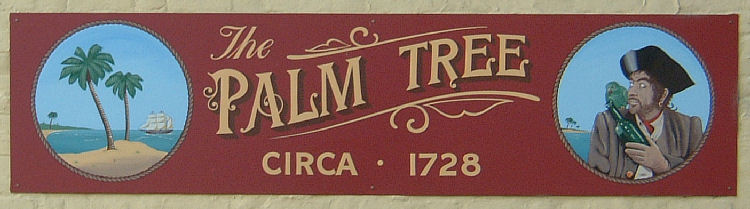
Josiah Cressy was a seaman of Folkestone and had travelled extensively. Although not recorded as such, local account has it that Cressy had been aboard one of Captain James Cook's ships as they explored the globe, and in particular the Hawaiian Islands where sight of Palm Trees was first noted. Cressy renamed the house and registered it under the title of the "Palm Tree" in 1812, no doubt to remind him of some far distant shore that he had visited.

The property is set on the banks of the 'Nail Bourne' which winds along the Elham Valley. The valley has long been a corridor connecting the Ports of Dover and Folkestone through to the historic Cathedral City of Canterbury, and as such has been a busy trade and passage way over the Centuries.

It was around here that King John camped with 50,000 men in preparation for war with France in 1214, and the Duke of Wellington camped 18,000 troops along the valley in 1799 awaiting embarkation during the Napoleonic Wars.

It’s many legends about smuggling however, have influenced the property over the last few years. There are many stories and local tales associating the property with local smugglers using the property as a meeting place and hostelry, either hiding from customs or dividing their spoils.

One tale of events involving smuggling in 1748 was when a local gang brought a large cargo of brandy, tea and rum over from France. Customs were particularly displeased and managed to capture a number of the gang. One of the gang members however was able to give an alibi for his captured colleague. Whilst relaying the alibi to the customs official, in this very Inn, a local informer saw the two men talking and mistook this as treachery. The remaining gang members hunted them down, allegedly lacing their drinks until they were sleepy. According to myth the disloyal gang member was made an example of and thrown head first down the Well, which remains to this day as, part of the dining table in The Lodge as pictured below.

Dining table at Palm Tree


Known to be a tied house to Mackeson in 1962. Unfortunately closed in about 2008.


Visit their web site at:-

http://www.palmtreelodgeandcampsite.co.uk


See also click here


LICENSEE LIST

FITTEL Harrison 1847-58 Bagshaw's Directory 1847Melville's 1858

CLIFFORD Henry 1874+ Post Office Directory 1874

GOLDUP John 1913+ Post Office Directory 1913

WEST Edward J 1899+ Kelly's 1899

WATTS William 1934+ Kelly's 1934

WANSTAN Ewart and Neal & PARRISH Keiron 2008


Bagshaw's Directory 1847From Bagshaw Directory 1847

Melville's 1858From Melville's Directory 1858

Post Office Directory 1874From the Post Office Directory 1874

Kelly's 1899From the Kelly's Directory 1899

Post Office Directory 1913From the Post Office Directory 1913

Kelly's 1934From the Kelly's Directory 1934


If anyone should have any further information, or indeed any pictures or photographs of the above licensed premises, please email:-

TOP Valid CSS Valid XTHML