|
From the Bexleyheath Observer, 1 January 1876.
Sutton at Hone.
Death From Exposure at Sutton at Hone, Shocking Inhumanity.
On Thursday afternoon Mr. Carttar, coroner for the Western division of the
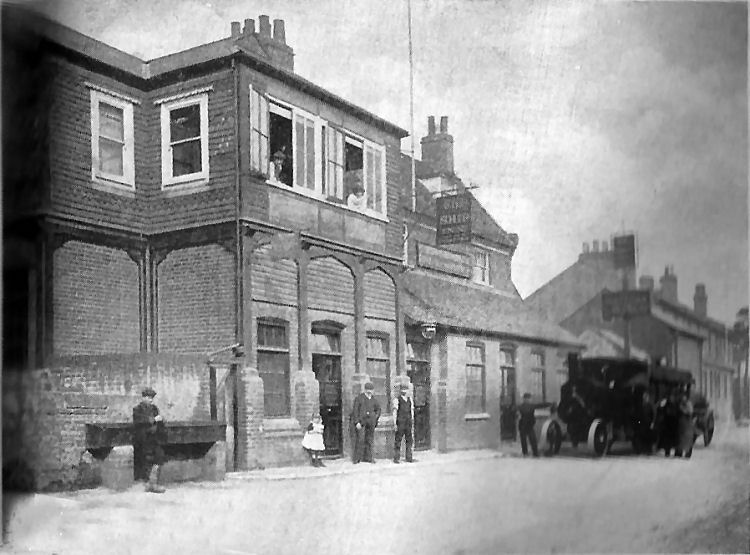
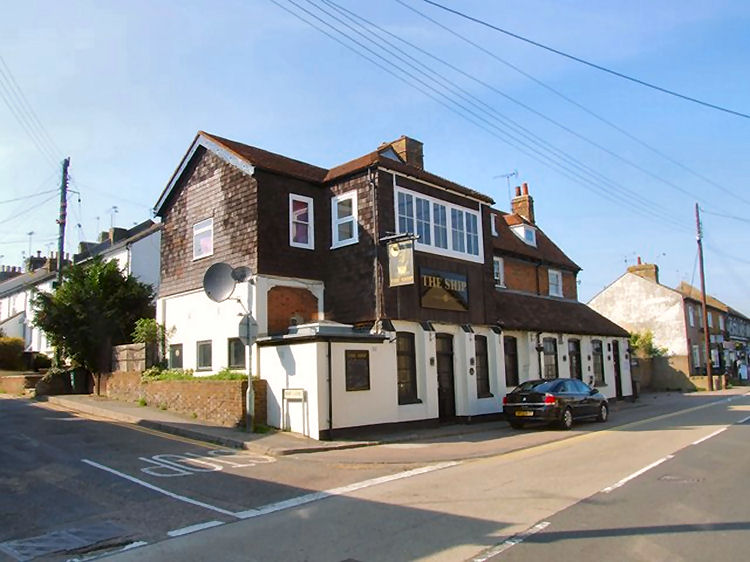
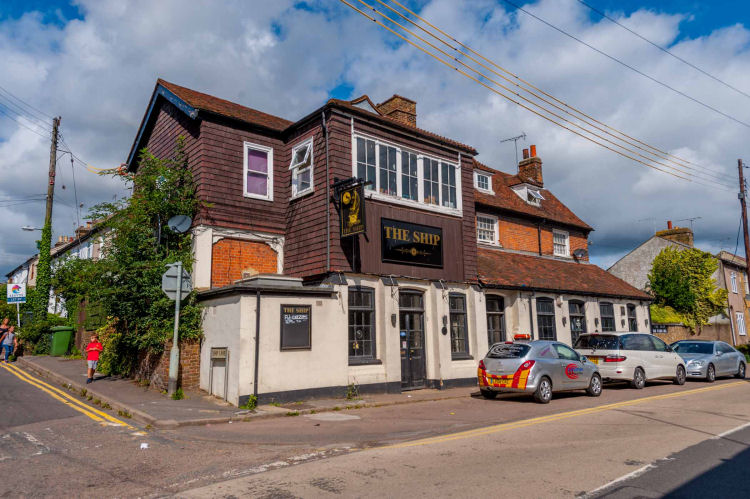
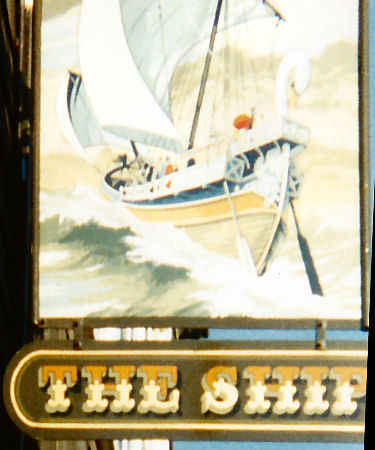
County, held an inquest at the "Ship Inn" in the village upon the body of Mary
Ann Thomas, age 32, who came by a death on Saturday morning under circumstances
detailed below.
The jury was sworn in as follows. Mr. B. Lane (foreman,) Messrs. T. Bellingham,
F. Cracknell, P. Coals, J. Bristow, T. Brown, T. Dancer, C. Gilliss, R. Lane, J.
Partridge, J. S. Stiff, E. Smith, J. Collins.
The jury having viewed the body of the deceased, the first witness was Thomas
Crisp, Homefield Cottage, labourer, who said:- The deceased, who was 32 years of
age, lived with me as my wife. She was a married woman, but seperated from r
husband, who is, I believe, living at Merton, Surrey. On Friday night we were at
the "Ship Inn," and left at ten o'clock the worst for drink. We were going home,
and there had overcome deceased so much on leaving the "Ship" that I was obliged
to carry her. We got as far as the straw stacks, when deceased prayed for me to
leave her under one of the straw stacks and she should get round. This was three
quarters of a mile from the house. I allowed her to lie down, and put two
bundles of straw over her, untying them. Deceased soon went off to sleep, but
when I had got across a field I returned and tried to get her to come on home.
She would not, and I went home, and remained till half past five in the morning.
Mercer, a neighbour is stated to have called me about four o'clock, but I did
not hear him well. Mrs. Mercer called me at half past five, but deceased to be
frequently with Mrs. Mercer, and I thought she might go into her house. When I
went to deceased at half past six I found her out of doors, and that she had the
skirt of her dress off. We took our home in a cart, and she died at 8 o'clock.
We got a home at half-past 6. The skirt was found on the way deceased had taken,
and her bonnet in the straw.
By the Coroner:- The straw which I threw over deceased was dry. I had never got
drunk before with her, and we never had an angry word all the time he were
together. If I had been sober I should not have left deceased under the stack.
The Foreman:- I cannot think that it was possible for a woman in the state
deceased was in to nearly strip herself naked. I am told that she was naked as
when born.
George William Smith said he had seen the deceased at 10 o'clock at the "Ship
Inn" with the last witness. The man was "fresh" but the deceased was not "much
amiss". Witness had been drinking with them from 8 o'clock.
Henry George Mercer, carter, Homefield Cottage, said:- I found deceased at four
o'clock on Friday morning lying on the pathway near my cottage and that of the
last witness, in which deceased lived. Deceased was in an insensible state. She
had neither bonnet on nor the skirt of her dress. I went and called Crisp and
told him his wife was lying dead at the end of the house. He asked me how she
had come there, I told him I did not know. I then went to look after my horses.
At five I went to my breakfast. My mistress was indoors, and the woman was lying
at the end of the house, as when I had first seen her.
The Coroner:- And why did you not remove her?
Witness:- I did not know what I could do with her.
The Coroner:- What, a woman lying in a dying state in the cold - how justify
such conduct?
Witness:- It was on the turn of six when I removed deceased. She was lying up on
the ground, and my wife had put a skirt over her.
Mary Mercer, wife of the proceeding witness said:- When my husband called at 4
o'clock I was in a fright, and went into the neighbors' houses. When I saw the
deceased she was wholly insensible. She had one skirt, a chemise, and two
bodices on, and was a skirt deficient. I threw a linen skirt over her.
The Coroner:- Why not have removed her into your house?
Witness:- I had no room. I have four young children, and could not attend to a
dying woman in one room.
The Coroner:- It is a question of humanity. One would think that you would have
let a dying dog into your premises. How far is the house off?
Witness:- Eight or ten yards. We raised an alarm. The man was called, and I went
down half dressed.
The Coroner:- Why, then, not have lifted her out of the wind? You could then
have put her down again. You would not have liked to have lain two hours and a
half exposed in such a way, and close to the house.
Witness:- It was half past five, and I called Chrisp again and I told him his
wife was dying. He was a long time coming. Deceased expired at 20 minutes to
eight in my arms.
The Coroner:- You could have lifted into the house.
Witness:- It was as much as four men could do to lift her.
The Coroner:- Something should have been done, and then if deceased a died no
blame would have been attached as now. Deceased should have been lifted into her
own house. What was a linsey skirt to throw over the woman? I think there has
been a great want of humanity shown.
Witness:- Deceased should not have been left there at first.
The Coroner:- That does not matter; when their she should have been removed.
Mr. Tucker, surgeon, Farningham, said when information reached him respecting
the occurrence, he sent his assistant; and accordingly to instructions received
from the Coroner he had made a post mortem examination. He have found no marks
of violence. The internal viscera was much congested, the result of exposure to
cold. He could not say when deceased had become first affected from the cold.
The disposition to sleep under such circumstances was a bad symptom, and the
fact of the deceased having been drinking freely would have hastened death. If
sober, and proper means have been applied at four o'clock, when first found by
Mercer, deceased might have recovered; but exposure to great cold from ten
o'clock to six would be sufficient to kill deceased. Decease was insensible when
she got up. He was told she had had a tremendous tumble at the railway
embankments when endeavouring to reach her home from the straw stack.
The Foreman:- There are 16 steps to go up and 16 to descend. I cannot understand
how deceased could have torn her skirt in the way in which it was found.
The Coroner:- The skirt is found in that state and that is all we know of it. As
there is no mark of violence, there does not seem any ground for the supposition
that deceased met with a violent treatment. A juryman said there had been marks
to show that deceased had walked up the steps at the railway line, and slid
down.
The Coroner:- There are no marks of violence, and nothing to show but what
deceased died from the effects of exposure to cold.
Mr. Bristow, who had assisted on the occasion, said when he had seen deceased
all her clothes from her stays had been stripped off. He lifted the deceased up,
with Mr. And Mrs. Mercer. She was removed about 220 yards.
A juryman thought deceased might of trodden on her lower garments in staggering
along, and torn them off as described.
This was the evidence, and the Coroner, in summing up, said the conduct of
Chrisp in leaving the deceased at the stack in the first instant was most
discreditable. She had been found at four in the morning by Mercer, and after
this he thought great neglect had been shown by Mercer and his wife. A feeling
of common humanity should have caused them to remove the deceased from the
exposed position and dying state in which she lay. The life of deceased might
have been saved by this being done. He could not say it would have been; but two
hours and a half elapsed before the main Chrisp came up, and this was a great
aggravation to the position in which the deceased was found. He could understand
that Chrisp should think that deceased would have the care of Mrs. Mercer whom
she knew; but his conduct was altogether disgraceful in the occurrence, for
death had ensued from such conduct, and through that of Mercer and his wife. A
dog should not be served as the deceased had been. The deceased, when found,
might have been ill from other causes, and she should have been taken away; but
she had been allowed to remain on the frozen ground in a dying state. He (the
Coroner) should not have expected to hear of such conduct in England or from
Englishmen. If not removed, blankets might have being wrapped around the
deceased. Altogether he could not but strongly deprecate conduct of that kind.
Death, as he had said, might have resulted even if deceased had received proper
treatment when found at 4 o'clock; it might then have been too late, has the
doctor and told them that exposure in the state of liquor that deceased was
would be much more likely to be attended with fatal results then if she had been
sober, but still they could not say life would not have been saved but for the
inhumanity shown deceased. If the doctor had been gone after at 4.30 the woman
might now have been alive.
A juryman spoke to the deceased dealing at his shop, and said that from the
purchases made there must have been no deficiency in necessary at home.
A verdict was returned that death had been caused by congestion of the brain,
the results of exposure to the cold.
The Coroner again called Mrs. Mercer, and said he would not say more to her upon
the painful subject, but he trusted that if she should find herself in such a
position again she would do her duty as a woman.
Mrs. Mercer said she had done what she thought would be best. She had not even
dressed before she went down to deceased.
The Coroner:- It will not do. Such conduct is unpardonable - inhuman. The
woman's life might have been saved. Addressing Chrisp, the Coroner said he's
conduct a bean of the most discreditable character. If he had had allowed the
deceased a lie down he should have laid down by the side of her, and not have
left her. Then in not getting up when called he had shown great want of feeling.
Crisp:- Mrs. Mercer was a friend of deceased, and I thought she would be right
with her.
The Coroner:- It is all owing to drunkenness, and if you are not more careful
you will get into trouble. If the woman on this occasion had black eyes, or any
other marks of violence upon her, you would have got yourself into Maidstone
gaol. You were the last man seen with her, and no one could have said that you
would not have been the guilty party, whether so or not; and when persons are
drunk they do what they would not when sober. Therefore, it is well for you that
there was not a scratch upon the body. You acted disgracefully in picking up
another man's wife and living with her away from her husband.
The Coroner then dismissed the jury.
|


 )
)