|
From the Kent Messenger, 12 April, 1974.
THE modernisation of a pub always attracts attention, and in many
cases, causes trepidation. Regulars complain that their local has
been commercialised and plasticised, that its character has been
destroyed. On the other hand, renovation can give a pub a new
character and add to its attraction.
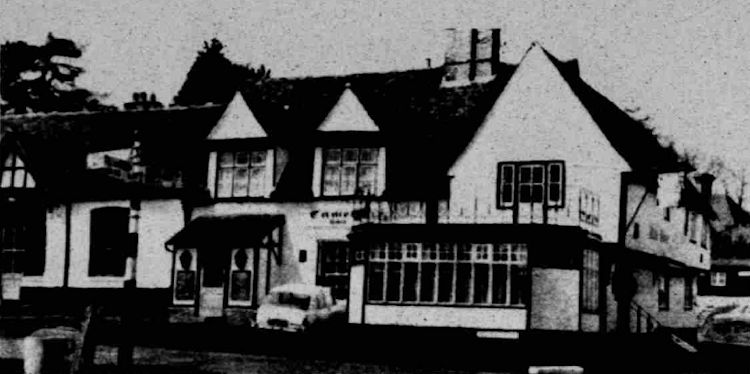
There was some controversy over the renovation of the "White Horse"
on Bearsted Green. The owners, Whitbread-Fremlin, intended to rename
the pub "Camelot."
Local residents and the parish council Objected, and the brewers
decided to retain the pub’s original name, giving the name "Camelot
Hall" to the restaurant that has been set up, in the Victorian
extension of the mainly 17th-century inn.
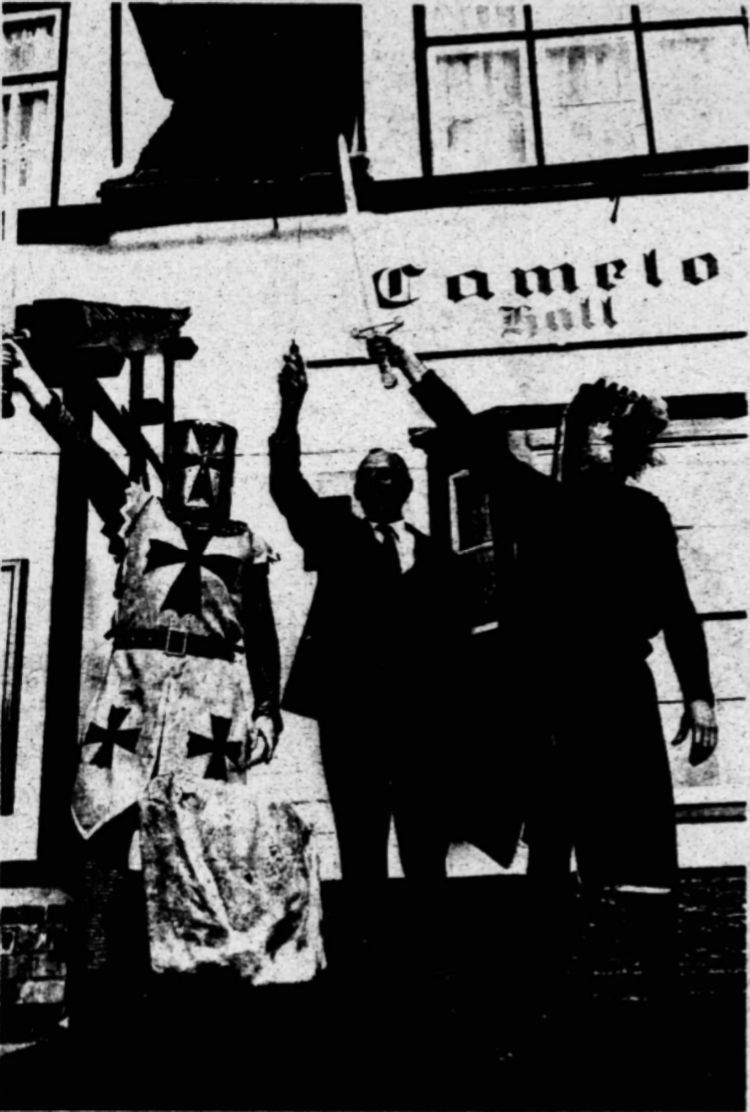
The pub is to be reopened at lunchtime today by Lord Monkton, in the
evening Morris dancers will perform and waitresses will be in
medieval costume, as will manager Bill Standen and his wife.
The Whitbread-Fremlin design team and firm of Mr. John Rogers have
spent twelve months trying to capture an Arthurian atmosphere in the
Camelot Hall.
Mr. Rogers has been praised for his work creating Kentish village
type pubs in France. Now he has been given a typical Kentish village
pub to work on.
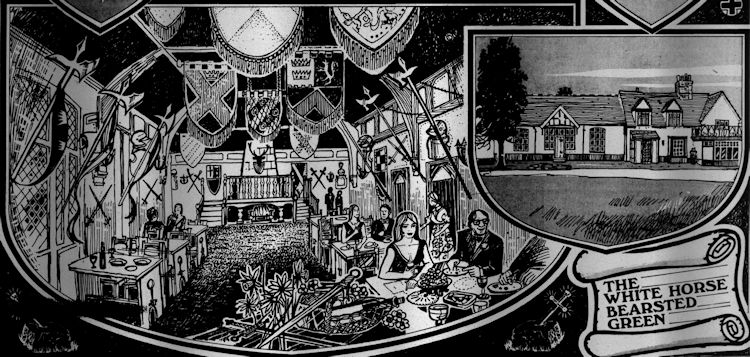
Heraldic banners hang from pikestaffs, and axes adorn the wall.
Pieces of armour are placed around the hall, which has seating for
80. Chef Ricky Lesham will concentrate on typical English food, such
as steaks, grills and poultry dishes, which, like the wine, is
reasonably priced.
There is a minstrel's gallery at the head of the hall, and there is
a dancing area for customers.
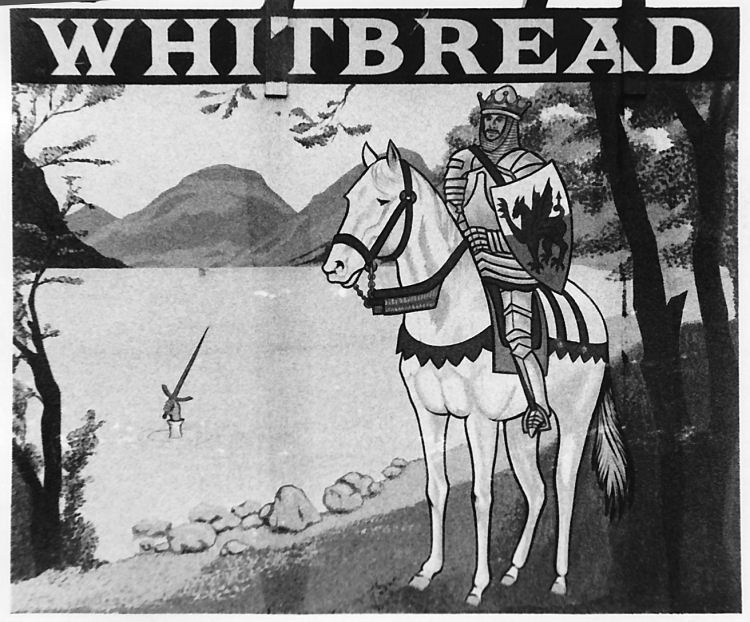
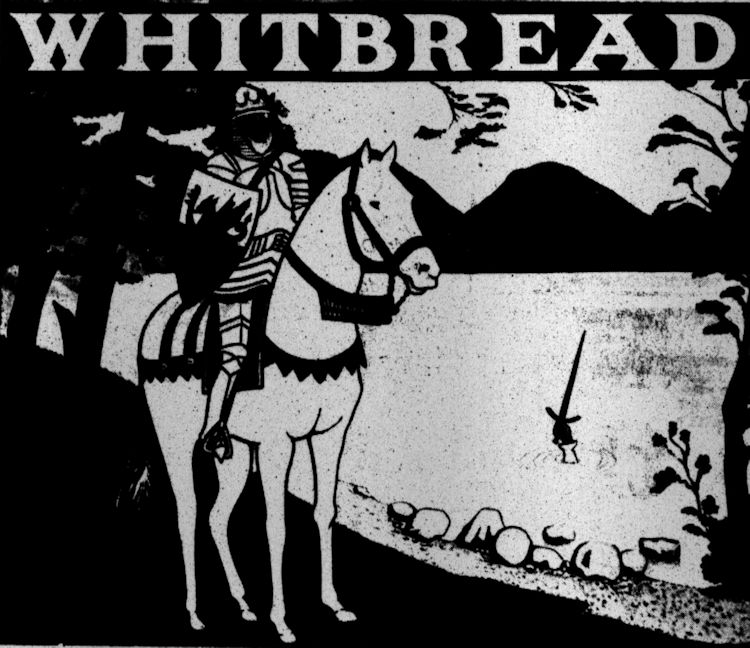
A fluorescent Excalibur hangs from the ceiling, apparently floating
in space, and the hand of the Lady of the Lake emerges from an
ornamental pond.
The brewers say that their aim is to create an illusion, to
transport their customers back to the Age of Chivalry, when Knights
roamed the countryside saving damsels in distress, and valour and
integrity were the paramount virtues.
The renovation of the bars is attractive. During the work the
builders discovered two inglenook fireplaces, probably dating from
the erection of the building early in the 17th century. These have
been cleaned up, and adorned with copper bed-warmers.
Ceiling beams have been exposed, and interior and exterior have been
freshly painted.
The bar has been pushed back to give more room, and on the walls are
prints of hunting, boxing and (appropriately in the village of the
great Kentish bowler, Alfred Mynn) cricket scenes from the
eighteenth and nineteenth centuries.
The bar’s timbers and white walls reflect the important part that
the inn has played in the history of Bearsted.
During the eighteenth century and the early nineteenth century the
Inn was used as a courthouse, with the magistrates dispensing
Justice in the upstairs rooms before coming down for a glass of ale
and some food.
Doubtless the great cricketers who exercised their artistry on the
village green in the last two centuries supped there between
innings.
One of the difficulties that the design team faced in recreating the
Age of Chivalry was in deciding just which age to recreate.
Arthur led the Britons against the Invading Saxons in the sixth
century. He defeated, the invaders at the battle of Mount Badon in
518, and was killed at the battle of Camelot in 580. there the facts
end and conjecture begins.
Camelot might have been in Cornwall, or perhaps, in Scotland,
Camelot, where the Knights of the Round Table met when Arthur held
his court has also eluded archaeologists. Cadbury Castle in
Somerset, Tintagel, Winchester and Wales, have been suggested as
sites of Camelot.
Whitbread-Fremlins hope that, the regulars will approve of the
changes that have been made.
The regulars will decide for themselves. What is certain is that the
novelty of the Camelot Hall will attract many new customers to
Bearsted. |