|
138-140 High Street
Bromley
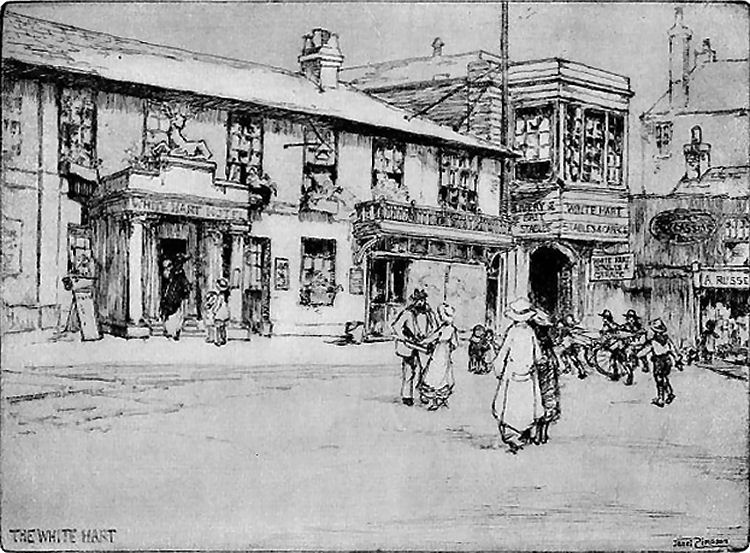
Above painting by Janet Simpson. |
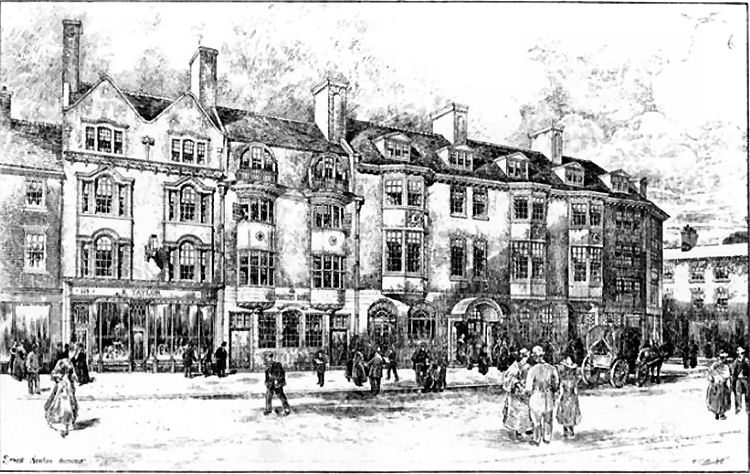
Above sketch, date unknown. |
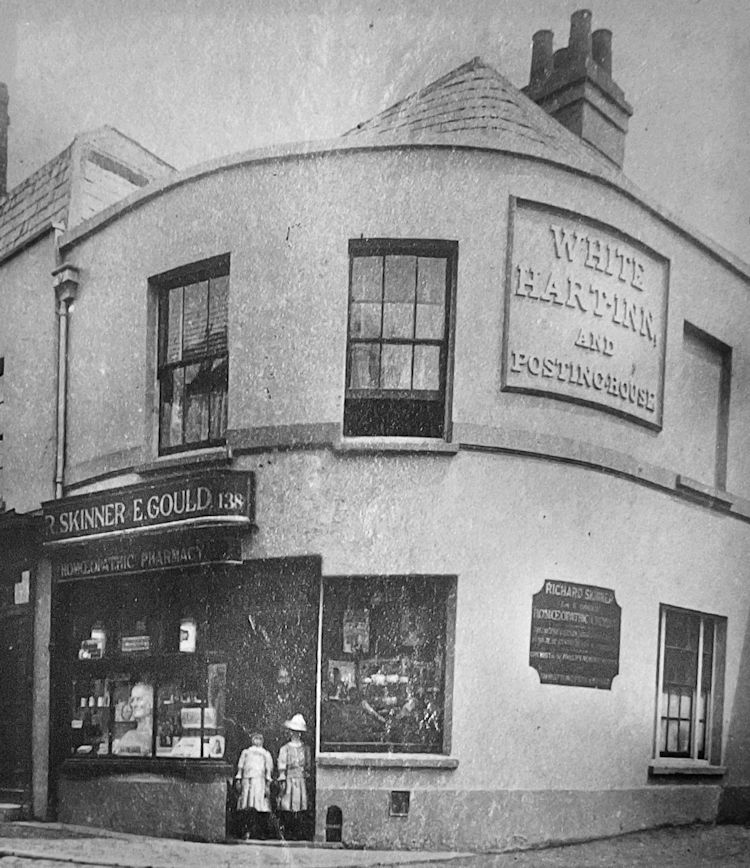
Above photo, 1888. |
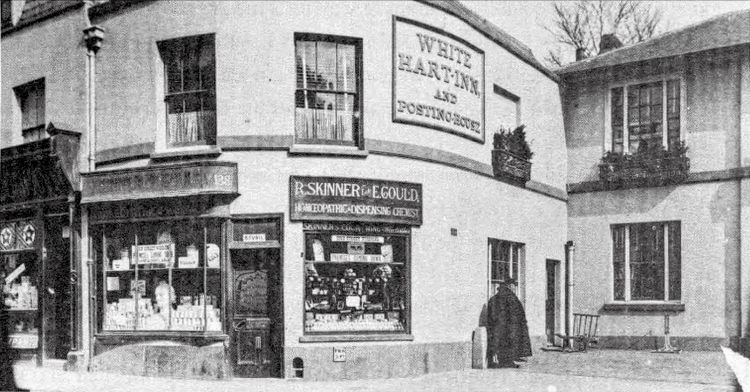
Above photo 1902 showing notice of impending demolition for street
widening in the shop window. Kindly sent by Brinley Hawkins. |
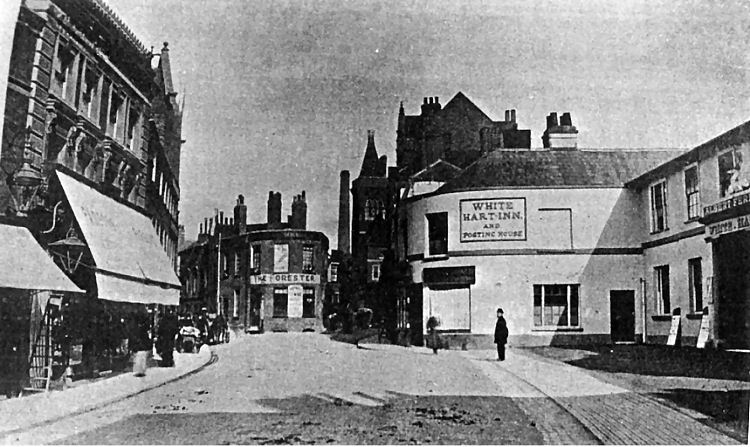
Above photo, date pre 1902. |
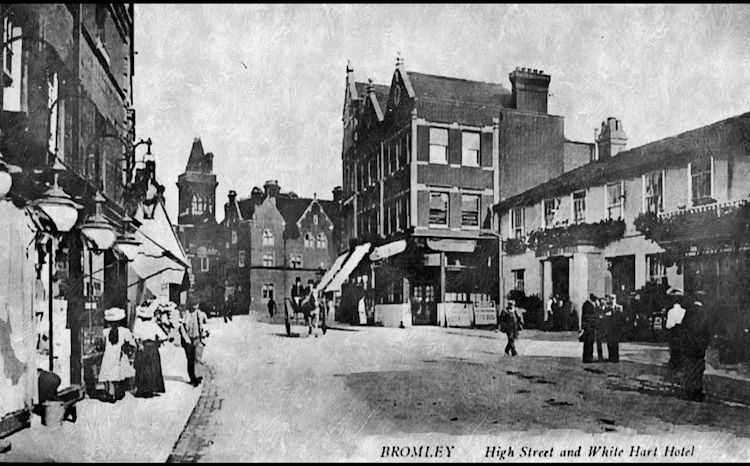
Above postcard, date unknown. |
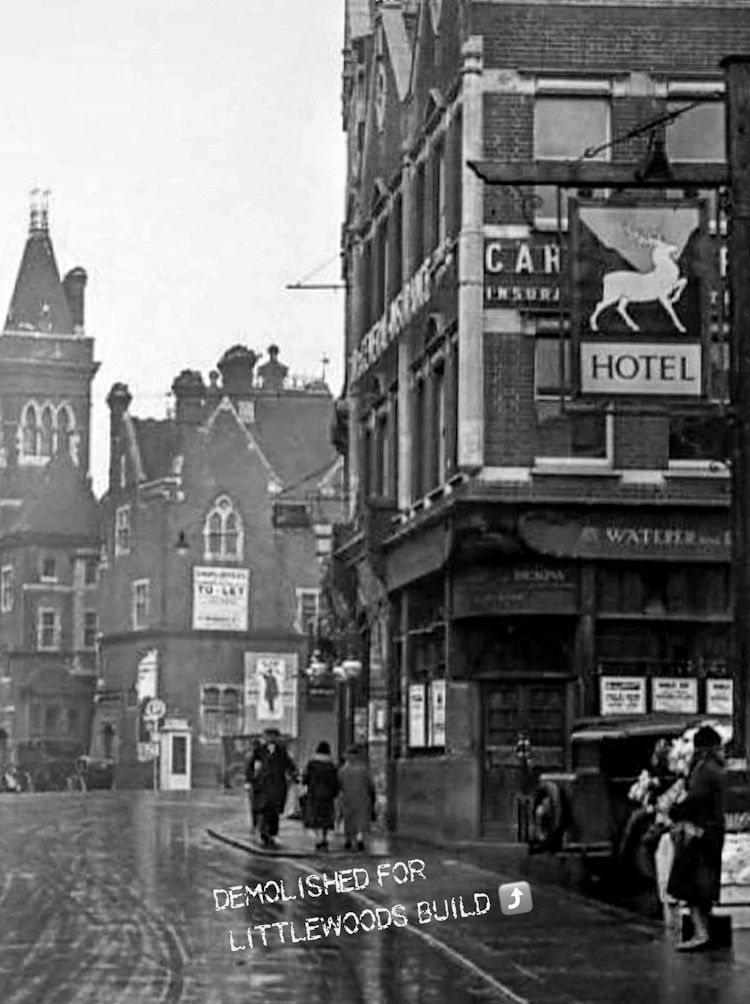
Above photo, date unknown. |
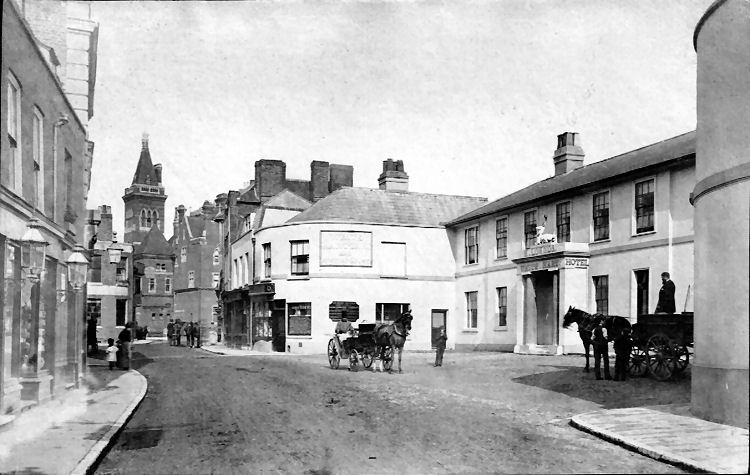
Above photo circa 1903, kindly sent by Rory Kehoe. |
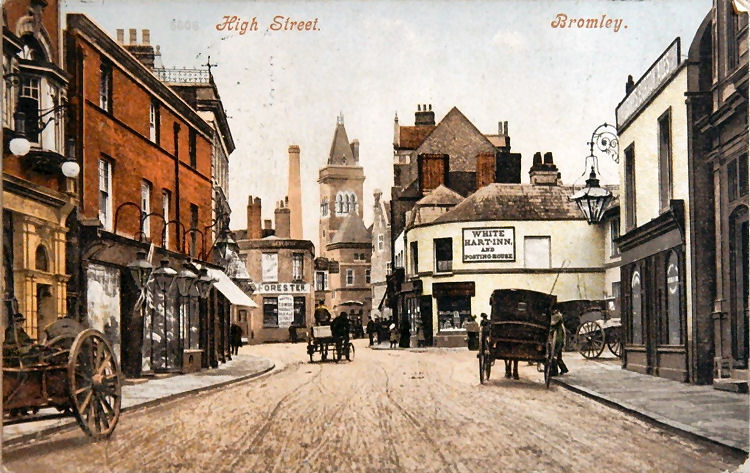
Above postcard, postmarked 1905. Also showing the "Forester." |
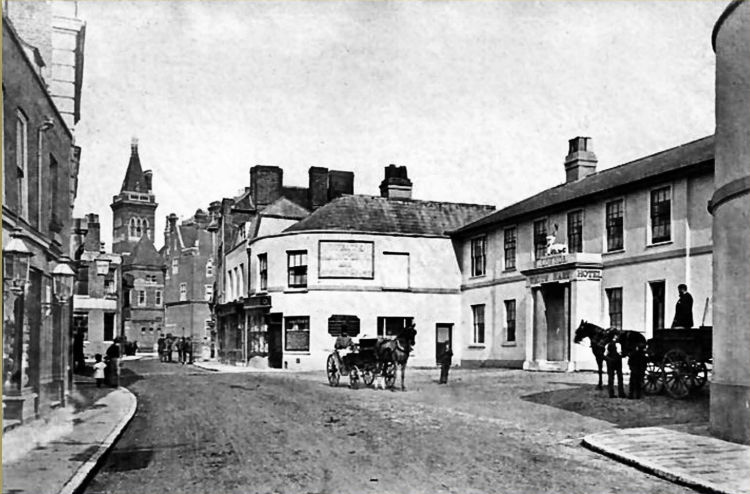
Above photo, date unknown. |
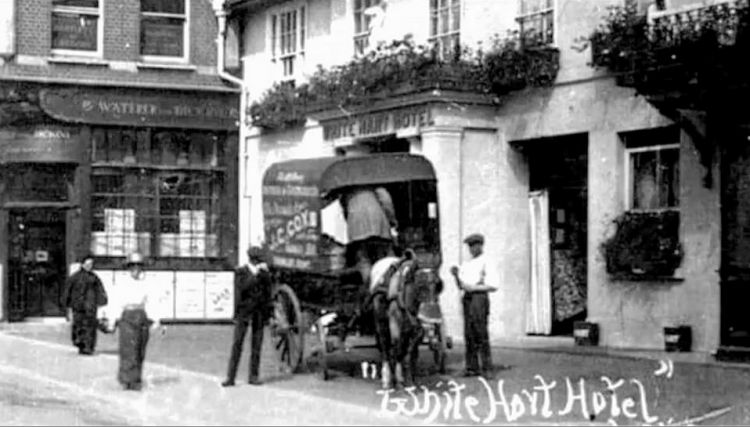
Above postcard, date unknown, kindly sent by Brinley Hawkins. |
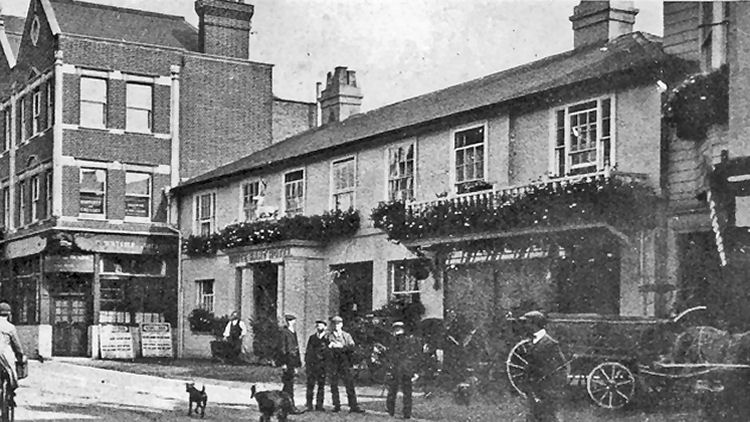
Above photo, date unknown. |
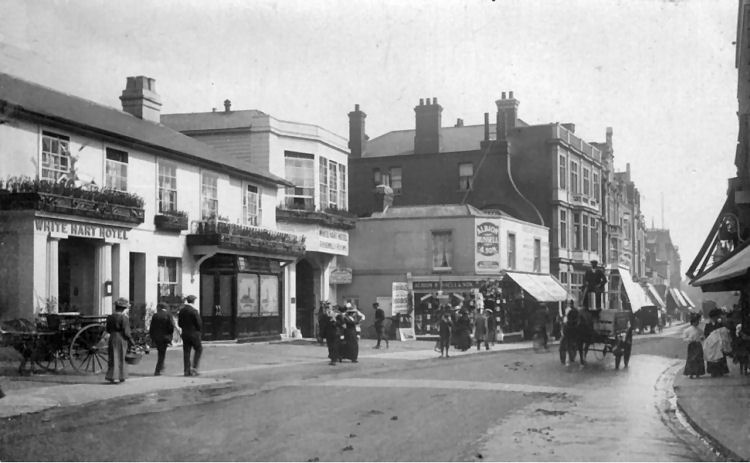
Above photo 1905, kindly sent by James Fribbins. |
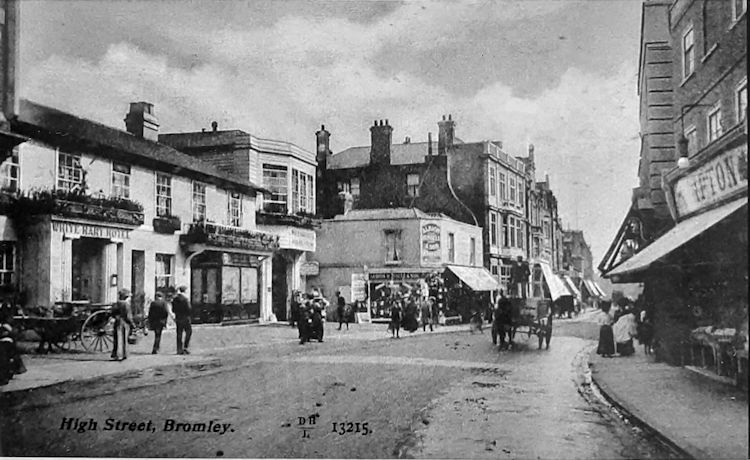
Above postcard, circa 1905. |
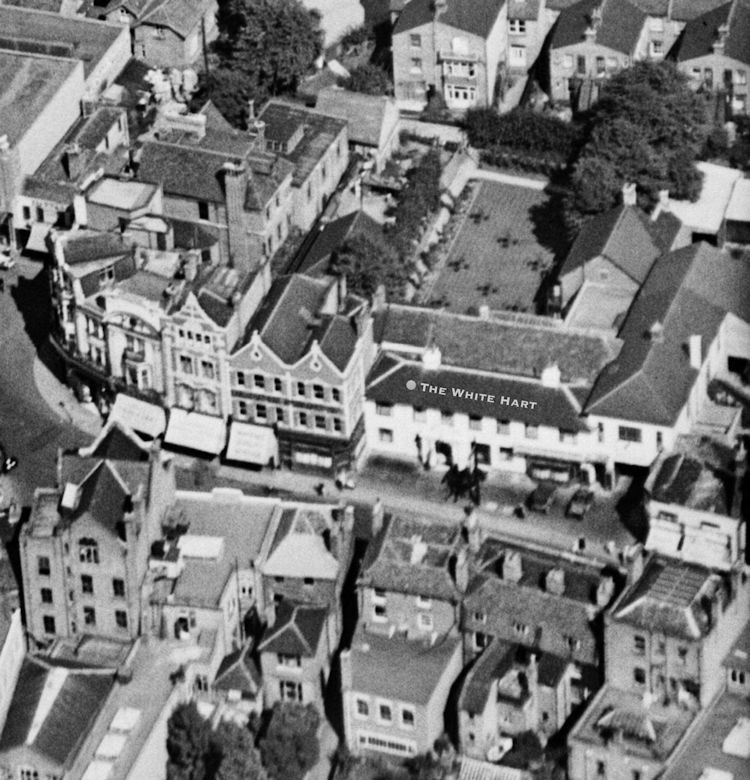
Above photo, 1929. |
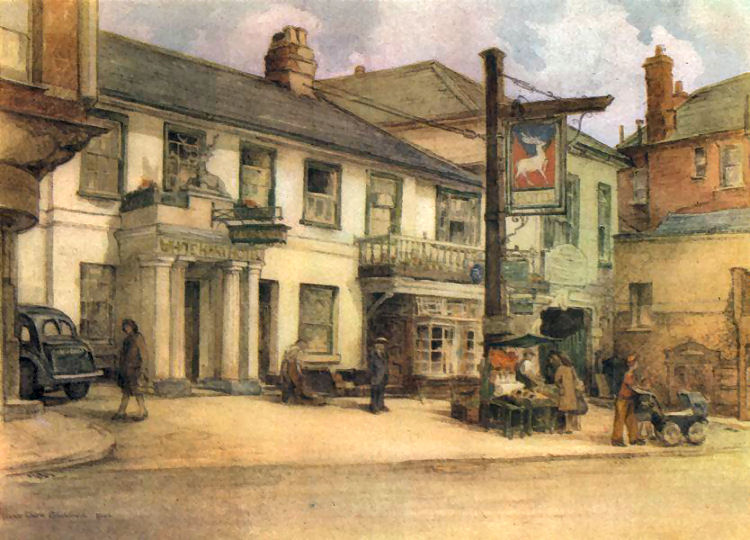
Above painting, 1947. Kindly sent by Rory Kehoe. |
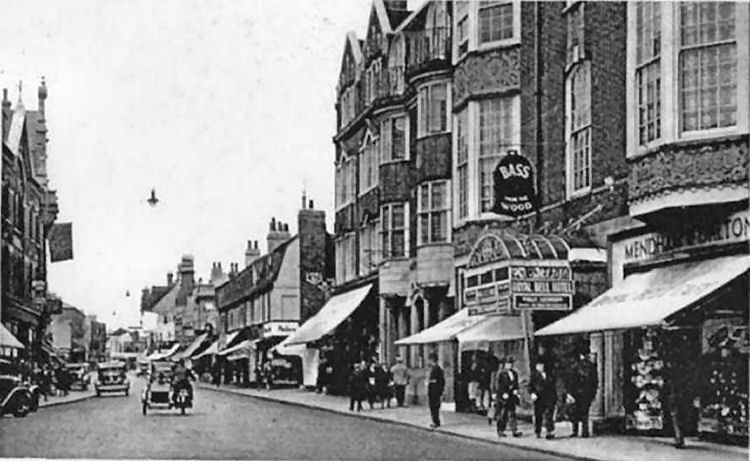
Above postcard circa 1950s. |
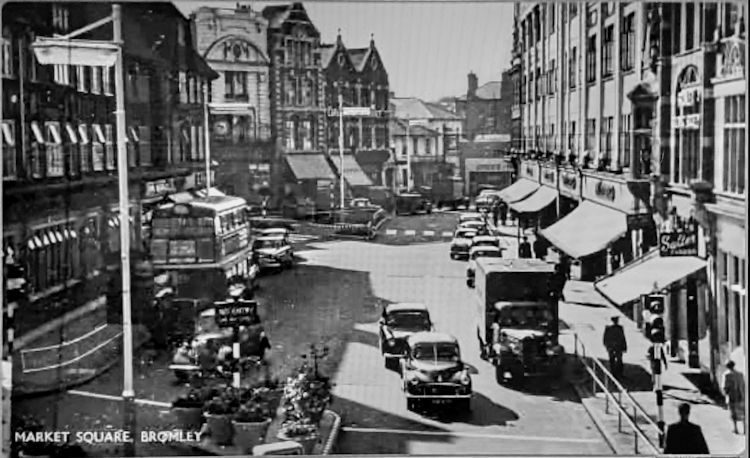
Above postcard circa 1950s. Showing pub in distance. |
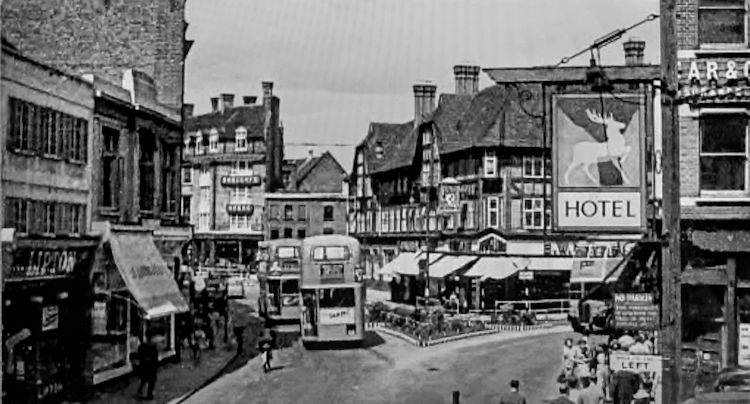
Above photo, circa 1960s. |
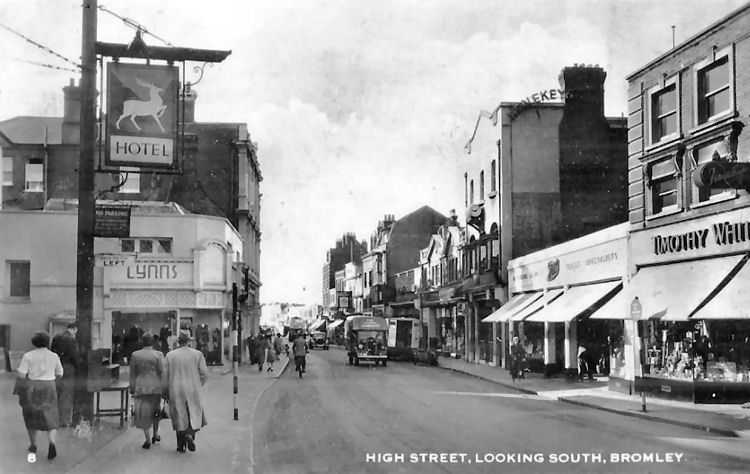
Above postcard, 1961. |
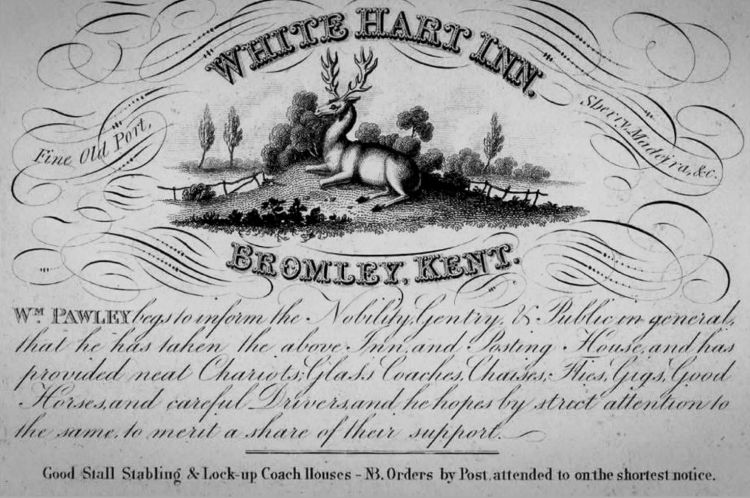
Above advert, circa 1832. Stating the following:- William Pawley begs to
inform the Nobility, Gentry and Public in general that he has taken the
above Inn and Posting House and has provided neat Chariots, Glass
Coaches, Chaises, Flies, Gigs, Good Horses and careful Drivers and he
hopes by strict attention to the same, to merit a share of their
Support.
Good Stall Stabling & Lock-up Coach Houses - N.B. Orders by Post
attended to on the shortest notice. |
It appears from the above photo the premises was also a Posting House
which in its heyday could accommodate up to 100 horses standing outside
waiting for trade.
Further research has shown a mention of it from the Morning Post of 30
June 1806.
The premises had a cricket ground behind it. On the right were the
stables later to become a garage where you could hire cars from from James
Young and Co. On the extreme right were the premises of Mr. Albion Russell
and Sons, bootmakers.
The original building was rebuilt in about 1826, when the front which
formerly stood close to the road was set back 28 feet; both sides of the
house being circular a good carriage drive was formed, and the obstructions
previously experienced entirely removed.
There is a reference to the pub hosting a cricket match between Bromley
and Chislehurst v. Addington to be played on 26 May 1746 in the ' Daily
Advertiser ' of 17 may 1746.
|
From the Kentish Gazette, 9 January, 1810.
CAPITAL INN AND POST-HOUSE.
To be Let, all that convenient and good-accustomed Inn, the "WHITE
HART," at Bromley, in Kent, with stabling, meadow land, and every
Convenience for carrying on a large stroke of business, which has
been established many years. The lease, 20 years of which is
unexpired, at a very low rent, may be purchased, and immediate
possession had.
Apply on the premises, or of Mr. Harman or Mr. Bell, Croydon.
|
|
From the Kentish Gazette, 14 July 1857.
BROMLEY.
An inquest was held on Monday, July 6, at the "White Hart Hotel,"
Bromley, before Mr. Carter, coroner, on the body of William Hudd,
whoso death we announced in our last, by falling from his seat in
front of a van as he, with two fellow-workmen, was returning home
late on Wednesday evening from the Regent’s Park Flower Show, where
they had been with flowers for exhibition. The fatal accident has
created considerable excitement, in consequence of his companions
leaving him in a shed on the premises of Mr. Coleschild, Bromley,
where he had been several years employed. The jury returned a
verdict of "Accidental Death," and the coroner, in an able address,
showed the folly of leaving persons who had met with similar
accidents unattended to as in this case.
|
|
From the Borough of Greenwich Free Press, 18 July, 1857.
Coroner's inquest. Bromley.
An inquest was held at the "White Hart," before C. J. Carttar, Esq.,
coroner, on Monday, the 6th inst., to inquire into the cause of the
death of William Hudd, aged 32, under gardener to Coles Childs, Esq.
It appeared, according to the evidence, he left work in company with
another of the under gardeners and the driver, with a large van load
of plants, to show at the Regent’s Park flower show. On Tuesday
night, at 11 o’clock, when the show was over, Mr. Morris, the head
gardener, after seeing the plants packed, left them, leaving orders
to bring the plants home. They got on the road and had been
drinking, and in passing through Lewisham all three were asleep on
the board in front of the van. The driver, Thomas Burridge, on
rousing himself, missed the deceased and cried out, and his mate
jumped off, run back, and found the deceased laying in the road
about 100 yards from where they stopped. He was assisted into the
van and brought home. At his own request they left him in a shed on
his saying he was not hurt, and should be all right in the morning.
His wife, who was uneasy at her husband not returning home, sent
early in the morning for his brother, Samuel Hudd, who found him in
the shed very bad, got him home, and sent for a doctor, but he got
gradually worse, and died on Friday morning early. He had injured
the spine of his back in the fall, which was the cause of his death.
Verdict, "Accidental, death." The coroner reprimanded the men for
leaving him in the shed instead of taking him home.
|
|
From the Bromley Record, May, 1859.
Sudden Death.
On Sunday, April 10, Mary Wade, who has been since November last, chambermaid,
&c., at the "White Hart Hotel," retired to bed between ten and eleven o’clock in
her usual state of health, and at about half-past eleven the cook, who slept
with her, finding that she was seriously ill, obtained assistance, and Mr.
Morgan, surgeon, was immediately sent for, but human aid was unavailing, as life
was quite extinct. The cause appears to have been a disease of heart.
|
|
From the Bromley Record, June, 1861.
A Daring Young Thief.
On Saturday of the 25th ult., about five o’clock, p.m., a Fly from the Bromley
Railway Station came up to the "White Hart Hotel," with the luggage of the Earl
of Meath; a messenger accompanied it, who informed the landlord (Mr. Lownds)
that the Earl and Family would arrive by the next train, and would require, (say
for shortness), the largest portion of the hotel for a few days. The landlord
was now in a fix, for every nook and corner of his extensive establishment was
pre-occupied; however he took the luggage in, and placed it in the passage; he
had scarcely turned his back after placing the luggage, before he thought he saw
some one taking a package away and a scream from the waiting-maid to the Dowager
Countess, who saw the theft, calling out that something had been stolen, caused
him to follow after, and to catch the thief opposite the Printing Office; a
ludicrous scene here commenced, the thief declaring he had found the parcel and
threatening to give the landlord in charge for interfering with him on the
Queen's highway. The police station being close by, the charge and
counter-charge were given, and the Sergeant after hearing both stories, took the
thief into custody, together with the Dressing Case he had stolen. He was taken
before the Bench on Monday morning (Present: Colonel Cator, Colonel Long, Coles
Child, Esq., G. W. Norman, Esq., C. L. Wilson, Esq.), where he gave his name as
Thomas Truelove, East London Chambers, Whitechapel. On being asked if he was
guilty, or not guilty, he replied with the greatest sang froid, that he was
guilty of finding it, and that was all. The Dressing Case being produced, the
prisoner pushed forward to feast his eyes on its contents, and when told to keep
back, he reminded the policeman who did so, and those present, that he was as
much interested in that case as anybody there, and he thought more so, and he
had as good a right to see what was in it. The Butler having identified it as
the property of his master, the Earl of Meath, the prisoner enquired if Earls
were not very rich people, if so, the loss of the case would not be of much
consequence, while the finding it may do him (prisoner), a great deal of good.
After having vainly endeavoured to convince his accusers that he had committed a
praiseworthy act, he looking round at the magistrates, who this time had an "an’intedone"
to deal with, expressed a strong presentiment that he should fail in getting
justice there. The theft being clearly proved he was committed to Maidstone for
trial.
|
|
From the Bromley Record, August, 1861.
MAIDSTONE SESSIONS.
Thomas Truelove, for stealing a dressing case, the property of the Earl of
Meath, from the "White Hart Hotel," Bromley: four years’ penal servitude.
The prisoner had lost none of the daring effrontery which characterised him at
his examination at Bromley. Upon the evidence of Mr Lownds (the principal
witness), the prisoner told the judge that he had time enough to load a waggon
between the time he found the dressing case and the time he was taken, and that
he was on his way to the police station to put the case in safe custody, and to
tell the police there were several other boxes which it was necessary for them
to see to. It came out in evidence that he had been imprisoned at Chelmsford,
for robbery and assault, and had only been liberated a few days before
committing this robbery. The value of the dressing case and its contents was
estimated, by the butler, at £30, but at the time he gave the probable value he
was not aware that the Earl had placed about £100 in a secret drawer a short
time before.
|
|
From the Bromley Record, October, 1861. Bromley 1.bmp"
A Bull, so it is said, was seen to go in at the front door of the "White Hart
Hotel," on Friday morning, the 20th ult. The news soon spread, and a number of
persons were as soon on the spot to witness the summary ejection of the animal,
and perhaps to see somebody tossed. A few minutes, and out came a Cow from
another part of the premises at full speed. She had probably been tempted to
commit this act of trespass by seeing the green lawn at the back, from the
street. If a bull went in, as was at first reported, it is there now, for it has
not been seen since.
A Pig Tale.
During the confusion caused by the Bull, which is now believed to have been a
Cow, in the Garden of the "White Hart," a Pig, a little Newcome, made his
escape. He was followed but gave his pursuers the go by. The first intelligence
of his whereabouts was that he had been seen making himself at home, and more
free than welcome among the choice flowers and shrubs in front of the "Palace,"
the residence of Coles Child, Esq. For this offence piggy was condemned to
suffer capital punishment, if he could be caught, by order of the above-named
gentleman, as the story goes. The death warrant however, on explanation, was
countermanded by the worthy magistrate. Whether Grumphy overheard the sentence
or not is best known to himself, he was no longer visible there, and the next
time his presence was recognized was about an hour and a half afterwards at
Hayes.
How he got there has not come to the knowledge of your special correspondent, he
must have run for his life.
|
|
From the Southeastern Gazette, 20 March 1866.
BROMLEY. County Court.
This court was held at the “White Hart” Assembly Room on Tuesday, before
J. ’Espinasse, Esq
English v. Ralfe.
The plaintiff is the landlord of the “Three Horse Shoes Inn,” Knockholt,
and he sought to recover £20 5s. 2d. being the balance of a large amount
of money he had lent the defendant at Knockholt, to assist him in his
business of butcher.
There were two or three other small items in the account, but the
defendant said he did not owe it all, only £18 or so.
His Honour, seeing one item “goose and gin,” said that the latter could
be not recovered, and he suggested that the accounts should be looked
through by some person on whom they could both agree.
The defendant wanted to know what “et cetera” was, but he consented to
the reference, and Mr. Bowen was named.
|
|
Maidstone Journal and Kentish Advertiser, Saturday 26 June 1869.
STEALING EATABLES.
On Monday, W. Wilson and Anne Hooper were charged at Mr. Lattor's
Office, Bromley, before Coles Child, Esq., with stealing a
piece of bacon, a piece of cheese, and a pocket handkerchief, the
property of James Venness. The property was left by the
prosecutor in the "White Hart Tap," lying in a basket, and whilst he
went out to prisoners walked in and stole its. Information was
given to P.S. Tipton., who went in pursuit, and found them at the
"Railway Tavern," close to the station, in the tap room, cooking
the stolen bacon. Both prisoners were remanded.
|
|
From the Kent and Sussex Courier, 25 September, 1874.
The Fatal Accident to a Coachman.
On the evening of Thursday, 17th inst., Mr. C. J. Carttar, coroner,
at the "White Hart Hotel," Bromley, held
an inquest on the body of Henry Lane, coachman to Sir David Lionel
Salomons, Bart., who was killed on the
preceding day by being thrown from a trap.
From the evidence it appeared that the deceased was driving in a
light dog cart from London to his master's
residence, and when passing the College he came in contact with
another vehicle, and was thrown into the
road, by which he sustained severe concussion of the brain, in
addition to other injuries. He was removed to
the cottage hospital in an insensible state, and he died shortly
after midnight. It was elicited that the person
who was driving the vehicle with which the deceased came into
collision drove off immediately after the
accident, and the enquiry was adjourned to give the police an
opportunity of finding out the person referred
to.
The adjourned inquest was held at the "White Hart Hotel," on Tuesday
evening, when several witnesses
were examined, and from their evidence it appeared that the
deceased's trap came into collision with an
egg van, belonging to Mr. John Kitely, of Woolwich, which was being
driven towards Southend. The
deceased was driving at a sharp trot on the wrong side of the road,
which was shown by the step of the dog
cart being bent, and the effect of the collision was that the
lighter cart was thrown completely over, and the
deceased fell on his head. A large crowd soon assembled and Mr.
Kitely, finding that he could render no
assistance, drove on.
Dr. Beeby, who tendered the deceased at the Cottage Hospital, said
that death was caused by a fracture of
the skull, and a verdict of accidentally killed was returned.
|
I am informed by Maria Wilson that the pub was closed some time in the 1960s and
has since been demolished and replaced by a typical 1960s building that was
occupied by Littlewoods.
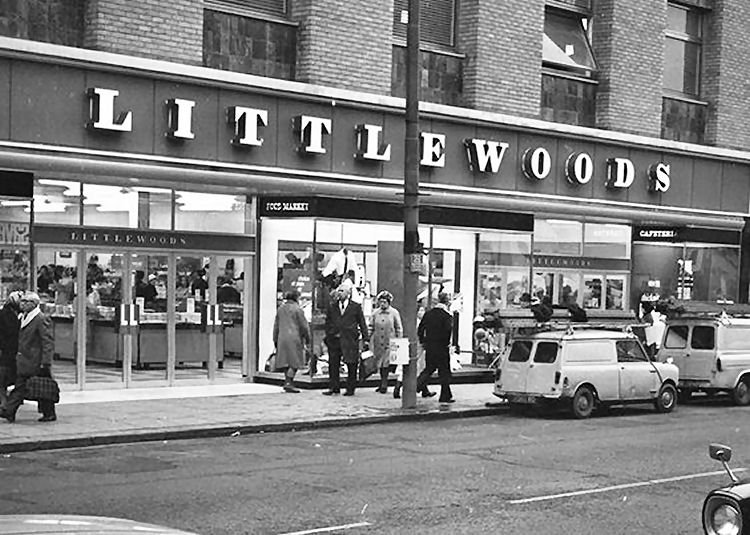
Above photo, showing the location, 1970s. |
LICENSEE LIST
PAWLEY William 1832-41+ (age 38 in 1841 ) )

JONES John 1841+ (age 53 in 1841)
(White Hart Tap.)
LOWNDS William 1858-83+ (age 52 in 1871)
 FERRIS Albert after 1897+
CLAESSENS Leon 1918+
FEWELL W R 1930+
OVER H M 1938+
https://pubwiki.co.uk/WhiteHartHotel.shtml
http://www.closedpubs.co.uk/whitehart.html
From the Pigot's Directory 1832-33-34
Census
|

